
The best telescope gift for Christmas is one of the most gifted and most returned hobby items every December. The pattern is painfully consistent: a well-meaning relative buys the flashiest box in the budget, the recipient spends Christmas night fighting a wobbly mount and a finder that shows nothing, and the scope is back in its box by New Year. This guide exists to break that cycle with real picks at every budget, from under $120 to smart-telescope splurge territory, and zero junk.
Every pick below follows one rule: it can show the Moon beautifully on the first night. Each tier names the best value based on manufacturer specs, reviewer findings, and owner reports, with honest notes on what each scope will not do. Read the gift-day survival tips near the end; they matter more than the telescope choice.
Nothing here comes from hands-on testing. Every claim is grounded in manufacturer spec sheets, reviewer findings, and owner reports.
- Under $120, the Gskyer 70mm AZ70400 is the only gift-worthy pick; below that price, most scopes are toys.
- The $200 to $300 tier is the sweet spot for a first real telescope, thanks to phone-guided finding.
- Smart telescopes are the best splurge for tech lovers and city dwellers who want photos, not eyepiece sessions.
- Assemble the scope yourself before gift day and align the finder in daylight; this one step saves Christmas night.
- Match the gift to the person: kid, adult beginner, and tech lover want three different telescopes.
Best Telescope Gift for Christmas: Top Picks at a Glance
Celestron StarSense Explorer LT 80AZ
Best gift overall ($200 to $300 tier). Guided finding means it actually gets used.
Celestron AstroMaster 70AZ
Best $120 to $200 gift. The classic beginner refractor.
Gskyer 70mm AZ70400
Best under $120. Real telescope, carry bag, phone adapter.
Celestron StarSense Explorer DX 102AZ
Best $300 to $450 gift. Bigger 102mm optics with guided finding.
ZWO Seestar S30
Best smart-telescope splurge. Photos of nebulae from the backyard.
DWARFLAB Dwarf 3
Ultimate splurge for the photographer. 4K sky imaging in a 1.3 kg package.
Detailed Reviews
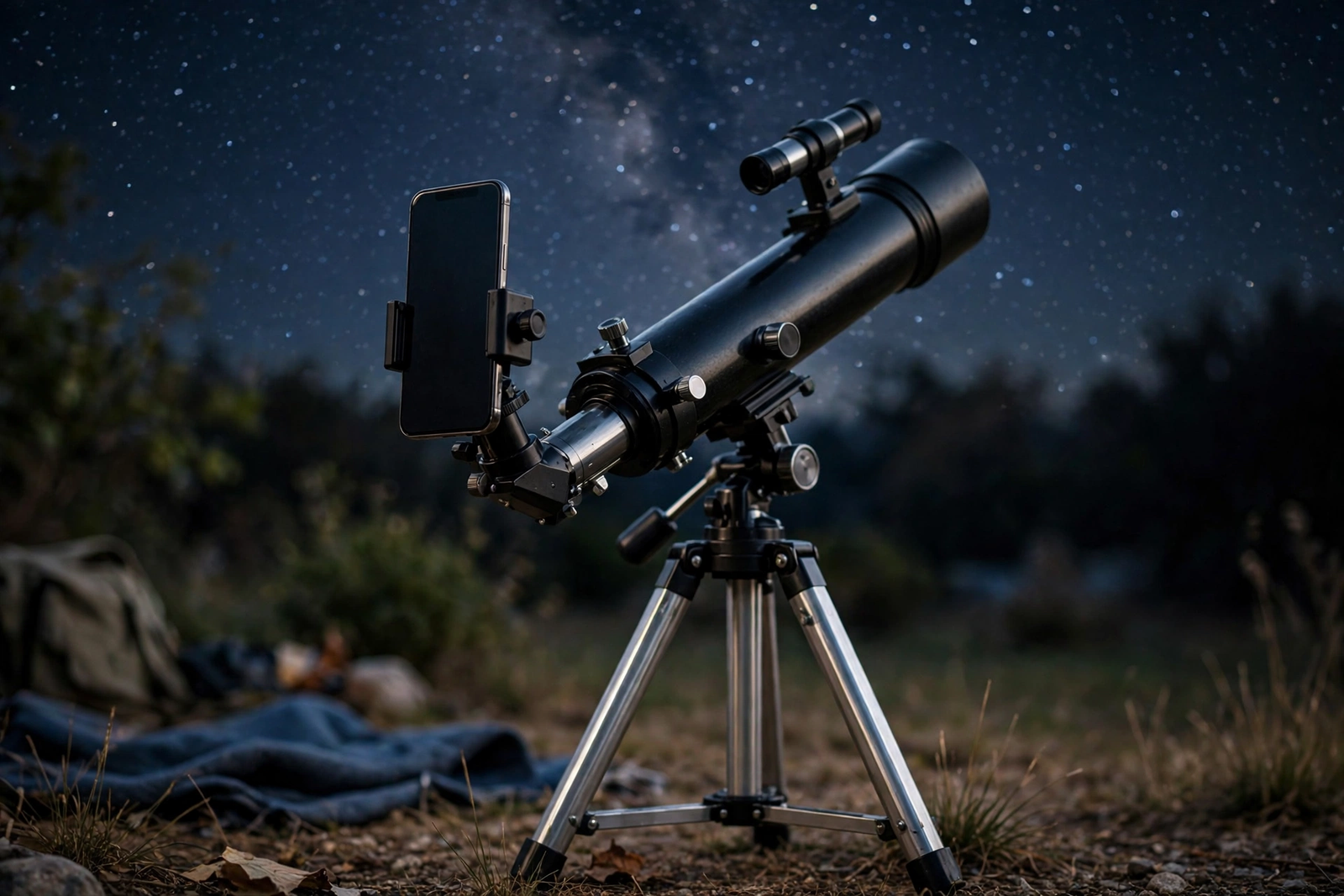
1 Celestron StarSense Explorer LT 80AZ
Best Gift OverallFor the highest odds the gift gets used past January, this is the tier and the scope. The StarSense Explorer LT 80AZ pairs an honest 80mm f/11 refractor with phone guidance: dock the phone, open the app, follow the arrows to any target. For a first-timer, this removes the biggest point of failure: pointing at something worth seeing.
The 80mm aperture gathers roughly 30 percent more light than 70mm, and the long 900mm focal length keeps views sharp. The 25mm eyepiece gives 36x wide views, the 10mm gives 90x for craters and planets, with a 2x Barlow included. Reviewers highlight how guided finding changes the beginner experience: recipients hop from the Moon to Jupiter to star clusters with confidence on night one.
One requirement: a reasonably modern smartphone, since guidance runs through the phone’s camera. Also note the mount is manual with no auto-tracking; objects drift over minutes and need a nudge, which is normal at this tier.
Who it is for: The top Christmas pick for kids, teens, and adult beginners alike, especially anyone you suspect might quit at the first frustration. Who should skip it: Recipients without a compatible smartphone lose the headline feature; the AstroMaster saves money in that case.
| Aperture | 80mm refractor |
| Focal length / ratio | 900mm, f/11 |
| Eyepieces included | 25mm (36x) and 10mm (90x), plus 2x Barlow |
| Finder | StarPointer red-dot finder plus StarSense phone dock and app |
| Mount | Manual alt-azimuth |
| Warranty | 2-year |
| Price tier | Mid-$200s tier |
- Guided finding dramatically raises the odds of a successful first night
- sharp 80mm optics
- simple manual mount
- 2-year warranty
- Requires a compatible smartphone
- no automatic tracking
- longer tube is less grab-and-go than short-tube rivals
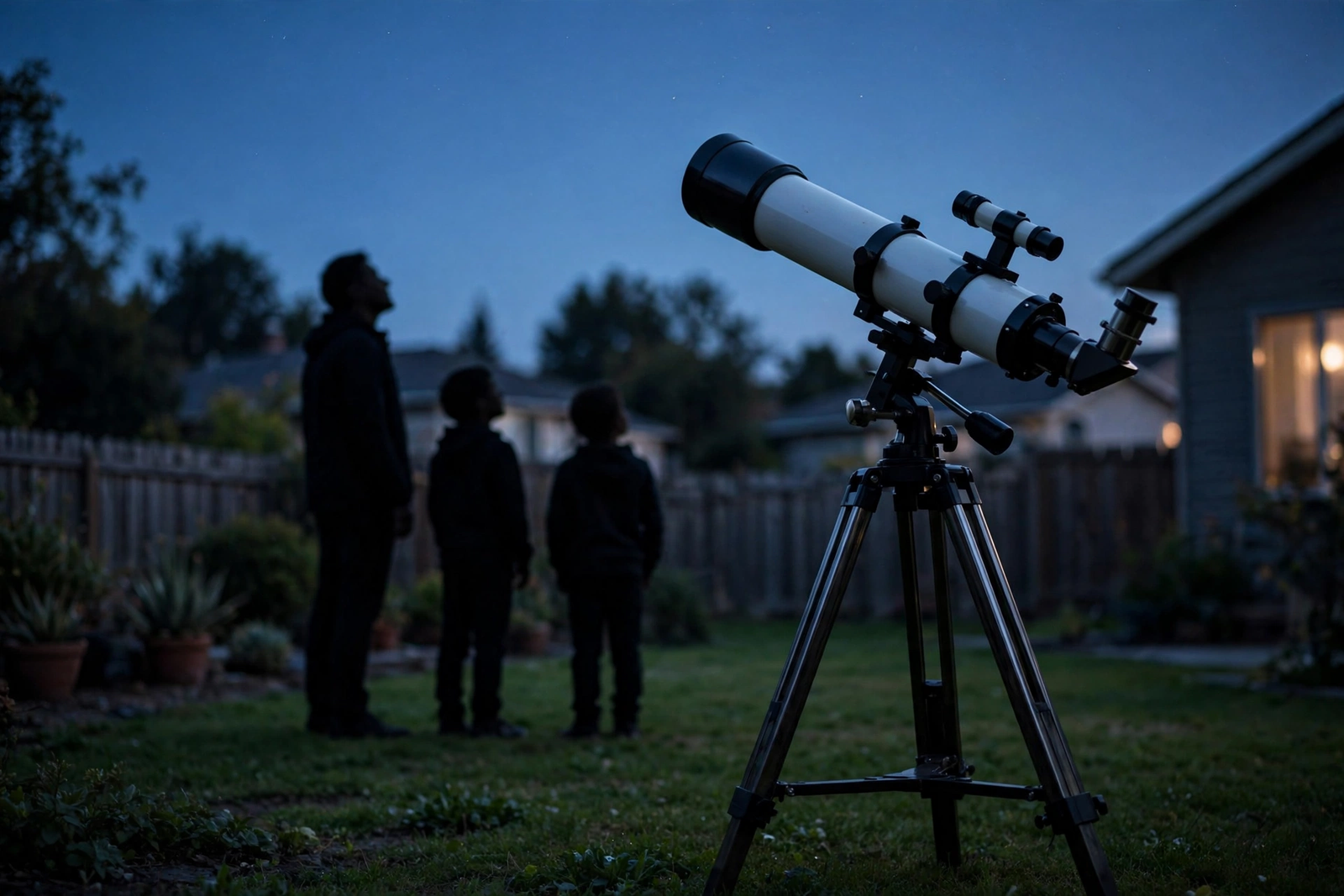
2 Celestron AstroMaster 70AZ
The Classic Beginner GiftIn the $120 to $200 tier, the AstroMaster 70AZ is the sensible gift: a long-tube 70mm refractor (900mm at f/13) that has introduced countless beginners to the hobby, with crisp lunar views and clean images of Jupiter and its moons.
Two underrated gift advantages: the erect-image diagonal shows everything right-side up, so it doubles as a daytime birding scope, and the StarPointer red-dot finder is far easier than tiny magnifying finders. Most recipients observe within 20 minutes of opening the box, and the 2-year warranty adds confidence.
The trade-off: finding anything beyond the Moon and bright planets takes patience or a phone app. For a patient adult beginner or an older kid with an interested parent, this is the value king of Christmas telescopes.
Who it is for: Adult beginners, patient teens, and families who like the daytime nature-watching bonus. Who should skip it: Easily frustrated recipients who need the scope to find things for them; that is the next tier’s job.
| Aperture | 70mm refractor |
| Focal length / ratio | 900mm, f/13 |
| Eyepieces included | 20mm (45x) and 10mm (90x) |
| Finder | StarPointer red-dot finder |
| Diagonal | Erect-image 90-degree |
| Mount | Manual alt-azimuth |
| Warranty | 2-year |
| Price tier | Budget tier, commonly around $150 |
- Crisp long-focus optics
- kid and beginner-friendly red-dot finder
- doubles as a daytime spotter
- 2-year warranty
- strong value
- No guided finding
- 70mm limits faint deep-sky views
- basic mount without slow-motion refinements

3 Gskyer 70mm AZ70400
The Only Safe Bet This CheapUnder $120, the telescope market is a minefield of toy scopes with plastic lenses and shaky tripods. The Gskyer 70mm AZ70400 is the rare exception that counts as a real telescope: a 70mm refractor with a short 400mm tube at around 5.7 pounds, plus an included carry bag that makes it a natural gift for camping families.
The box is generous: 25mm and 10mm eyepieces (16x and 40x), a 3x Barlow, a 5×24 finder, plus a phone adapter and wireless remote. A recipient who photographs the Moon on Christmas night has a story for the next week, and that social payoff turns a gift into a hobby. Owners confirm the Moon looks great and Jupiter’s moons are visible.
The limits are honest: owners report the finder needs fiddling to align, so align it in daylight before wrapping. Best views come at 40x to 60x despite the larger maximum printed on the box, and the short f/5.7 design shows some color fringing on bright objects. A starter scope, not a lifetime instrument.
Who it is for: Gift budgets under $120, grandparents shopping for grandkids, and anyone who wants a real telescope without committing real money. Who should skip it: If the budget stretches even slightly, the AstroMaster below gives cleaner optics. Do not buy anything cheaper than this; below this tier, you are buying a toy.
| Aperture | 70mm refractor |
| Focal length / ratio | 400mm, f/5.7 |
| Eyepieces included | 25mm (16x) and 10mm (40x), plus 3x Barlow |
| Finder | 5×24 finder scope |
| Extras | Phone adapter, wireless remote, carry bag |
| Mount | Manual alt-azimuth |
| Weight | About 5.7 lbs |
| Price tier | Around $110 tier |
- Real telescope at a gift-friendly price
- carry bag and phone adapter included
- light and portable
- Moon and Jupiter’s moons confirmed by owners
- Finder needs alignment fiddling
- best at 40x to 60x despite higher claimed maximums
- some color fringing
- basic mount
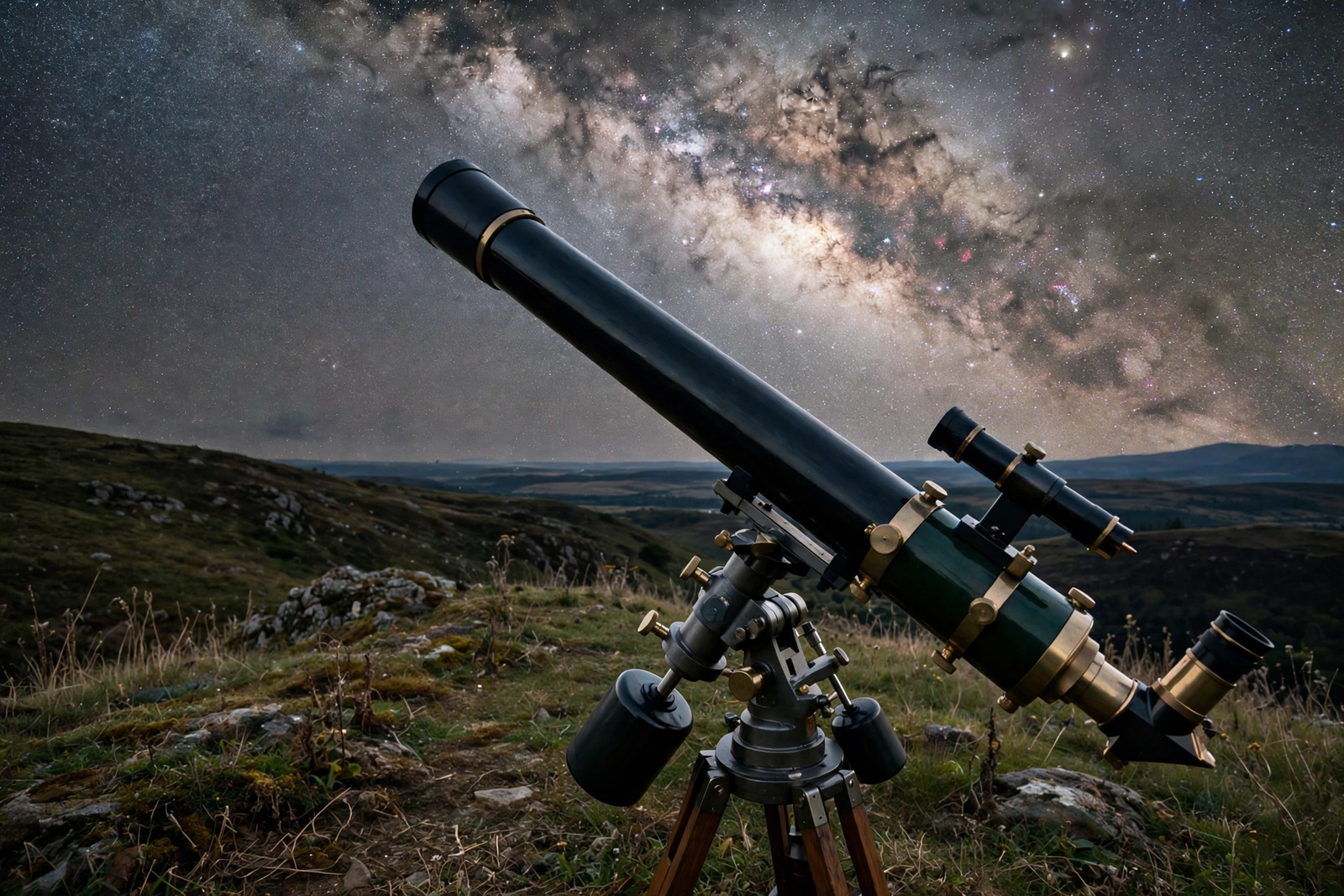
4 Celestron StarSense Explorer DX 102AZ
The Serious Beginner GiftFor the genuinely interested recipient, the DX 102AZ is the gift that grows with them. The 102mm aperture gathers about 60 percent more light than 80mm: more lunar detail, brighter clusters, nebulae with real structure. Reviewers note Saturn’s rings are clear at 66x with the included 10mm eyepiece, the kind of view that hooks people for years.
It keeps StarSense guided finding, so the bigger aperture adds no learning curve. The 660mm f/6.5 tube gives a wider field that makes Milky Way sweeping enjoyable, and slow-motion controls allow fine centering. The 25mm gives 26x sweeping views, the 10mm gives 66x for planets.
Clear-eyed honesty: the mount is manual with no tracking, so long-exposure astrophotography is off the table and planets need nudging. This is a visual instrument, and an excellent one. The 102mm tube is heftier, suiting a recipient with a yard or a car rather than a third-floor walk-up.
Who it is for: The adult beginner or dedicated teen who has shown real interest, and anyone upgrading from a starter scope. Who should skip it: Casual recipients who might observe twice; the LT 80AZ tier is plenty. Apartment dwellers without easy outdoor access.
| Aperture | 102mm refractor |
| Focal length / ratio | 660mm, f/6.5 |
| Eyepieces included | 25mm (26x) and 10mm (66x) |
| Finder | StarPointer red-dot finder plus StarSense phone dock and app |
| Mount | Manual alt-azimuth with slow-motion controls |
| Warranty | 2-year |
| Price tier | Roughly $350 to $440 tier |
- Big aperture jump over 80mm
- guided finding included
- wide-field views suit Milky Way sweeping
- slow-motion controls
- Saturn’s rings clear at 66x per reviewers
- Manual mount, no auto-tracking
- heavier tube needs easy outdoor access
- overkill for casual recipients
Editorial note: the Celestron StarSense Explorer DX 130AZ steps up to a 130mm Newtonian with roughly 60 percent more light than the 102, but reflectors need occasional collimation. Search “Celestron StarSense Explorer DX 130AZ” on Amazon for the current listing.
Check the Current Price on Amazon
5 ZWO Seestar S30
Photos, Not EyepiecesFor the tech lover, the Seestar S30 is the most exciting gift here. Set it outside, open the app, pick a target: it aligns itself, tracks automatically, and stacks exposures into a live image on the phone. Within minutes the recipient sees a colorful Orion Nebula from their backyard, ready to save and share. For someone who would rather photograph the universe than learn star-hopping, nothing else competes.
Honest framing: the 30mm aperture is not built for planets; Jupiter and Saturn stay small compared to the refractor views above. It is built for deep-sky imaging from light-polluted skies, where live stacking and the dual-band filter cut through city glow. A solar filter for safe daytime Sun viewing hides inside as a second gift. At roughly the $300 to $400 tier, often $349 on sale, it matches the DX 102AZ budget with a completely different experience.
Who it is for: Tech lovers, photographers, and city dwellers whose skies are too bright for traditional observing. The recipient who posts everything will love this. Who should skip it: Anyone who dreams of Saturn’s rings through an eyepiece; buy them the DX 102AZ instead. Also anyone without a smartphone or tablet.
| Aperture | 30mm smart telescope |
| Control | Fully app-controlled GoTo with automatic alignment |
| Imaging | Live stacking, dual-band filter, solar filter included |
| Portability | Compact and highly portable |
| Price tier | Roughly $300 to $400 tier, often $349 on sale |
- Zero learning curve, finds and photographs targets itself
- stunning deep-sky images from the city
- instant shareable results
- solar filter included
- 30mm aperture is not built for planets
- screen-based experience, not traditional eyepiece viewing
- needs charged devices
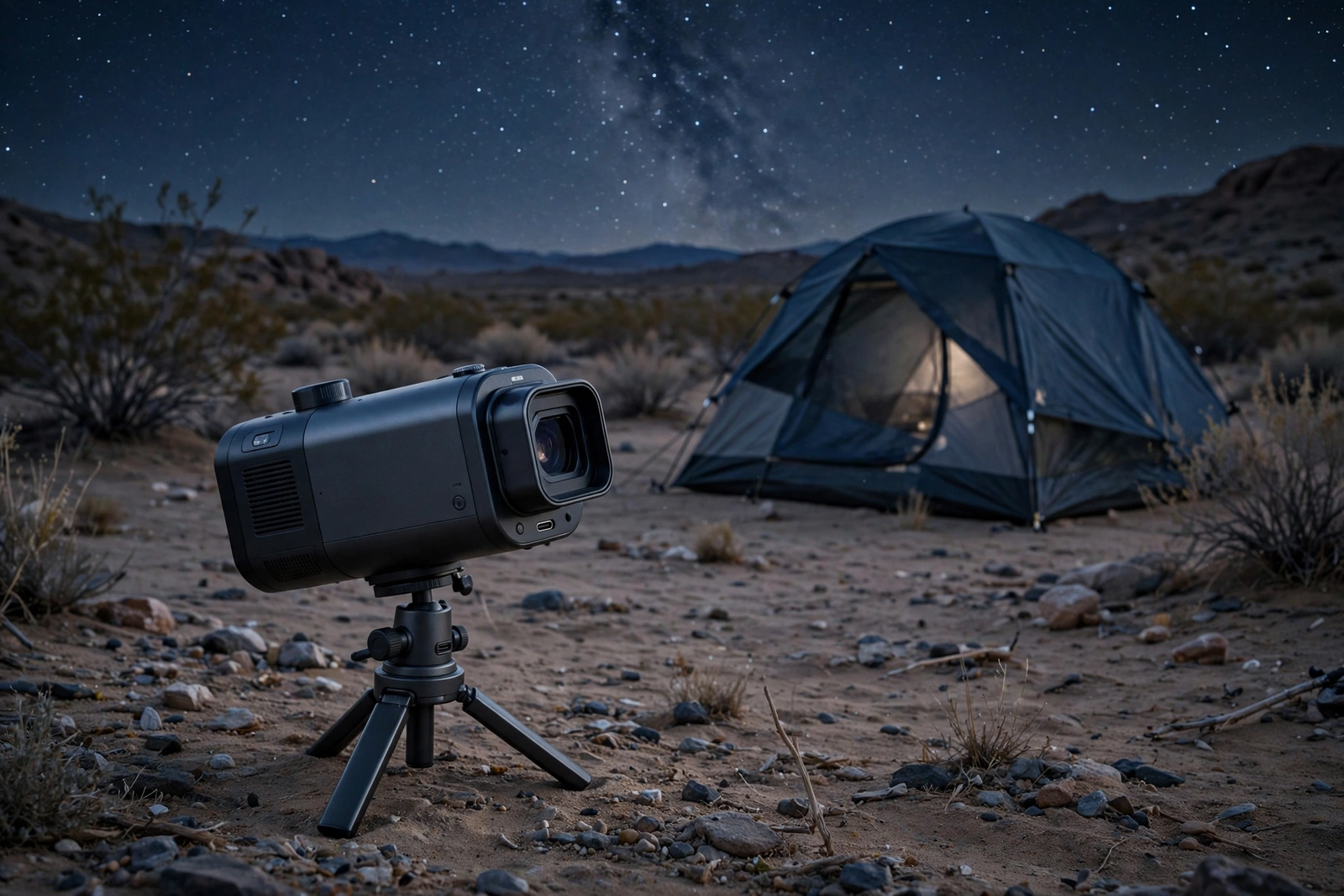
6 DWARFLAB Dwarf 3
For the PhotographerIf the budget has no ceiling and the recipient loves photography, the Dwarf 3 gets gasps. A 35mm f/4.3 smart telescope with a Sony IMX678 STARVIS 2 sensor, it captures 4K photos and video through dual wide-angle and telephoto lenses in a 1.3 kg body, with EQ mode, 128GB of storage, and a 10,000mAh battery. Owners call it the closest thing to a professional deep-sky rig that fits in a jacket pocket.
The honesty: this is a camera that points at the sky, not a telescope you look through. Planetary detail is limited versus advanced rigs, so buy it to photograph nebulae, galaxies, and wide star fields. At roughly the $500 to $550 tier it is firmly a splurge, and the kind of gift people remember for years.
Who it is for: The photography enthusiast, the gadget lover who has everything, the stargazer who already owns a visual scope and wants the imaging side. Who should skip it: Anyone expecting an eyepiece experience; first-time stargazers who should start with the guided refractor tiers.
| Optics | 35mm f/4.3 telephoto, 150mm focal length |
| Sensor | Sony IMX678 STARVIS 2 |
| Capture | 4K photo and video, dual wide-angle plus telephoto lenses |
| Storage and battery | 128GB internal, 10,000mAh battery |
| Weight | About 1.3 kg |
| Extras | EQ mode for improved tracking |
| Price tier | Roughly $500 to $550 tier |
- Remarkable 4K sky imaging in a pocketable package
- dual lenses cover wide and close views
- huge battery and storage
- EQ mode improves tracking
- No eyepiece, photography only
- limited planetary detail versus advanced rigs
- premium price
Gift-Day Survival Tips
The telescope you choose matters less than how the first night goes. These tips are the difference between a gift that launches a hobby and one that gets reboxed.
Assemble it yourself first. Build the scope a day early and confirm all parts are present. Nothing kills Christmas-night excitement like 40 minutes of parts-sorting.
Align the finder in daylight. This is the single highest-value step. Point the main tube at a distant object during the day and adjust the finder until both agree. Whoever receives the gift then starts the night already able to find things.
Charge the phone and download the app. For the StarSense models, install the app on the recipient’s phone ahead of time and test the dock fit. For the smart telescopes, charge the scope battery fully and install the control app before wrapping.
Wrap the accessories thoughtfully. Put eyepieces, Barlow, and phone adapter in a separate pouch so they survive the wrapping paper. A cheap red flashlight makes a great stocking stuffer and preserves night vision.
Plan the first target. Check a free astronomy app on gift day for what is up that night. Being able to say “tonight Jupiter is right there, let us look at its moons” beats “let us see what we can find.”
Manage expectations kindly. Nebulae look like gray smudges through an eyepiece, not Hubble photos, and that is normal. The smart telescopes are the exception: they really do produce colorful images.
Don’t Gift Junk: A Short Warning
December shelves are full of traps. Avoid extreme magnification claims like 600x, toy telescopes with plastic optics, cheap equatorial mounts for beginners, and no-name brands without warranties. Every pick here comes from an established maker with a real owner community, which matters when questions arise in January.
Our Verdict
Pick by recipient, not by price. For a kid or beginner, the StarSense Explorer LT 80AZ ($200 to $300) is the gift most likely to survive until next Christmas, because guided finding removes the failure point. On a tight budget, the Gskyer 70mm AZ70400 is genuine; the AstroMaster 70AZ is the classic step up. For the committed beginner, the DX 102AZ rewards with aperture. For the tech lover, the Seestar S30 or Dwarf 3 photographs nebulae on night one. Assemble early, align in daylight, plan the first target. The gift is not the telescope. The gift is the first night.