
First-time buyers in 2026 face a new choice in smart telescope vs regular telescope for beginners. On one side: the regular telescope, glass and eyepiece, refined over four centuries. On the other: the smart telescope, an app-controlled camera that finds targets and builds sky photos live on your phone. Different hobbies in similar clothes, and buying the wrong one for your personality is the fastest route to a dusty closet.
This guide explains what each type is, compares them on cost, ease, and what you really see, and names specific products on both sides. Short version: instant shareable images with zero learning curve means smart; photons from Saturn on your retina and the slow satisfaction of learning the sky means regular. The long version is below.
Nothing here comes from hands-on testing. Every claim is grounded in manufacturer spec sheets, reviewer findings, and owner reports.
- A smart telescope is a camera that points at the sky; a regular telescope puts photons directly into your eye. Different experiences, different rewards.
- Smart scopes win on ease and city skies: automatic finding plus live stacking beats light pollution.
- Regular scopes win on planets and the “soul” factor: bigger apertures show Saturn’s rings and the Moon in real time.
- Smart scopes are not planet instruments; their small apertures limit planetary detail.
- Through an eyepiece, nebulae are gray smudges, not Hubble colors. Smart scopes show the colors. Set expectations accordingly.
Smart Telescope vs Regular Telescope for Beginners: What Each Type Actually Is
A regular telescope gathers light through lenses or mirrors and delivers it to your eye through an eyepiece. You see objects in real time. Finding targets is on you: a finder, a phone app, and the learned skill of star-hopping. When you look at Saturn, photons that left the planet over an hour ago land directly on your retina. Many hobbyists call this the soul of the hobby, and no screen replaces it.
A smart telescope is a small computerized camera on a motorized mount, controlled by a phone app. It aligns itself, slews to your target automatically, tracks it, and stacks short exposures into a live image that sharpens minute by minute. You watch a photograph of the universe assemble itself, then save and share it. Closer to astrophotography than stargazing, and for many beginners that is exactly the appeal.
Head-to-Head Comparison
| Factor | Smart Telescope | Regular Telescope |
| Ease of first night | Excellent. Set it down, open the app, pick a target. Owners report imaging nebulae within 15 minutes. | Moderate. The Moon is easy; anything else takes a finder, an app, or guided help at first. |
| What you actually see | Photo-like stacked images with real color: nebulae, galaxies, star clusters in detail. | Real-time views: sharp Moon and planets, but nebulae appear as gray smudges. |
| Planets | Weak. Small apertures like 30mm to 35mm show Jupiter and Saturn small with limited detail. | Strong. A 102mm refractor or 150mm reflector shows Saturn’s rings and Jupiter’s cloud belts clearly. |
| Light pollution handling | Excellent. Live stacking cuts through city glow; dual-band filters help further. | Poor to moderate. City skies wash out faint objects through an eyepiece. |
| Learning curve | Near zero for operation; the sky knowledge stays optional. | Real but rewarding: finding targets teaches the constellations over months. |
| Portability | Excellent. Most smart scopes are compact, some pocketable at around 1.3 kg. | Varies. Small refractors travel well; a 150mm Dobsonian is bulky at roughly 37 lbs total. |
| Cost of entry | Roughly $300 to $550 tier for the models here. | Roughly $150 to $450 tier for the beginner models here. |
| The “soul” factor | Low for traditionalists: it is a screen, not an eyepiece. | High: direct photons, learned skill, quiet nights under the stars. |
Ease of the First Night
This is the smart telescope’s home turf, and it is not close. Unbox a Seestar S30, set it on its tripod, open the app, tap the Orion Nebula: the scope handles alignment, finding, tracking, and imaging. Owners describe first light within 15 minutes. No finder to align, no star-hopping to learn, no frustration.
A regular telescope asks more of night one. The Moon is easy in any scope here, and a guided model like the DX 102AZ narrows the gap with phone arrows. But an unguided scope still requires learning the finder and patience for the first targets. That work becomes a beloved skill, but on night one it is friction, and friction is where beginners quit.
What You Actually See
Through a regular eyepiece, the Moon is breathtaking, planets are sharp little worlds, and bright clusters glitter. But nebulae and galaxies appear as faint gray smudges. That is physics, not a defect: eyes cannot accumulate light like cameras. Experienced observers love these smudges, but beginners expecting Hubble images are often let down.
A smart telescope shows the Hubble-ish version: the Orion Nebula blooms in color and galaxies show spiral structure, built from real photons processed for human eyes. The trade flips on planets: small smart-scope apertures show Jupiter and Saturn as modest disks, while a 102mm refractor or 150mm reflector shows Saturn’s rings crisp and Jupiter’s belts in satisfying detail.
Cost, Light Pollution, and Learning Curve
Smart scopes here sit in roughly the $300 to $550 tier, overlapping the upper end of beginner regular scopes. The value depends on your sky. From a light-polluted city, stacking punches through glow that would render an eyepiece nearly useless on faint targets. From dark rural skies, eyepiece views are at their best and the smart advantage shrinks.
The learning curves point opposite ways. A smart scope teaches you nothing about the sky unless you go looking. A regular scope teaches the constellations incidentally as you learn to find things. Which sounds like fun: tapping a target in an app, or the slow pride of star-hopping to it? The answer picks your telescope.
Top Picks at a Glance
ZWO Seestar S30
Best smart telescope for beginners. Easiest path to stunning images.
Celestron StarSense Explorer DX 102AZ
Best regular telescope for beginners. Guided finding plus real eyepiece views.
DWARFLAB Dwarf 3
Best smart telescope splurge. 4K imaging in a pocketable body.
Orion SkyQuest XT6 Classic
Best regular telescope value. Big 150mm aperture, classic Dobsonian.
Detailed Reviews
1 ZWO Seestar S30
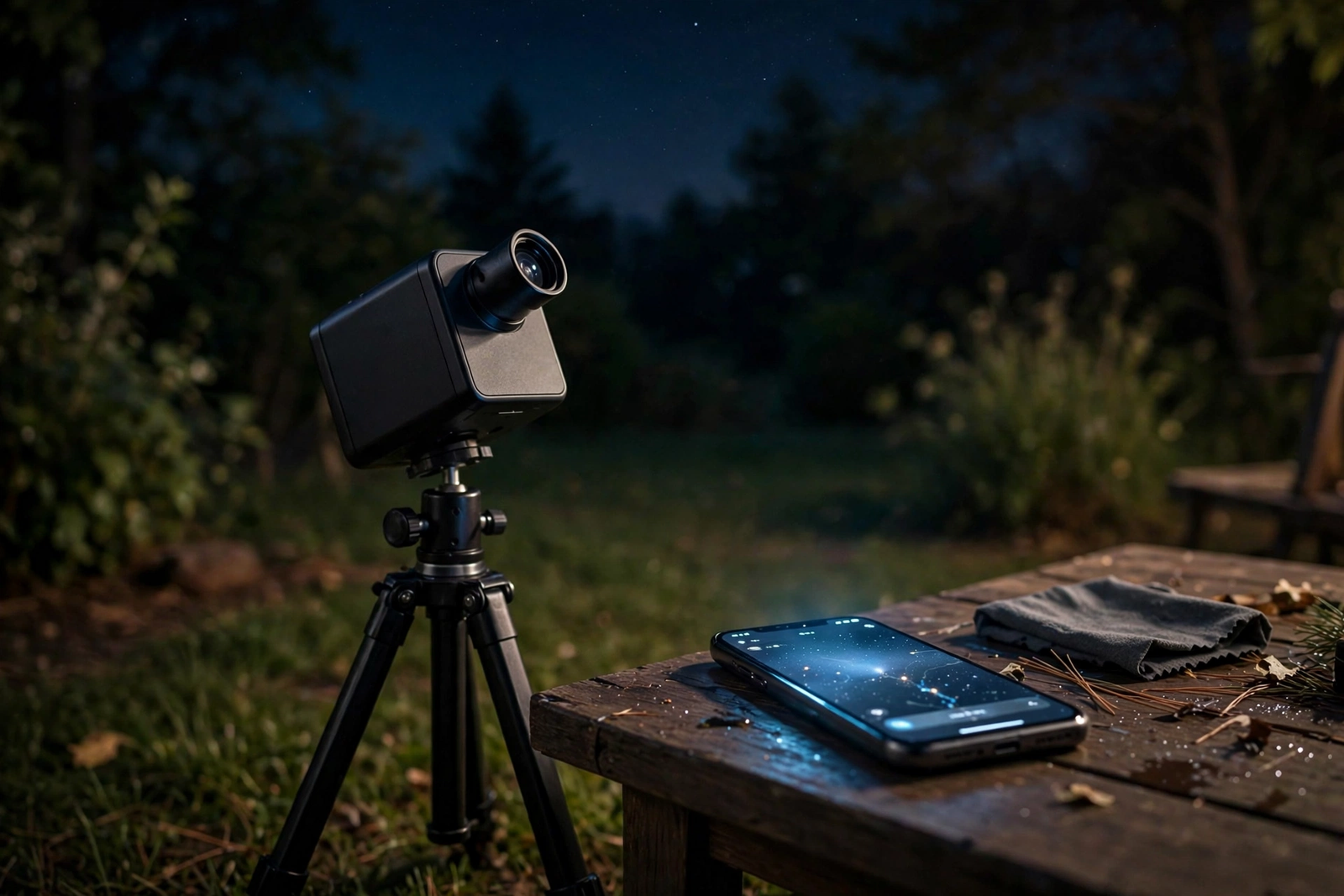
The Beginner’s Smart ScopeThe Seestar S30 is the smart scope most recommended to beginners. Its 30mm aperture works with fully app-controlled GoTo: automatic alignment, finding, tracking, and live stacking on your phone. The dual-band filter helps from light-polluted backyards, and the included solar filter enables safe daytime Sun observing. At roughly the $300 to $400 tier, often $349 on sale, it is priced like a mid-range beginner scope while doing something no eyepiece scope can.
Owners emphasize the first-night success rate and shareability: beginners save nebula photos within 15 minutes and post them immediately. That feedback loop sustains engagement in a way eyepiece observing sometimes does not. Compact, portable, genuinely point-and-tap.
The honesty, repeated because it matters: 30mm is not built for planets. Jupiter stays small, Saturn’s rings modest. This scope buys you the deep sky in living color at the price of planetary performance and the eyepiece experience. If your heart is set on Saturn’s rings, the regular scopes below are your answer.
Who it is for: The instant-gratification beginner, the photographer, the city dweller, anyone who wants to share the universe. Who should skip it: Planet lovers, traditionalists who want photons on the retina, and anyone without a smartphone or tablet to run the app.
| Aperture | 30mm smart telescope |
| Control | Fully app-controlled GoTo with automatic alignment |
| Imaging | Live stacking, dual-band filter, solar filter included |
| Portability | Compact and highly portable |
| Price tier | Roughly $300 to $400 tier, often $349 on sale |
- Near-zero learning curve with automatic everything
- colorful deep-sky images from city skies
- instant shareable photos
- solar filter included
- 30mm aperture is not built for planets
- screen-based, not an eyepiece experience
- needs charged devices
2 Celestron StarSense Explorer DX 102AZ
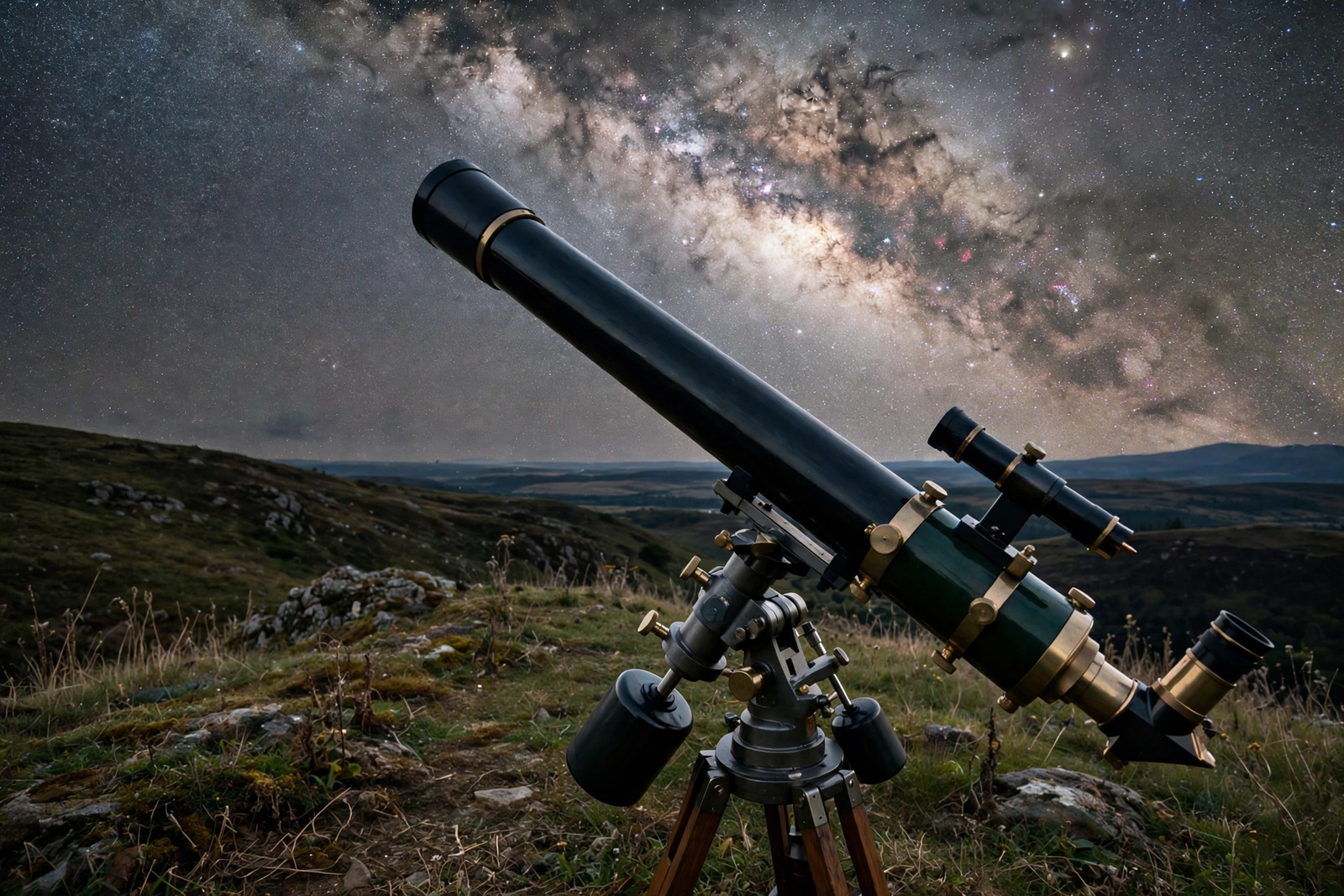
The Guided ClassicThe DX 102AZ gives smart scopes the hardest fight for a beginner’s money because it borrows their best trick. StarSense docks your phone, reads the sky through its camera, and guides you with on-screen arrows. You still push the tube and look through a real eyepiece, but the finding frustration is gone.
The optics are a genuine step up: 102mm at f/6.5 gathers about 60 percent more light than 80mm, and reviewers note Saturn’s rings are clear at 66x with the 10mm eyepiece. The 25mm gives 26x wide-field views for Milky Way sweeping, the erect-image diagonal keeps orientation correct, and slow-motion controls allow fine centering. The 2-year warranty and huge owner community mean help is always available.
Honestly versus the smart side: real photons in real time, which no screen replicates, and planetary views that beat the smart scopes’. But no colorful nebulae, darker skies needed for faint objects, and guided finding still involves you. The manual mount means objects drift and need nudging. For the beginner who wants the traditional hobby with training wheels, this is the pick.
Who it is for: The traditional stargazer who wants to learn the sky, the planet lover, anyone who values the eyepiece experience over images. Who should skip it: City observers focused on nebulae and galaxies, photographers, and anyone who wants results without any learning curve.
| Aperture | 102mm refractor |
| Focal length / ratio | 660mm, f/6.5 |
| Eyepieces included | 25mm (26x) and 10mm (66x) |
| Finder | StarPointer red-dot finder plus StarSense phone dock and app |
| Mount | Manual alt-azimuth with slow-motion controls |
| Warranty | 2-year |
| Price tier | Roughly $350 to $440 tier |
- Guided finding removes beginner frustration
- strong 102mm optics with clear Saturn views at 66x
- real-time eyepiece experience
- slow-motion controls
- 2-year warranty
- Manual mount, no auto-tracking
- nebulae are gray smudges, not colorful images
- needs darker skies for faint targets
- heavier than small smart scopes
3 DWARFLAB Dwarf 3
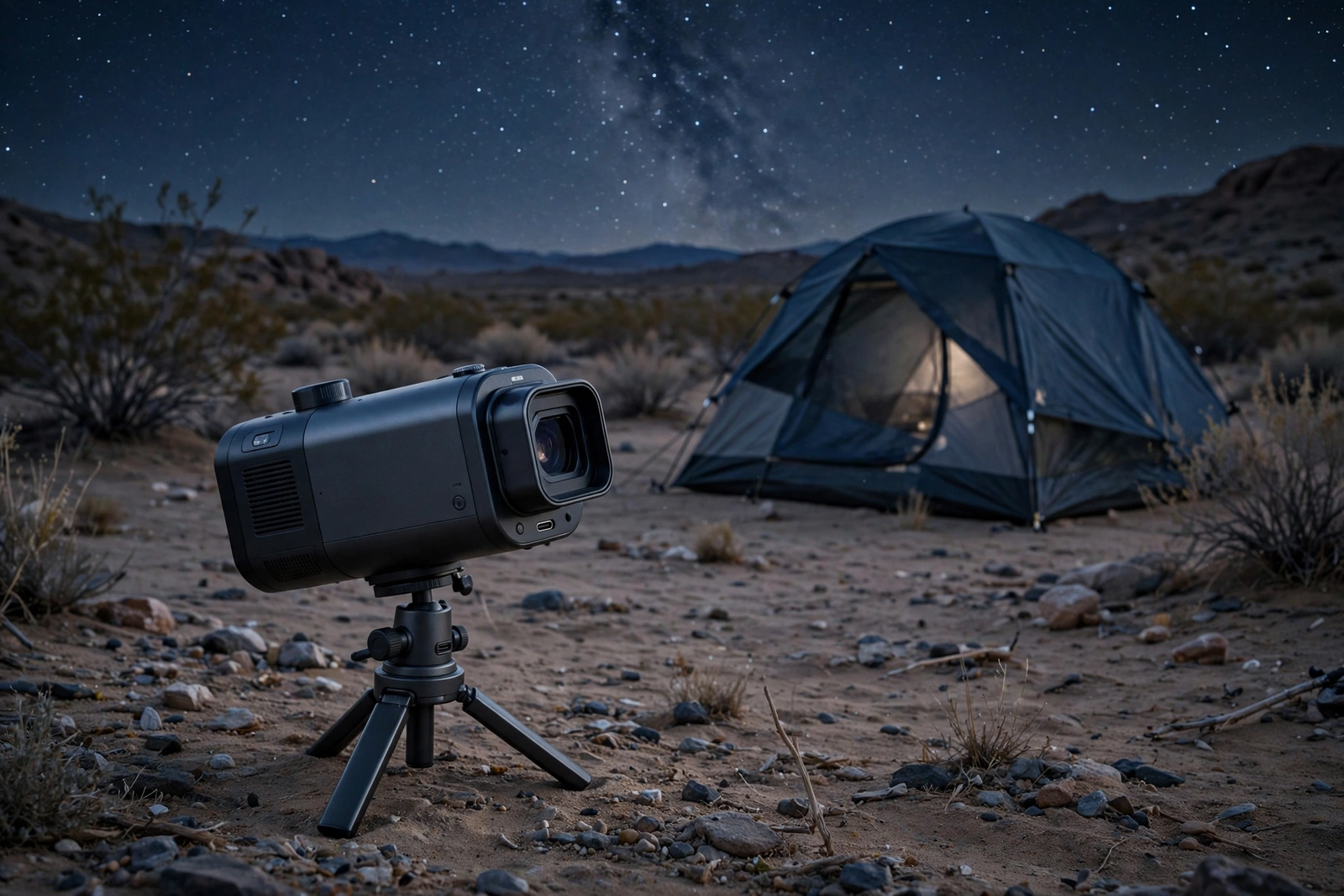
The Imaging SplurgeIf the S30 is the sensible smart scope, the Dwarf 3 is the enthusiast’s upgrade: a 35mm f/4.3 telephoto (150mm) with a Sony IMX678 STARVIS 2 sensor, capturing 4K photos and video through dual wide-angle and telephoto lenses. EQ mode improves tracking, 128GB holds a serious library, and the 10,000mAh battery runs all night, all in about 1.3 kg.
This is the pick for the beginner who already loves photography and wants imaging from day one. Reviewers describe image quality a clear step above entry-level smart scopes, with dual lenses covering wide Milky Way vistas and tighter deep-sky targets. The closest thing to a portable observatory a beginner can buy.
Frame it correctly: a camera that points at the sky, not a telescope you look through, with planetary detail limited versus advanced rigs. Buy it for nebulae, galaxies, comets, and wide star fields. At roughly the $500 to $550 tier it is a splurge, but for the photography-minded beginner it can be the only scope they ever need.
Who it is for: The beginner who is really a photographer, the gadget enthusiast, the traveler who wants a pocketable deep-sky camera. Who should skip it: Anyone who wants an eyepiece, planet observers, and unsure beginners; start cheaper.
| Optics | 35mm f/4.3 telephoto, 150mm focal length |
| Sensor | Sony IMX678 STARVIS 2 |
| Capture | 4K photo and video, dual wide-angle plus telephoto lenses |
| Storage and battery | 128GB internal, 10,000mAh battery |
| Weight | About 1.3 kg |
| Extras | EQ mode for improved tracking |
| Price tier | Roughly $500 to $550 tier |
- Superb 4K imaging in a tiny package
- dual lenses cover wide and close views
- all-night battery and generous storage
- EQ mode sharpens tracking
- No eyepiece experience at all
- limited planetary detail versus advanced rigs
- premium price for a first telescope
Editorial note: ZWO’s step-up smart scopes, the Seestar S50 and the newer S30 Pro, offer larger apertures for buyers who outgrow the S30. Search “ZWO Seestar S50” on Amazon for the current listing.
Check the Current Price on Amazon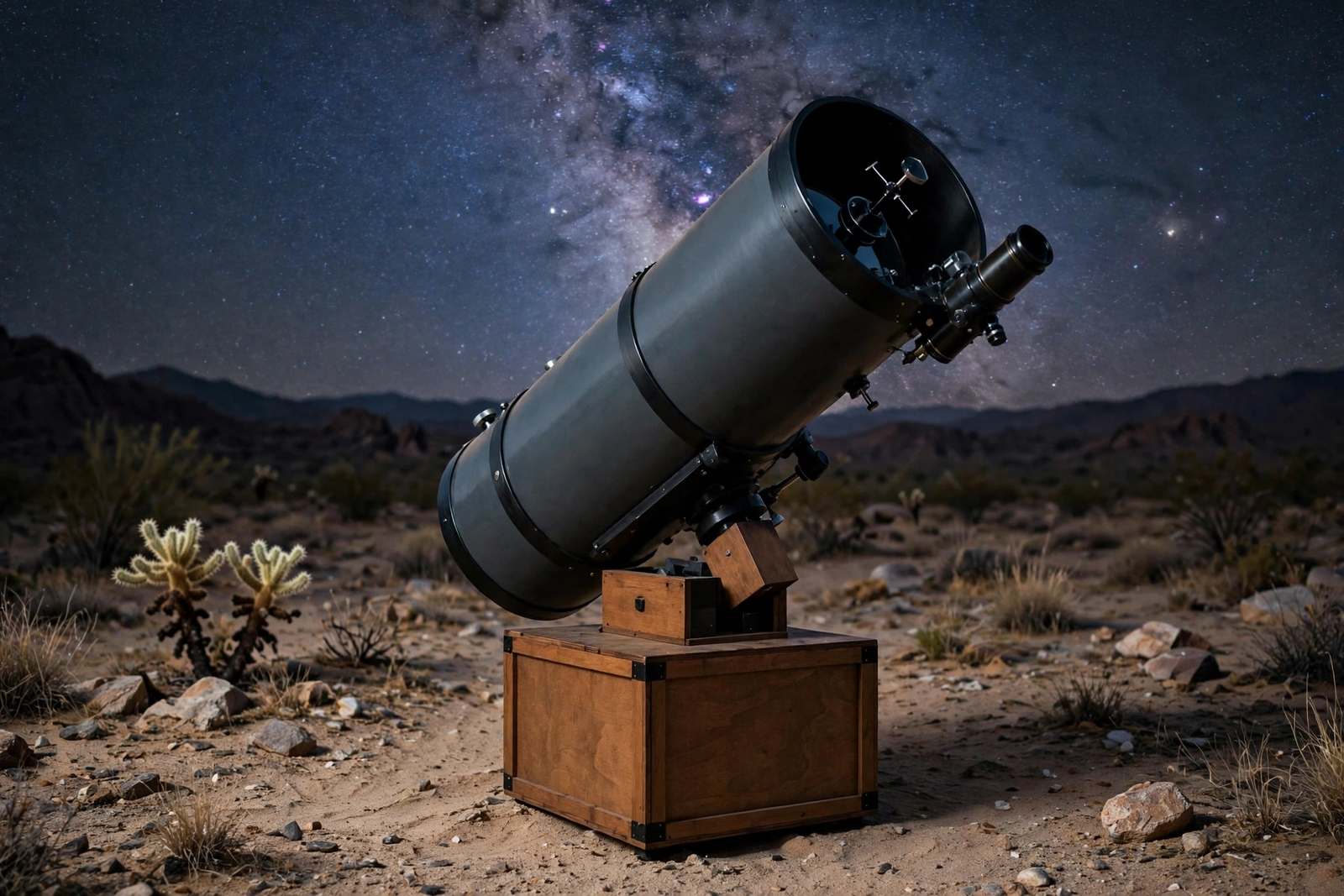
4 Orion SkyQuest XT6 Classic
Maximum Aperture per DollarIf the question is “what shows me the most,” the beginner answer has been the same for decades: a Dobsonian. The Orion SkyQuest XT6 Classic is a 150mm f/8 Newtonian on a simple rocker-box base. That mirror gathers more than twice the light of a 102mm refractor: the Moon in staggering detail, Jupiter’s belts, Saturn’s rings sharp, globular clusters resolving into stars.
The Dobsonian design is why beginners can afford this aperture: a rocker box the tube sits in, push to aim, smooth bearings keep it steady. No wobble, no counterweights, no electronics. The 25mm Plossl gives 48x, the EZ Finder II aids aiming, and a collimation cap is included for occasional mirror alignment. At roughly the $270 to $450 tier depending on retailer, it is the most telescope per dollar here.
The honest bulk warning: the tube is about 13 lbs and the base about 24 lbs. They separate for carrying, but this scope lives in a garage, not a third-floor apartment. Reflectors need occasional collimation, 10 minutes to learn and 2 to do, a chore smart scopes never impose. And there is no guided finding: the XT6 rewards beginners willing to learn star-hopping.
Who it is for: The committed beginner with storage space and dark-ish skies, the aperture-maximizer, anyone who wants the most impressive eyepiece views per dollar. Who should skip it: Apartment dwellers, impatient beginners, anyone who wants guided finding or photography; the bulk and collimation are real friction.
| Aperture | 150mm Newtonian reflector |
| Focal length / ratio | 1200mm, f/8 |
| Eyepiece included | 25mm Plossl (48x) |
| Finder | EZ Finder II |
| Mount | Dobsonian rocker-box base |
| Extras | Collimation cap included |
| Weight | Tube about 13 lbs, base about 24 lbs |
- Most aperture per dollar in the beginner class
- rock-solid Dobsonian mount with no wobble
- stunning lunar and planetary views
- simple, electronics-free reliability
- Bulky and heavy
- reflectors need occasional collimation
- no guided finding
- poor fit for apartments or travelers
The “Soul” Factor, Honestly Addressed
Ask experienced hobbyists why they still use eyepieces and the answer is consistent: directness. Photons from a galaxy that traveled millions of years landing on your retina feels qualitatively different from watching an image assemble on a phone. Add the learned skill of finding things yourself and the quiet ritual of a manual session, and you have an experience many call meditative.
Smart telescopes are not lesser, just a different pleasure: the joy of capture, of seeing structure invisible to the eye, of sharing instantly. Many hobbyists eventually own both. But for a first purchase, be honest about which pleasure is yours, because the wrong one gathers dust while the right one gets used weekly.
Our Verdict
No universal winner, but a right answer for each buyer. Go smart for instant results: the Seestar S30 for the easiest path to beautiful deep-sky images, the Dwarf 3 for photographers wanting the best portable imaging. You will photograph nebulae on night one, from the city, with zero learning curve. Go regular for the traditional hobby: the DX 102AZ for guided finding with real eyepiece views and strong planets, the XT6 for maximum aperture per dollar. You will see Saturn’s rings with your own eyes and learn the constellations month by month, with no batteries to charge. The instant-gratification photographer goes smart. The traditional stargazer goes regular. Buy for the experience you want; either beats the dusty closet.