
Meat grinder keeps jamming? It is one of the most frustrating sounds in a home kitchen or a deer camp. The motor strains, the meat stops coming out, and you are left standing there with a tray of ground meat that went smearing and grey instead of clean and red. If this keeps happening, it is not bad luck. Something in your process (or your machine) needs to change.
The good news is that jamming is almost never a mystery. Hunters who grind whole deer and pitmasters who make sausage by the batch have run into every version of this problem, and their fixes are consistent. We dug through hunting and BBQ forums and distilled the advice down to the seven fixes that actually work. They are listed in the order you should try them, because most jams come down to temperature and prep, not to the grinder itself.
One honest note before we start: some of these fixes require your grinder to have a reverse function, and not all do. If yours does not, you will be taking the head apart to clear clogs by hand. That is fine. Just know where you stand. And if you try everything here and your grinder still jams on every batch, that is a signal, not a failure. A worn blade or an underpowered motor will not be fixed by colder meat. We cover that at the end, with three upgrade picks for people whose grinder is the actual problem.
- Cold is everything. Meat near freezing (28-32F) and a chilled grinder head fix the majority of jams on their own.
- Trim the sinew. That stringy silver skin wraps around the blade and causes most jams people blame on the motor.
- Cut smaller chunks. One-inch cubes feed cleanly. Big slabs pack in and stall the auger.
- Do not overtighten the locking ring. Snug is enough. Too tight creates friction, heat, and smearing.
- A dull blade smears instead of cutting. If everything is cold and it still smears, the blade (or the blade and plate pair) is worn.
- The upgrade signal: jams on every batch, even with cold meat and trimmed cuts, means the grinder is underpowered or worn out.
Meat Grinder Keeps Jamming: Top Picks at a Glance
STX Turboforce 3000
Feature-loaded favorite. #12 head, 180-240 lbs per hour, and a full attachment kit.
STX Turboforce II 4000
Air-cooled motor for long sessions, and the only one here rated for soft bones.
Sunmile SM-G73
Sub-$100 workhorse with a real reverse switch. The honest fix for a dying cheap grinder.
The 7 Fixes That Actually Work
Fix 1: Keep Everything Cold
This is the number one fix in every hunter and BBQ thread on the subject, and it is not close. Cold meat grinds cleanly. Warm meat smears, turns grey, and jams. The target is meat that is just barely thawed or near frozen, roughly 28 to 32 degrees Fahrenheit. The meat should be firm to the touch, almost crunchy at the edges.
But here is the part most people miss: it is not just the meat. The grinder head, the plates, the blade, and the auger should go in the freezer too. A room-temperature metal head warms the first few ounces of meat instantly, and that warm layer smears and clogs the plate holes. Hunters processing deer swear by chilling the head between batches. If you are grinding a big batch, put the head back in the freezer during breaks. A frozen head buys you a long margin.
If your jams always show up toward the end of a batch, this is almost certainly your problem. The meat warmed up as it sat in the tray while the first half ground. Fix it by grinding in smaller sub-batches and keeping the waiting meat in the fridge.
Fix 2: Trim the Sinew and Silverskin
Ask around on any hunting forum and you will hear the same line: the stringy stuff is what jams grinders, not the meat. Sinew and silverskin do not cut cleanly. They wrap around the blade, wind up like thread on a spool, and eventually choke the whole head. When you open a jammed grinder and find a wad of white stringy material packed around the auger, that is your culprit.
The fix is prep work, and there is no way around it. Trim the tough connective tissue off your cuts before grinding. This is especially true for venison, where silverskin is everywhere, and for cheaper beef cuts. It feels slow, but ten minutes of trimming saves you thirty minutes of disassembling and unclogging the head. A sharp boning knife makes this go much faster.
Fix 3: Cut Smaller Chunks
Big slabs of meat look efficient. They feed terribly. Oversized pieces get caught at the throat, the auger cannot grab them cleanly, and the motor strains. Aim for roughly one-inch cubes. They should drop into the feed tube without forcing and let the auger pull them through at its own pace.
This matters twice as much with partially frozen meat, which is exactly the meat you should be grinding after Fix 1. Frozen-solid chunks the size of your fist will stall almost any home grinder. One-inch cubes of near-frozen meat are the sweet spot: firm enough to cut cleanly, small enough to feed.
Fix 4: Do Not Overtighten the Locking Ring
This one is counterintuitive. The locking ring at the front of the grinder head holds the plate and blade in place, and the instinct is to crank it tight. Too tight is a real cause of jamming. Excess pressure increases friction between the blade and the plate, which generates heat, and heat melts fat, which smears and clogs the plate holes.
Snug is enough. Tighten the ring firmly by hand, no tools, and stop. The blade should sit flat against the plate without being crushed into it. If you have been reefing the ring down and your grinds come out smeary and warm, back it off and try again. Forum folks report this fixing “mystery jams” more often than you would expect.
Fix 5: Match the Blade to the Plate
Here is the mechanical truth about grinders: the blade and the plate cut as a pair. The blade’s cutting edges ride against the plate’s face, and the two surfaces wear together. A dull blade does not cut meat, it mashes it. Mashed meat smears across the plate instead of extruding through the holes, and smeared meat clogs.
Signs your blade is the problem: the meat comes out mushy and grey even when everything is properly chilled, the plate holes seem to clog from the inside, and you need to push harder to get anything through. The fix is a new blade, and ideally you replace the blade and plate as a matched set so the surfaces mate cleanly. Blades are cheap consumables. Treat them that way. A fresh blade on a budget grinder will often outperform a dull blade on an expensive one.
Fix 6: Feed Steadily, Do Not Force
The auger knows its pace. Your job is to drop meat in and let it pull. Forcing meat down with the stomper packs it into the throat, compresses it into a dense plug, and stalls the motor. That plug is a jam you made yourself.
Use the stomper lightly, just to guide meat toward the auger, not to shove it. If the grinder is taking meat on its own, step back and let it work. If it stops taking meat, stop pushing. Back off, let the auger clear, and try a smaller piece. The people who grind the most meat, hunters doing whole deer, all say the same thing: patience feeds the grinder better than pressure.
Fix 7: Use Reverse (If You Have It)
Most modern grinders have a reverse switch for exactly this situation. When the head clogs, run a short burst in reverse. It backs the auger up, breaks the packed plug loose, and usually clears the jam without disassembly. Short bursts are the key. Do not hold reverse for a long stretch, just a second or two, then go forward again.
If your grinder does not have reverse, you are clearing clogs the manual way: unplug the machine, remove the locking ring, pull the plate and blade, and clear the packed meat by hand. It is slower, but it works every time. Just be careful with the blade edges, they are sharp even when dull at grinding.
When the Fixes Do Not Work: Time to Upgrade
Be honest with yourself here. If you have chilled everything, trimmed the sinew, cut small cubes, backed off the locking ring, and either sharpened or replaced the blade, and your grinder still jams every batch, the grinder is the problem. Two things cause chronic jamming: a motor that is too weak for the job, and worn parts that no longer cut cleanly. The upgrade signal is consistent jamming under good conditions. Cold meat, trimmed cuts, right-sized chunks, and it still stalls? That is an underpowered or worn-out machine telling you it is done. Here are three replacements worth buying, covering the main budgets.
Detailed Reviews
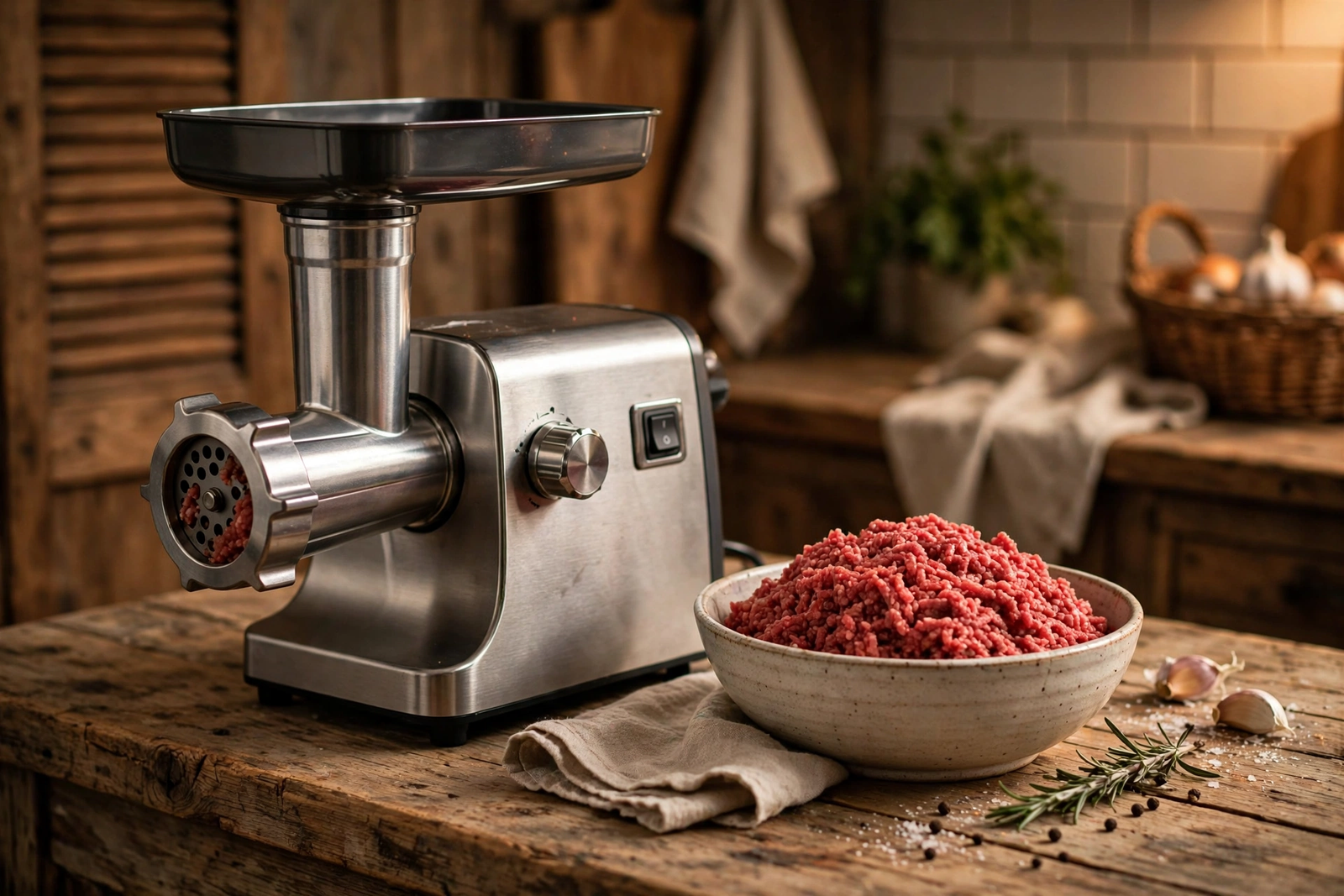
1 STX Turboforce 3000
Best All-Around UpgradeThe STX Turboforce 3000 has been a best-selling home grinder on Amazon for years, and there is a reason it keeps showing up in hunter threads. The #12 head is the sweet spot for home processing, big enough to move meat fast without the waste of a commercial-size head, and the Advanced Variable Intake is designed to grab meat and pull it through without the packing problem that causes jams. Owners report it chews through venison trim and pork shoulder without the stalling that smaller grinders suffer.
It ships with a genuinely complete kit: three blades, three grinding plates, three sausage stuffing tubes, and a kubbe maker, plus a foot pedal on most bundles so you can run it hands-free. That foot pedal is underrated for jam prevention. Both hands free means you feed at the right pace instead of rushing. Note the one hard limit: STX is explicit that this machine will not grind bones. If bone grinding matters to you, look at the Turboforce II below.
Who it is for: home processors doing deer, bulk burger, or sausage who want the feature-loaded favorite with enough power to stop the jamming cycle. Who should skip: anyone who needs to grind soft bones (chicken frames for pet food, for example). The 3000 is meat-only. Also, if your batches are tiny, this much machine is overkill.
| Motor | 3000W max locked (800-1200W under load) |
| Head Size | #12 |
| Throughput | 180-240 lbs per hour |
| Included | 3 blades, 4/7/10mm plates, 3 sausage tubes, kubbe maker, foot pedal (most bundles) |
| Warranty | 3 years |
- Proven bestseller with a strong owner track record
- Advanced Variable Intake resists packing and jams
- Complete kit: blades, plates, sausage tubes, kubbe
- Foot pedal allows hands-free feeding pace
- Will NOT grind bones, per STX
- More machine than tiny batches need
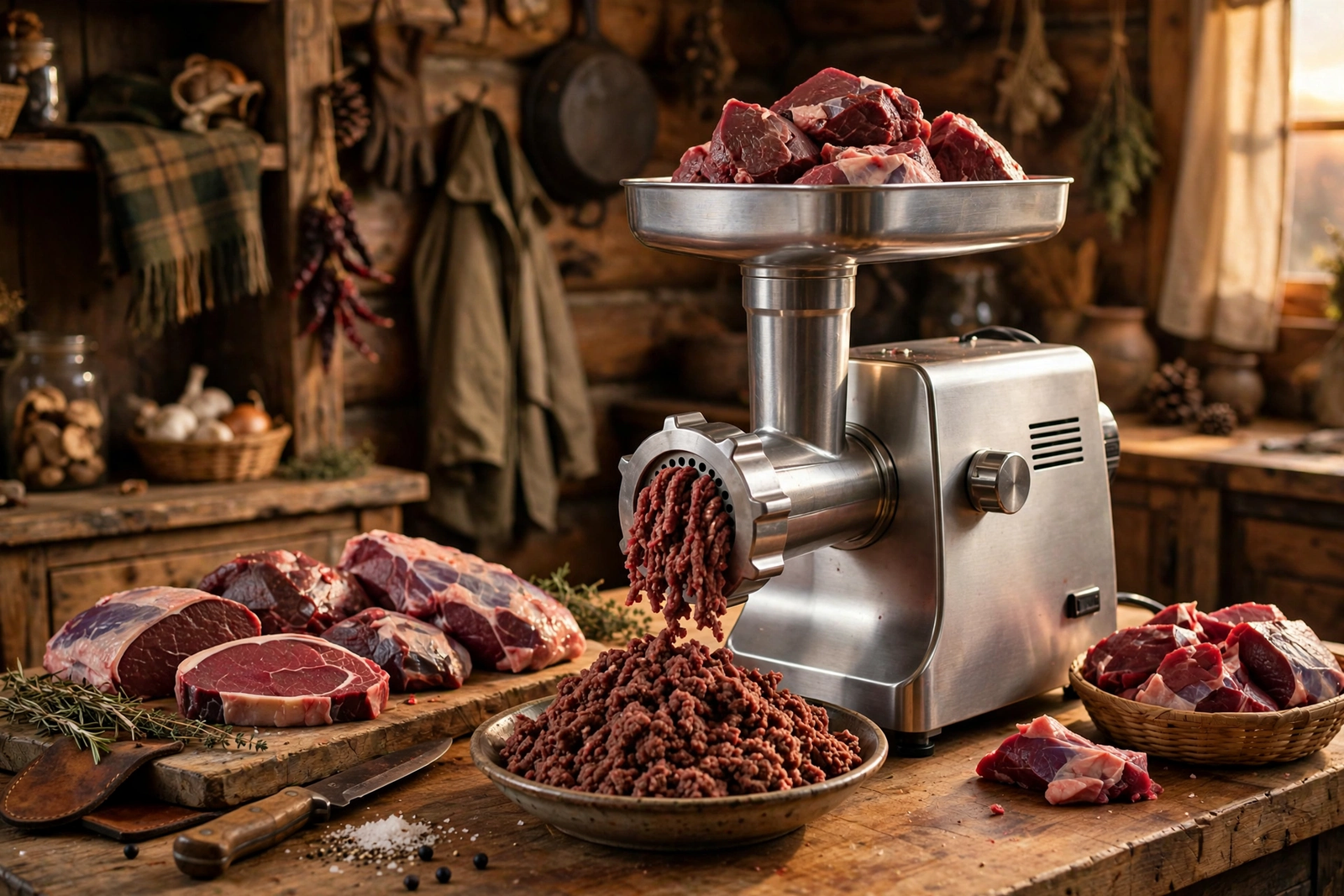
2 STX Turboforce II 4000
Best for Hunters and Long SessionsThe Turboforce II 4000 is the hunter’s STX. The headline feature is the patented Quad Air Induction Cooling, which keeps the motor cool during long grinding sessions. Heat is the enemy of clean grinding, as the cold-meat fix above explains, and a motor that stays cool through a whole deer is doing you a real favor. Owners who process multiple animals report it holds up where lesser grinders start fading halfway through.
The other standout is bone capability. STX rates this machine for soft bones: chicken, rabbit, quail, and squirrel. That makes it a legitimate pick for raw pet food makers who grind chicken frames. The hard limits still apply, and they matter: no hard bones like beef or pork leg, and no frozen meat or bones. Within those lines, it is one of the few home grinders that handles bone at all. Five plates give you more grind-size options than the 3000, and the foot pedal comes included rather than depending on the bundle.
Who it is for: hunters processing multiple deer, raw pet food makers grinding chicken frames, and anyone doing long sessions where motor heat becomes a factor. Who should skip: buyers who will never touch bones and do short batches. The 3000 covers that for usually less money.
| Motor | 2000W max |
| Head Size | #12 |
| Throughput | 220-260 lbs per hour |
| Bone Rating | Soft bones: chicken, rabbit, quail, squirrel (no hard bones, no frozen) |
| Warranty | 3 years |
- Quad Air Induction Cooling for long sessions
- Rated for soft bones, rare at this price
- 5 plates and 3 blades included
- Foot pedal included
- Not for hard bones or frozen meat
- Overkill for small, occasional batches

3 Sunmile SM-G73
Best Budget FixSometimes the jamming grinder is a cheap no-name unit with a weak motor and no reverse, and the honest fix is a cheap grinder that is actually decent. The Sunmile SM-G73 is that grinder. It is a budget workhorse with thousands of Amazon ratings, and the spec that matters most for this article is right on the switch: it has reverse. Fix 7 works here.
The #8 head is smaller than the STX #12s, which means it suits smaller batches, but the tradeoff works in your favor if you are grinding 5 to 10 pounds at a time. A smaller head wastes less meat per batch, since less stays behind in the auger. ETL certification is a nice reassurance at this price. Owners report it handles the standard burger and sausage routine well as long as you follow the cold-meat rules above, which you should be doing regardless of the grinder.
Who it is for: budget buyers whose current grinder is underpowered or lacks reverse, and who grind modest batches for burgers and sausage. Who should skip: high-volume hunters and anyone grinding whole deer regularly. Step up to one of the STX models for that workload.
| Motor | 1000W max (600W rated) |
| Head Size | #8 |
| Throughput | About 185 lbs per hour |
| Controls | ON/OFF/REVERSE switch |
| Warranty | 1 year |
- Real reverse switch for clearing jams
- ETL certified
- Thousands of owner ratings
- Sub-$100 price
- #8 head is slow for big batches
- Only 1-year warranty
Comparison Table
| Product | Key Specs | Standout |
| STX Turboforce 3000 | 3000W max, #12 head, 180-240 lbs/hr, 3-yr warranty | Feature-loaded favorite, foot pedal bundles |
| STX Turboforce II 4000 | 2000W max, #12 head, 220-260 lbs/hr, 3-yr warranty | Air-cooled motor, handles soft bones |
| Sunmile SM-G73 | 1000W max, #8 head, ~185 lbs/hr, 1-yr warranty | Budget pick with reverse, ETL certified |
Our Verdict
Try the seven fixes first, because most jams are a process problem and cold meat plus trimmed sinew solves them for free. But if you have done everything right and the jams keep coming, stop fighting the machine. The STX Turboforce 3000 is the upgrade we recommend for most people: the #12 head, the strong motor, and the full attachment kit handle everything from bulk burger to deer season without the stalling that drove you here. Hunters running long sessions or grinding soft bones for pet food should step up to the STX Turboforce II 4000 for its air-cooled motor and bone rating. And if your budget is tight and your batches are small, the Sunmile SM-G73 gets you reverse, ETL certification, and honest grinding power for well under a hundred dollars. Whichever you choose, keep the meat cold. That rule never changes.