
Finding the best telescope for beginners should be simple, and the internet makes it anything but. Hundreds of models, magnification numbers like lottery tickets, reviews that all sound the same. Beginners either buy the cheapest scope with the biggest number on the box (a mistake) or research for six months and buy nothing (also a mistake). This guide ends that paralysis.
The short version: a good beginner telescope has three qualities: enough aperture to show real detail, a mount steady enough to hold still, and a design simple enough to use on a random Tuesday. Everything else is decoration. The five scopes below clear that bar from about $110 to about $440, each suiting a different beginner.
You will also find what most buying guides skip: the three designs in plain language, the two rules that matter, and a red-flags list to spot junk in seconds. No unexplained jargon, no assumed knowledge, no pretending a $90 toy is a deal because it says 675x.
Nothing here comes from hands-on testing. Every claim is grounded in manufacturer spec sheets, reviewer findings, and owner reports.
- A good beginner scope needs three things: real aperture, a steady mount, and simplicity.
- Three beginner-friendly designs: refractor (simple, sealed), Dobsonian reflector (most aperture per dollar), smart telescope (app-controlled camera, no eyepiece).
- Two rules beat any spec sheet: aperture wins, and the mount matters as much as the optics.
- Red flags: absurd magnification claims, toy-store brands, and wobbly mounts. All three are easy to spot.
- The beginner sweet spot runs about $110 to $440; the best all-rounder sits in the mid-$300s to low-$400s.
- First targets: the Moon, Saturn, Jupiter, and bright clusters, not faint galaxies.
Best Telescope for Beginners: Top Picks at a Glance
Celestron StarSense Explorer DX 102AZ
Best overall beginner scope. 102mm with phone-guided finding that removes the learning curve.
Orion SkyQuest XT6
Most aperture per dollar. 150mm Dobsonian for maximum detail; learn collimation once.
Celestron AstroMaster 70AZ
Best budget pick. Classic 70mm long-tube refractor with honest optics for around $150.
ZWO Seestar S30
Best smart-telescope alternative. App-controlled camera that photographs the sky; no eyepiece.
Gskyer 70mm AZ70400
Cheapest entry. A real telescope for around $110, best for kids and the merely curious.
The 3 Beginner-Friendly Designs, Explained Simply
Every beginner telescope is one of three designs. Two minutes here prevents 90 percent of bad purchases.
Refractor: the simple sealed tube. A glass lens at the front gathers light; the sealed tube keeps dust out and there is nothing to adjust, ever. Lowest maintenance in existence: take it outside, let it cool, observe. Refractors excel at the Moon and planets with crisp, high-contrast images. The trade-off: lenses are expensive, so you get less aperture per dollar than with reflectors. The Celestron scopes in this guide are refractors, and their appeal is exactly this simplicity.
Reflector on a Dobsonian mount: the aperture bargain. A curved mirror at the back gathers light instead of a lens. Mirrors are cheaper to make large, so reflectors deliver the most aperture per dollar. They sit on a Dobsonian mount: a simple rocker box you nudge by hand, no motors, no alignment ritual. The trade-offs: the open tube needs 30 to 45 minutes to cool, and the mirrors need occasional collimation (realignment), a five-minute job once learned. The Orion XT6 below is the classic example: 150mm of light grasp for near the price of a 102mm refractor.
Smart telescope: the camera that points itself. The eyepiece is replaced by a camera, a computer, and an app. Tap a target on your phone: the scope finds it, tracks it, and builds a live stacked image on your screen. No star-hopping to learn, no eyepiece technique. Smart scopes punch above their small apertures under city skies, because stacking reveals what the eye cannot see. The trade-offs: they photograph rather than show, so planets look small; they need charging. The Seestar S30 below is the beginner entry point.
Which should you pick? Traditional eyepiece views with zero maintenance: refractor. Most detail per dollar with occasional tinkering: Dobsonian reflector. Photographs with zero learning curve: smart telescope.
The 2 Rules That Matter
Rule 1: Aperture wins (within reason). Aperture is the diameter of the light-gathering lens or mirror, and it sets the ceiling on everything: detail, brightness, usable magnification. A 150mm scope shows things a 70mm scope physically cannot, and no accessory changes that. The “within reason” part: aperture only wins if the mount is steady and the scope portable enough to carry outside. A 150mm scope you use beats a 200mm scope you do not.
Rule 2: The mount matters as much as the optics. This is the rule cheap scopes break. A shaky mount turns every focuser touch into wobbling blur, and at 100x even a breath of vibration ruins the view. Apply the tap test: tap the tube and count how long the image shakes. One to two seconds is fine; five seconds is a bad mount no optics can fix. Simple alt-azimuth mounts with slow-motion controls and Dobsonian rocker boxes pass at beginner prices. Spindly photo tripods usually do not.
Red Flags: What to Avoid
Absurd magnification claims. If the box screams “675x POWER!” on a 60mm scope, walk away. Useful magnification tops out around 2x the aperture in millimeters (about 140x for 70mm, 200x for 100mm). Reputable makers advertise aperture, not magnification.
Toy-store brands. If the brand is famous for toys rather than optics, the telescope is a toy: bragging about magnification, a useless 4mm eyepiece, a camera-grade tripod. Real beginner brands (Celestron, Orion, Sky-Watcher, established value names like Gskyer) advertise aperture and focal length up front.
Wobbly mounts. If the display model’s image shivers for seconds after a light touch, or the tripod legs flex visibly, the mount will fight you every clear night. This flaw kills more beginner interest than any optical shortcoming.
Detailed Reviews
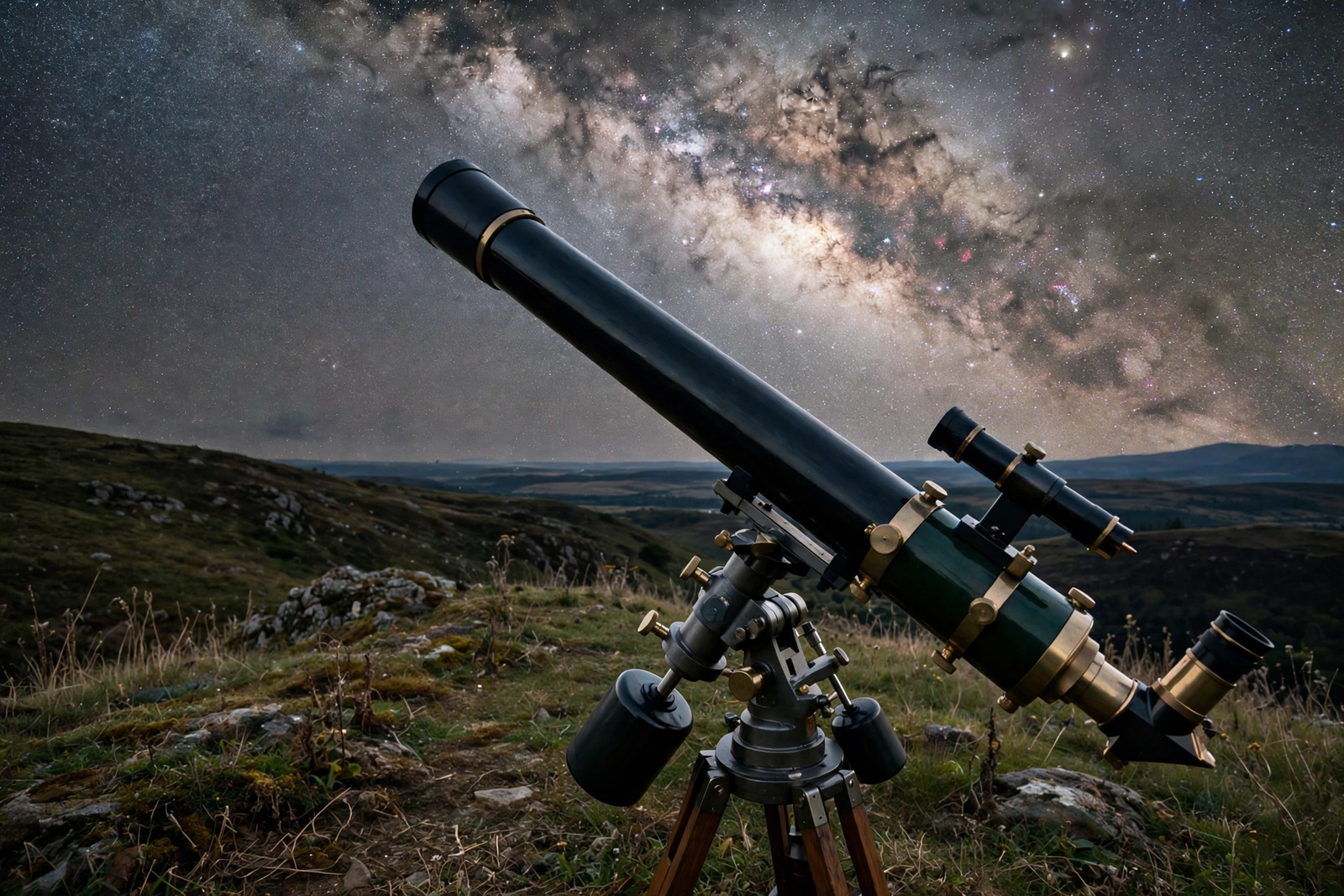
1
Celestron StarSense Explorer DX 102AZ
The DX 102AZ is the best-balanced first telescope here because it removes the two things that defeat beginners: too little aperture, and not finding anything. The 102mm f/6.5 refractor gathers genuinely useful light, reaching 26x with the 25mm eyepiece and 66x with the 10mm. Reviewers note Saturn’s rings are clear at 66x with the included 10mm: honest optics. The manual alt-azimuth mount includes slow-motion controls, and a 2-year warranty backs the package.
The StarSense system is what makes this a beginner scope rather than just a good scope. Dock your phone, open the app: it uses the phone’s camera to recognize star patterns, then guides you to any target with on-screen arrows. Owners report going from box to Saturn in under half an hour on night one. Beginners who see something amazing immediately stay in the hobby; beginners who sweep empty sky for an hour quit.
Honest notes: the mount is manual, so no auto-tracking; you nudge the slow-motion cables every minute or so at high power, which becomes second nature. The price tier runs roughly $350 to $440, real money for the aperture-plus-guidance combination that defines the beginner sweet spot.
Who it is for: Beginners who want the highest chance of a great first night and a scope that stays useful for years. Who should skip it: Tight budgets (see the $110 to $150 picks below) and observers who want maximum aperture per dollar (see the XT6).
| Aperture | 102mm refractor |
| Focal length / ratio | 660mm, f/6.5 |
| Included eyepieces | 25mm (26x), 10mm (66x) |
| Finder | StarPointer red-dot + StarSense phone dock and app |
| Mount | Manual alt-azimuth with slow-motion controls |
| Warranty | 2-year |
| Price tier | Roughly $350 to $440 |
- 102mm aperture with honest optics
- StarSense guidance removes the finding learning curve
- Slow-motion controls for easy tracking
- 2-year warranty
- Manual mount means no auto-tracking
- Top of the beginner budget
- Phone needed for guidance
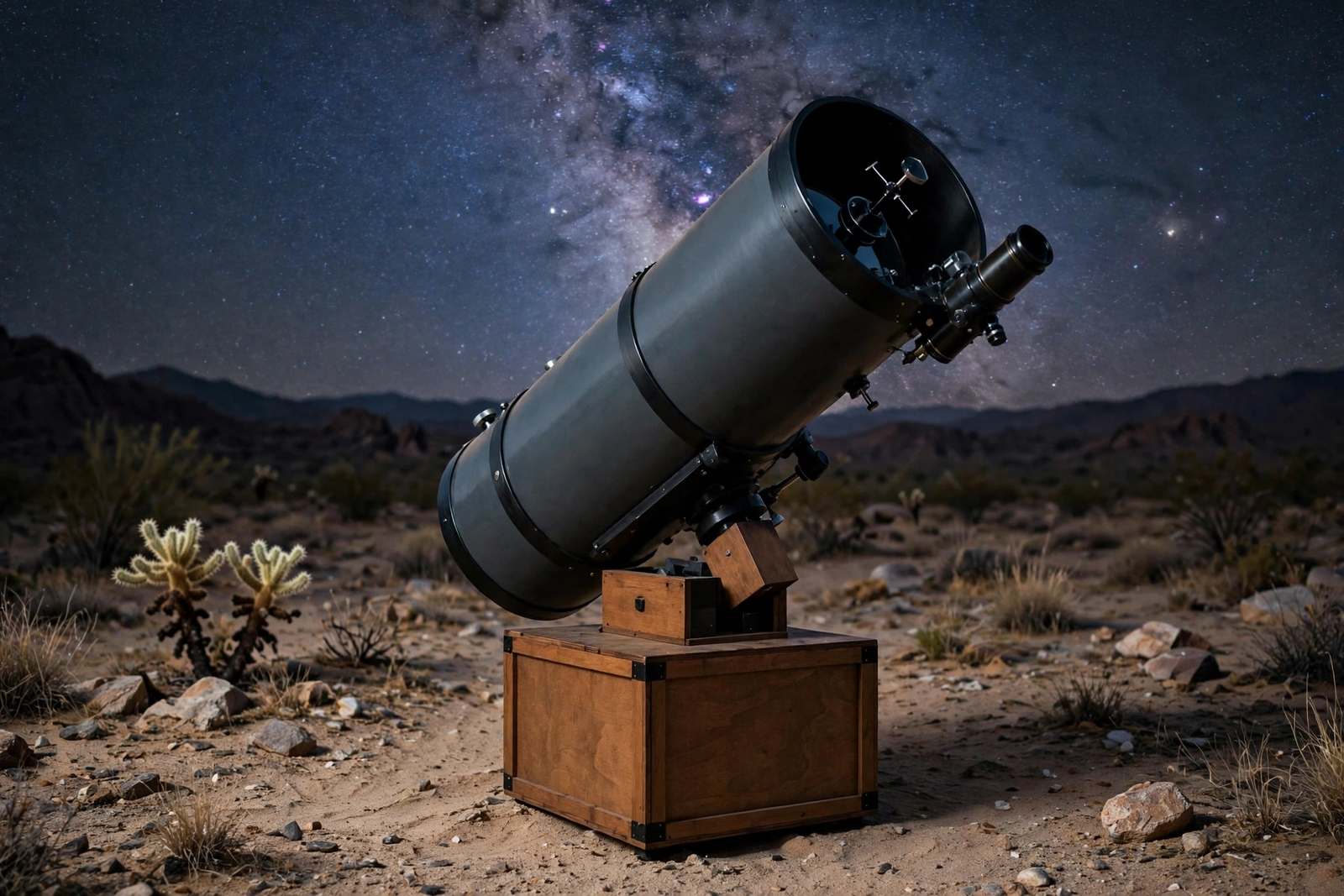
2
Orion SkyQuest XT6
For maximum value with one maintenance skill to learn, the XT6 gives beginners more telescope than anything else near its price. The 150mm f/8 mirror collects over three times the light of a 70mm refractor, yielding 48x with the included 25mm Plossl and room toward 300x on superb nights. At 100x to 200x that means Jupiter’s bands with texture, Saturn’s rings with crisp edges, and the Orion Nebula showing real structure.
The Dobsonian mount is beginner-friendly simplicity: a rocker box you nudge by hand. The two beginner costs are size and collimation. The tube (about 13 pounds) and base (about 24 pounds) travel as two pieces, so you need storage and a short carry. Collimation (mirror alignment) sounds scarier than it is: Orion includes a cap, and owners report it takes minutes once learned, needed only occasionally. The price tier runs roughly $270 to $450 depending on the retailer, often near the $300 line.
Who it is for: Beginners who want the most detail per dollar and enjoy learning how their equipment works. Who should skip it: Apartment dwellers with stairs, anyone needing one-trip portability, and buyers who want zero maintenance.
| Aperture | 150mm Newtonian reflector |
| Focal length / ratio | 1200mm, f/8 |
| Included eyepiece | 25mm Plossl (48x) |
| Finder | EZ Finder II |
| Mount | Dobsonian rocker-box base |
| Extras | Collimation cap included |
| Weight | Tube about 13 lbs, base about 24 lbs |
| Price tier | Roughly $270 to $450 depending on retailer, often near $300 |
- Most aperture and detail per dollar
- Dead-simple Dobsonian mount
- Huge magnification headroom
- Collimation cap included
- Two-piece carry, bulky to store
- Needs occasional collimation
- Single eyepiece means budgeting for a high-power one
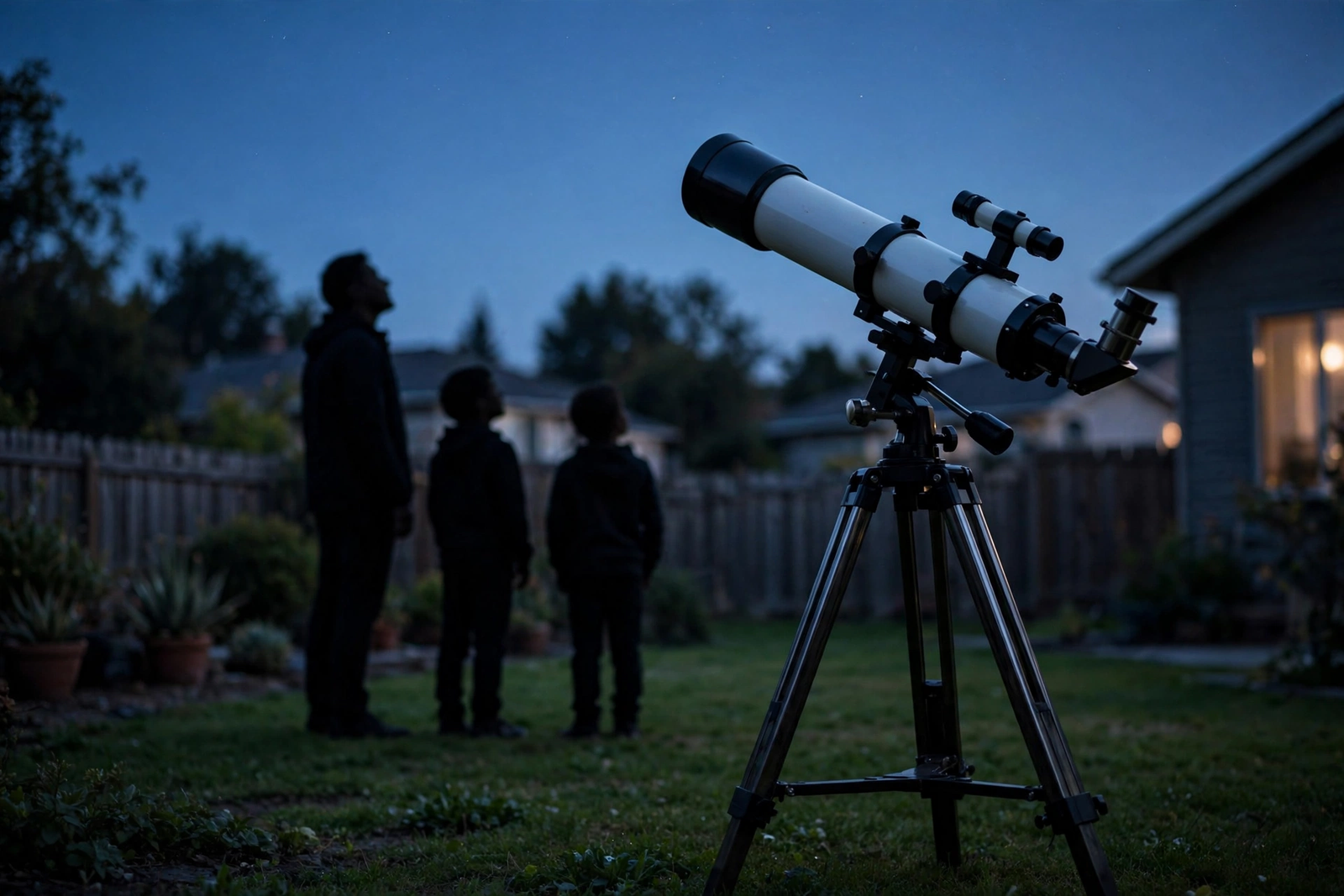
3
Celestron AstroMaster 70AZ
The AstroMaster 70AZ has been the default “I have $150” answer for years, thanks to optical honesty. The 70mm f/13 refractor stretches 900mm into a long, slow tube, reaching 45x with the 20mm eyepiece and 90x with the 10mm. That slow ratio flatters the Moon and planets: minimal false color, steady high-power images, Saturn’s rings clean at 90x.
Its virtues are simplicity and forgiveness: a basic manual mount, a red-dot finder, no batteries or apps. The trade-offs: 70mm is the floor for satisfying planet detail, the mount wants a gentle focusing touch at 90x, and the long tube needs room to swing. A 2-year warranty covers the optics; the price tier sits commonly around $150.
Who it is for: Budget-conscious beginners who want a real, no-fuss first telescope. Who should skip it: Anyone who can stretch to 102mm or 150mm, and deep-sky imagers.
| Aperture | 70mm refractor |
| Focal length / ratio | 900mm, f/13 |
| Included eyepieces | 20mm (45x), 10mm (90x) |
| Finder | StarPointer red-dot |
| Mount | Manual alt-azimuth |
| Warranty | 2-year |
| Price tier | Budget tier, commonly around $150 |
- Honest optics, great on Moon and planets for the price
- Simple with no batteries or apps
- Slow f/13 ratio gives clean high-power views
- 2-year warranty
- 70mm limits how far the hobby goes
- Mount needs gentle handling at high power
- Long tube needs swing room
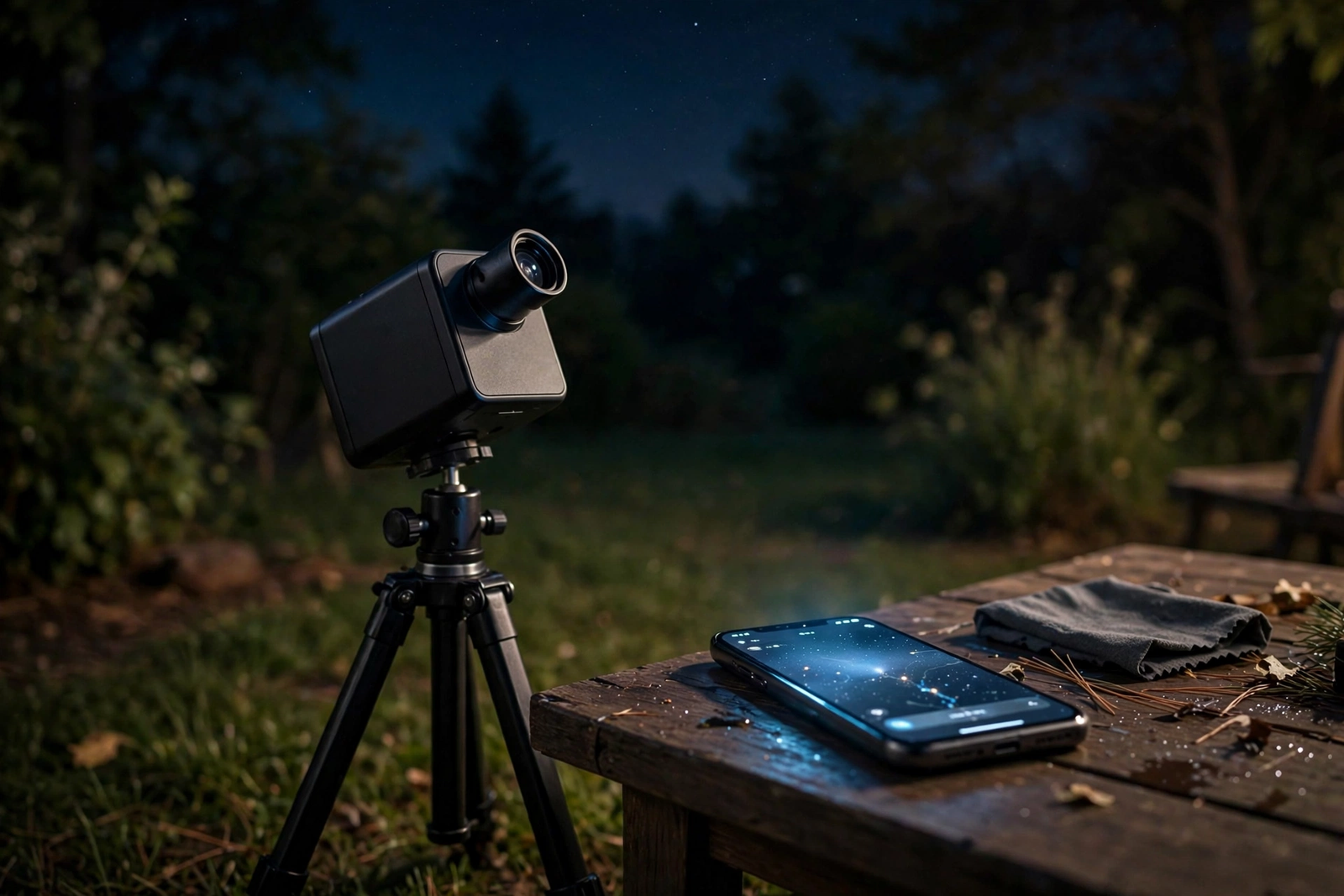
4
ZWO Seestar S30
Not every beginner wants an eyepiece. The Seestar S30 is for those who want the sky on a phone screen: a 30mm smart telescope that finds targets itself, tracks them, and stacks live images in the app. Set the tiny unit on its tripod, tap the Orion Nebula, and watch the image build from city glow your eye would never penetrate. It includes a dual-band filter and a solar filter for safe daytime Sun viewing; the price tier runs roughly $300 to $400, often $349 on sale.
The appeal is the vanished learning curve: no star-hopping, no finder alignment, no eyepiece technique, plus real photography. The honest framing: 30mm is not built for planets, so Saturn and Jupiter appear small in its images. Buy the S30 for nebulae, clusters, and galaxies from light-polluted skies. It needs charging like any gadget; operation is nearly silent.
Who it is for: Tech-comfortable beginners who want photos and zero learning curve, especially under city skies. Who should skip it: Anyone whose dream is seeing Saturn’s rings with their own eye (choose a refractor or the XT6).
| Aperture | 30mm smart telescope |
| Control | Fully app-controlled GoTo via phone |
| Imaging | Live stacking, dual-band filter, solar filter included |
| Viewing | Phone screen (no eyepiece) |
| Noise | Soft motor whirs only |
| Price tier | Roughly $300 to $400, often $349 on sale |
- Zero learning curve
- Stacks through light pollution
- Photographs deep-sky objects
- Tiny and portable
- Not a planet instrument
- No traditional eyepiece viewing
- Needs regular charging

5
Gskyer 70mm AZ70400
The Gskyer AZ70400 answers “what is the least I can spend on a real telescope” with a price tier around $110. It is a genuine 70mm refractor, not a toy: a short 400mm tube (f/5.7) at roughly 5.7 pounds, with 25mm (16x) and 10mm (40x) eyepieces, a 3x Barlow, a 5×24 finder, a phone adapter with wireless remote, and a carry bag. For a kid’s birthday or a “let’s see if this hobby sticks” experiment, the value is obvious.
Beginner honesty: the fast f/5.7 ratio is a wide-field design, so keep it at 40x to 60x and ignore the higher maximum on the box. Owners report the finder needs patient alignment, so do that on a distant object in daylight before night one. At low power it frames the Moon, the Pleiades, and the Beehive beautifully, and shows Jupiter’s moons and Saturn’s ring shape. A real first telescope for barely more than a nice dinner.
Who it is for: Kids, gifts, and the casually curious testing the waters. Who should skip it: Anyone already committed to the hobby; the $150 to $440 picks go much further.
| Aperture | 70mm refractor |
| Focal length / ratio | 400mm, f/5.7 |
| Included eyepieces | 25mm (16x), 10mm (40x), 3x Barlow |
| Finder | 5×24 |
| Extras | Phone adapter, wireless remote, carry bag |
| Mount | Manual alt-azimuth |
| Weight | About 5.7 lbs |
| Price tier | Around $110 tier |
- Cheapest real telescope here
- Light with carry bag
- Generous accessory kit
- Great for kids and gifts
- Soft past 40x to 60x
- Finder alignment takes patience
- Outgrown quickly by committed beginners
Side-by-Side Comparison
| Telescope | Design | Aperture | Beginner superpower | Price tier |
|---|---|---|---|---|
| Celestron StarSense Explorer DX 102AZ | Refractor | 102mm | Phone-guided finding | $350 to $440 |
| Orion SkyQuest XT6 | Dobsonian reflector | 150mm | Most detail per dollar | $270 to $450, often near $300 |
| Celestron AstroMaster 70AZ | Refractor | 70mm | Simple, honest budget optics | Around $150 |
| ZWO Seestar S30 | Smart telescope | 30mm | Zero learning curve, photos | $300 to $400, often $349 on sale |
| Gskyer 70mm AZ70400 | Refractor | 70mm | Cheapest real scope | Around $110 |
Our Verdict
Choose by budget and temperament, in that order. Around $110 for a kid or a casual curiosity: the Gskyer 70mm AZ70400, a real telescope that fits the experiment. Around $150 for the classic no-fuss start: the Celestron AstroMaster 70AZ, honest optics on the Moon and planets. Near $300 with a DIY streak and storage room: the Orion SkyQuest XT6, the most detail per dollar in the beginner world. If photographs beat eyepieces, the ZWO Seestar S30 at around $349 on sale removes every barrier. Best overall first telescope: the Celestron StarSense Explorer DX 102AZ, 102mm of real aperture with phone guidance that puts Saturn in the eyepiece in minutes. Whatever you choose, start with the Moon, cool the scope 30 minutes, and ignore boxes that brag about magnification.