
Affiliate Disclosure: As an Amazon Associate, we earn from qualifying purchases at no extra cost to you.
The best smart thermostat for most homes in 2026 is the ecobee Smart Thermostat Premium: a room sensor in the box, support for Alexa, Siri and Google Assistant, and a power extender kit for homes without a C-wire. But the honest answer depends on your wiring before it depends on features. More smart thermostats get returned over a missing C-wire or an incompatible furnace than over any app or screen, so every pick below states its wiring needs up front. Before ordering, pull your thermostat off the wall (power off first) and check whether a wire lands on the C terminal.
Nothing here comes from hands-on testing. Every claim is grounded in manufacturer spec sheets, published reviewer findings, and owner reports.
Key Takeaways:
- No C-wire? Your realistic options are the Google Nest Thermostat (runs without one in most homes), the ecobee Premium (extender kit included), or any other pick here plus an adapter kit.
- ecobee Premium is the best overall buy: room sensor included, air quality monitoring, 3-year warranty, about $250.
- Nest Learning Thermostat (4th gen) is the best learner, but its price and its power behavior without a C-wire deserve a hard look first.
- Amazon Smart Thermostat is the cheapest route in at about $80, and it strictly requires a C-wire. No exceptions.
- Heat pump and multi-stage owners should start with the Sensi Touch 2 and Honeywell T9, the picks built around complicated equipment.
What Should You Check Before Buying a Smart Thermostat?
Three things, in order. First, the C-wire: most smart thermostats need constant 24V power from a common wire, and older two-wire heat-only homes often lack one. Second, system type: every pick here works with standard 24V forced air, heat pump, and radiant boiler systems; none works with line-voltage electric baseboard heat (120-240V) or millivolt systems. Third, stages: match the thermostat’s stage support to your equipment label.
Top Picks at a Glance
Best Overall
ecobee Smart Thermostat Premium
Room sensor in the box, air quality monitoring, and a power kit for no-C-wire homes.
Best Learning Features
Google Nest Learning Thermostat (4th gen)
Still the thermostat that builds its own schedule, now with a bigger screen and a sensor included.
Best for Alexa Homes
Amazon Smart Thermostat
About $80, built on Honeywell Home technology, made to live inside the Alexa app.
Best Budget / Best No-C-Wire Option
Google Nest Thermostat
The lowest-priced Nest, designed to run without a C-wire in most homes.
Best for Multi-Room Coverage
Honeywell Home T9
One smart room sensor in the box and support for up to 20.
Best for Multi-Stage and Heat Pump Systems
Emerson Sensi Touch 2
The pick most roundups skip: deep equipment compatibility and a strict privacy stance.
Detailed Reviews
1. ecobee Smart Thermostat Premium
Best for: most homes that want room-by-room comfort without buying extras
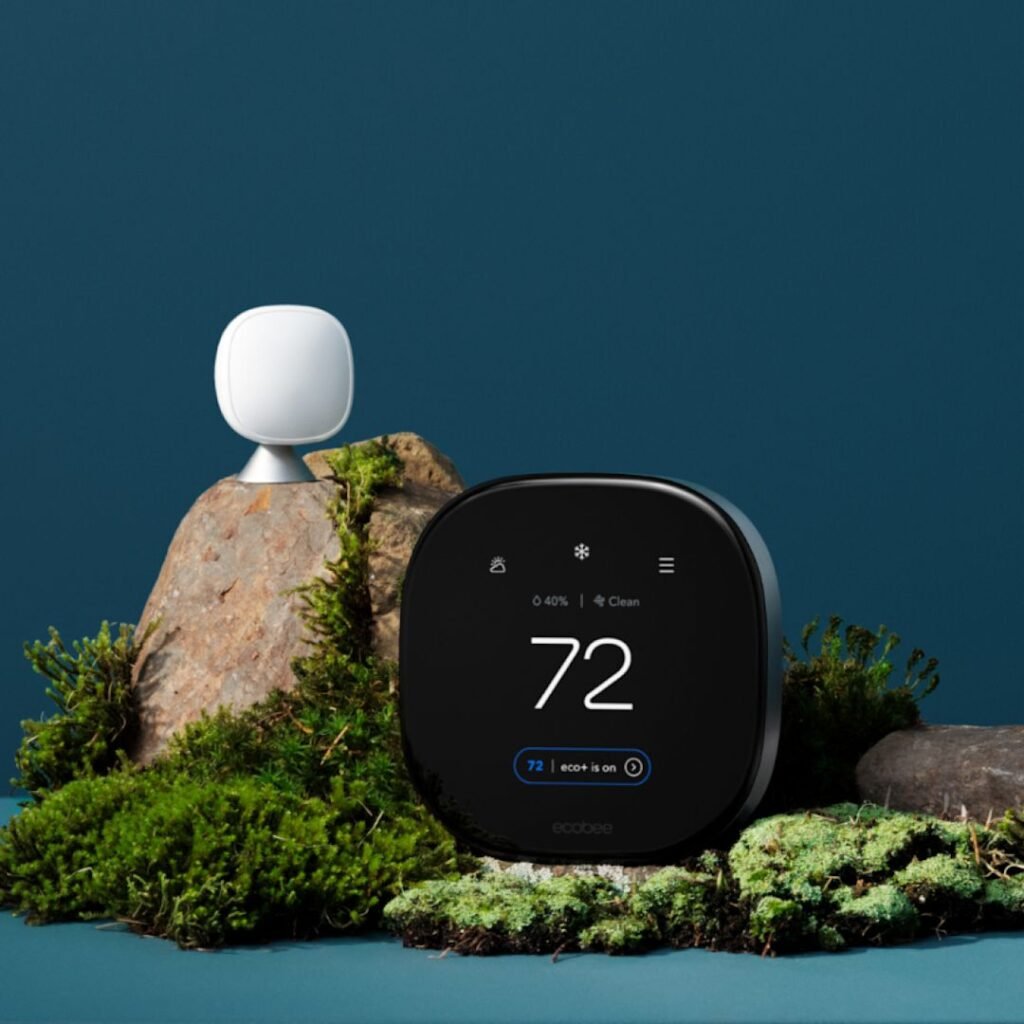
The Premium earns the top spot by solving the two problems that sink other smart thermostats. Uneven rooms: the included SmartSensor lets the system heat or cool to the room you are actually in, and ecobee says this cuts room-to-room variation by up to 50 percent. Missing C-wire: the box includes a Power Extender Kit, as long as you are comfortable opening the furnace panel and moving a few labeled wires. You also get an air quality monitor, radar occupancy sensing, and voice control via built-in Alexa or Siri (Siri needs an Apple home hub).
Who it is for: homes with hot and cold spots, Apple or Alexa households. Who should skip: rural heat pump owners (see cons) and anyone unwilling to open a furnace panel.
| Key fact | Detail |
|---|---|
| C-wire | Required, or use the included Power Extender Kit |
| System support | Most 24V systems; conventional up to 2H/2C, heat pump up to 4H/2C |
| Room sensors | 1 SmartSensor included; supports more |
| Voice | Alexa and Siri built in; works with Google Assistant, SmartThings |
| Extras | Air quality monitor, radar occupancy, smoke alerts with subscription |
| Price tier | Premium tier (about $250) |
Pros
- Room sensor included in the box
- Extender kit solves most no-C-wire installs
- Widest voice assistant support here
Cons
- Some owners report the built-in sensor reading several degrees off a standalone thermometer; in one documented Home Depot review, ecobee support acknowledged a sensor bug and suggested relying on the SmartSensor instead
- Smoke alarm alerts and doorbell live view sit behind the ecobee Smart Security subscription
- Rural heat pump owners report the auxiliary heat logic uses internet weather from a distant station, which can run expensive backup heat at the wrong times
Check the Current Price on Amazon
2. Google Nest Learning Thermostat (4th gen)
Best for: people who will never program a schedule and know it
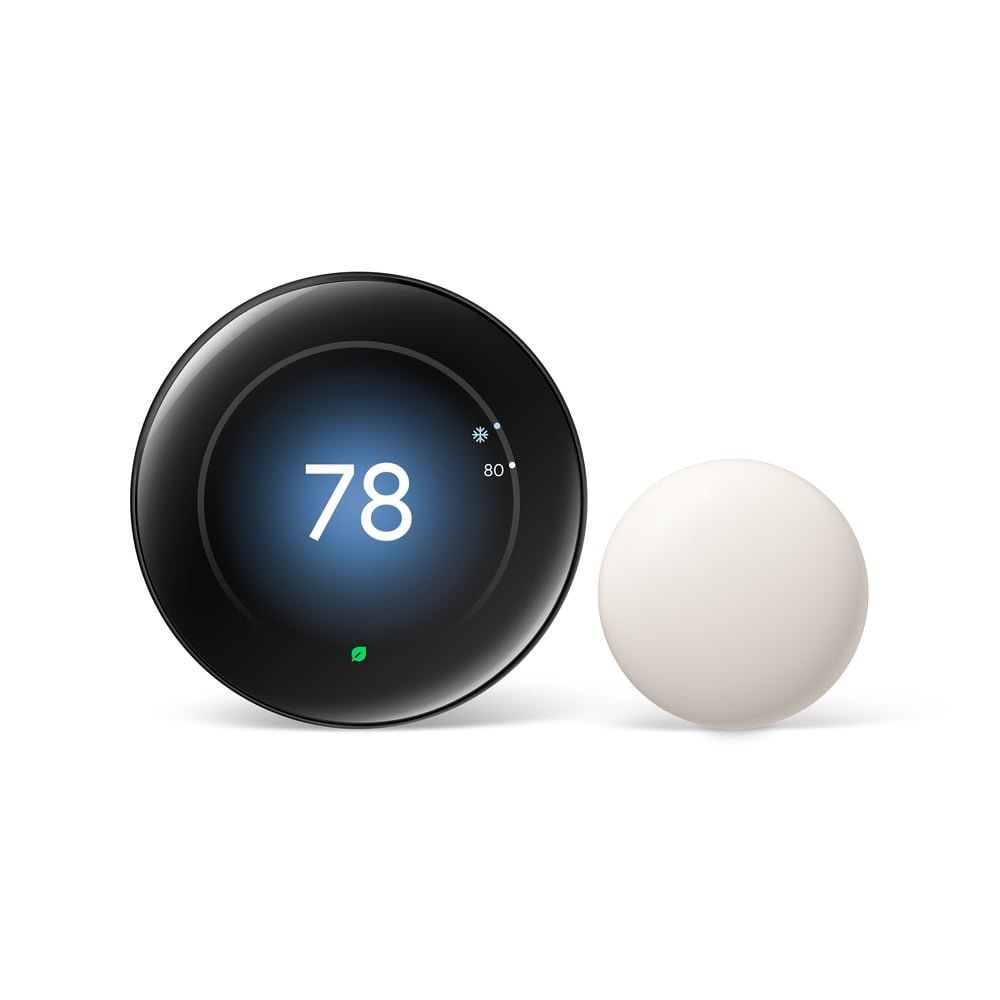
The 4th gen Nest is still the only thermostat that genuinely builds its own schedule: adjust it by hand for the first week or so and it converts your habits into a program, then keeps refining it. The display is 60 percent larger than the 3rd gen, it speaks Matter, and Google now bundles a temperature sensor for the room that never matches the hallway. Google quotes average savings of 10 to 12 percent on heating and 15 percent on cooling.
Who it is for: set-and-forget households and Google Home users. Who should skip: anyone without a C-wire who cannot add one (read the con).
| Key fact | Detail |
|---|---|
| C-wire | Not required in most homes; strongly recommended (see cons) |
| System support | Most 24V systems including heat pumps and radiant |
| Room sensors | 1 Nest Temperature Sensor (2nd gen) included |
| Voice | Google Assistant and Alexa; Matter over Wi-Fi |
| Learning | Yes, Smart Schedule learns from manual adjustments |
| Price tier | Premium tier (about $280, frequently near $220 on sale) |
Pros
- True learning, not just geofencing
- Sensor now included in the box
- Best-looking hardware in the category
Cons
- Without a C-wire, the Nest powers itself by drawing small pulses of current through your heating and cooling circuits. Owner reports and HVAC technicians link this to short cycling and systems switching off, and Google has acknowledged that some homes cleared for no-C-wire installs do in fact need one
- Highest price on this list when not on sale
- Setup lives entirely in the Google Home app; no account-free option
Check the Current Price on Amazon
3. Amazon Smart Thermostat
Best for: Alexa households that want smart control for the price of a dumb programmable
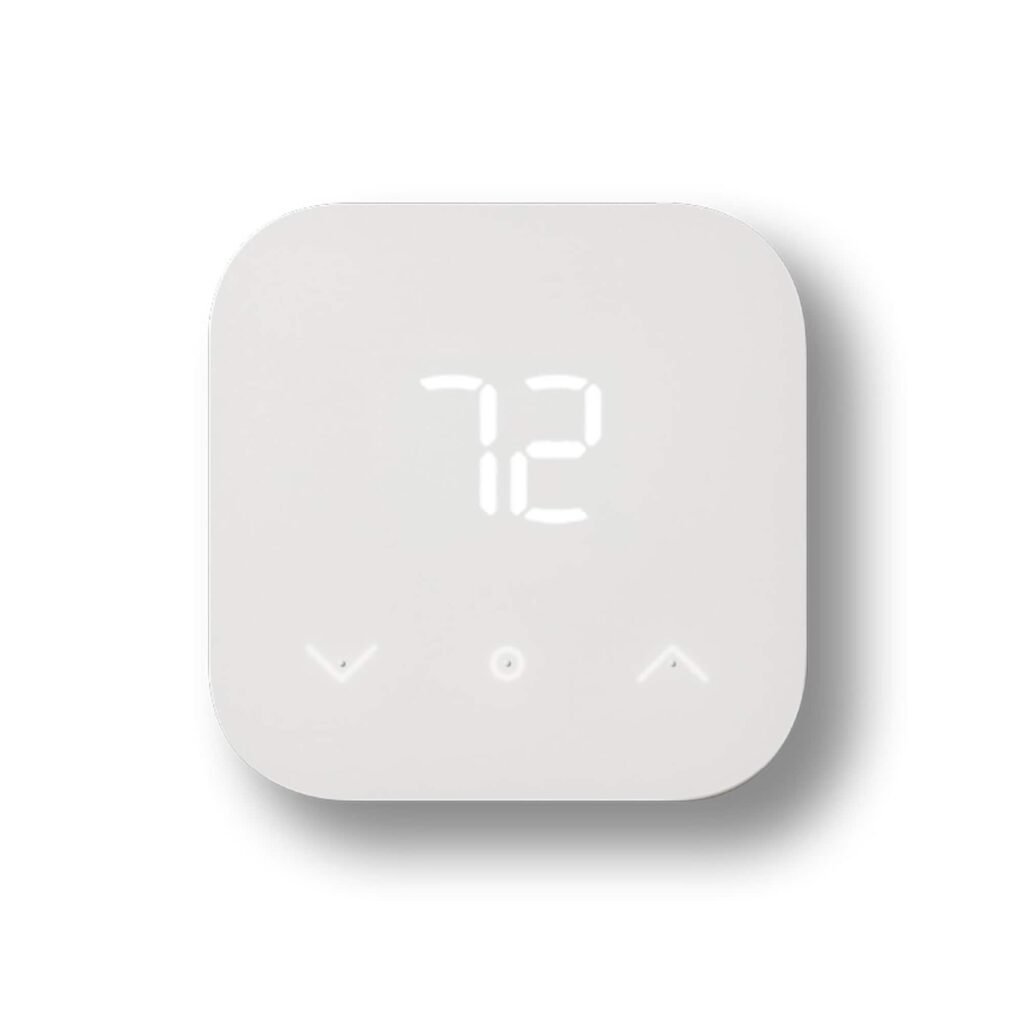
Amazon’s thermostat is the budget door into this category: about $80 at list, built on Honeywell Home thermostat technology, ENERGY STAR certified, and controlled through the Alexa app or any Echo. Alexa can hold home, away, and sleep temperatures using presence cues from your other Alexa devices. What you give up is learning, a bundled room sensor, and ecosystem flexibility.
Who it is for: Alexa homes with a C-wire in the wall. Who should skip: anyone without a C-wire who will not install an adapter kit, and Google or Apple smart homes.
| Key fact | Detail |
|---|---|
| C-wire | Required. Adapter kit sold separately, nothing in the box |
| System support | Most 24V systems: conventional, heat pump, radiant boiler |
| Room sensors | None included; can read temperature from select Echo devices |
| Voice | Alexa only |
| Learning | No; schedules and Alexa automatic controls instead |
| Price tier | Budget tier (about $80, seen near $57 on sale) |
Pros
- Cheapest credible smart thermostat from a major brand
- Honeywell Home hardware underneath
- Guided install inside the Alexa app
- Utility rebates can drop the real price further
Cons
- The C-wire requirement is absolute, and Best Buy owner reviews show a steady stream of buyers who discovered it only after opening the box
- Alexa-only: no Google Assistant, no HomeKit, no app of its own
- No dedicated room sensor for problem rooms
Check the Current Price on Amazon
4. Google Nest Thermostat
Best for: budget buyers and older homes without a C-wire
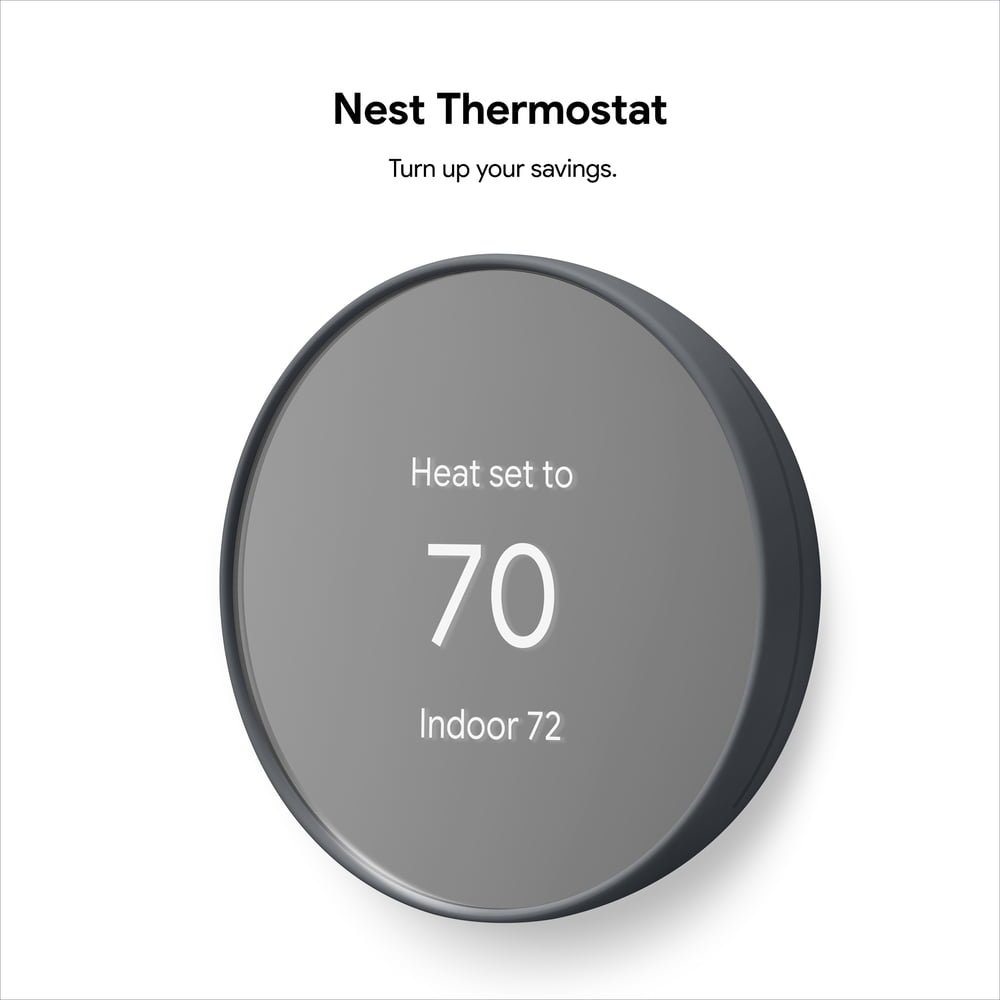
Do not let the shared name fool you: the plain Nest Thermostat is a different, cheaper product than the Learning model above, and it does not learn. What it offers is app control, a clean mirrored display worked by swiping and tapping its edges, and the most forgiving power setup in the category. Google designed it to work without a C-wire in most homes, the default for older houses where pulling new wire is not realistic. You program it with Quick Schedule in the Google Home app.
Who it is for: first-time buyers and older homes. Who should skip: heating-only, cooling-only, zoned, and some heat pump systems, which can still need a C-wire or the Nest Power Connector.
| Key fact | Detail |
|---|---|
| C-wire | Designed to work without one in most homes; some system types still need a C-wire or Nest Power Connector |
| System support | Most 24V systems; check zoned and heat pump setups carefully |
| Room sensors | Works with Nest Temperature Sensor (sold separately) |
| Voice | Google Assistant and Alexa; Matter certified |
| Learning | No; Quick Schedule plus Eco temperatures |
| Price tier | Budget tier (about $130, often under $100 on sale) |
Pros
- Runs without a C-wire in most homes
- Lowest entry price into the Google ecosystem
- Simple interface for non-technical households
Cons
- The name oversells it: there is no learning, which disappoints buyers expecting the flagship behavior
- Owner reviews regularly flag the mirrored display washing out in bright rooms
Check the Current Price on Amazon
5. Honeywell Home T9
Best for: multi-room homes that want sensor coverage from a traditional HVAC brand
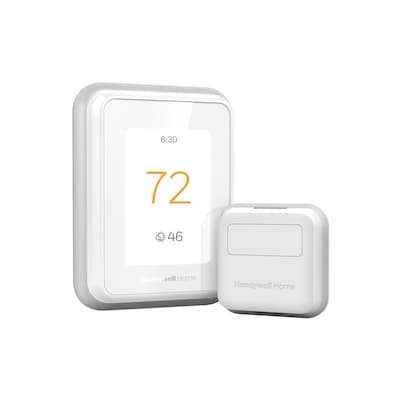
The T9 is the pick for houses where one hallway reading will never describe the whole building. It ships with one Smart Room Sensor with a range of up to 200 feet, supports up to 20 sensors, and can prioritize the rooms you choose at the times you choose, so the bedroom wins at night and the office wins during work hours. Underneath the touchscreen it is a Resideo thermostat with deep conventional and heat pump support.
Who it is for: larger and multi-story homes, and buyers who prefer HVAC-brand hardware. Who should skip: anyone without a C-wire, which is strictly required, and HomeKit households.
| Key fact | Detail |
|---|---|
| C-wire | Required; Resideo offers adapter options, check current box contents |
| System support | Conventional up to 2H/2C; heat pump up to 3H/2C with auxiliary heat |
| Room sensors | 1 Smart Room Sensor included; supports up to 20 |
| Voice | Alexa and Google Assistant; SmartThings and IFTTT |
| Learning | No; schedules plus geofencing |
| Price tier | Mid tier (about $210 with one sensor) |
Pros
- Best sensor scaling here, up to 20 rooms
- Sensor range up to 200 feet suits bigger homes
- Strong multi-stage and heat pump support from Resideo
- Room prioritization by schedule, not just averaging
Cons
- C-wire is required, per Resideo’s own installation guide, and the T9 does not work with electric baseboard or millivolt systems
- No HomeKit support, unlike the ecobee and Sensi picks
- Owners report sensor prioritization can overshoot: the priority room hits its target while unmonitored rooms drift
Check the Current Price on Amazon
6. Emerson Sensi Touch 2
Best for: complicated HVAC systems and buyers who care about data privacy
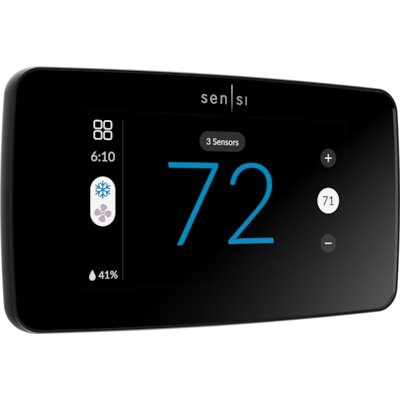
Most roundups quietly skip Sensi, a mistake if your equipment is more complicated than a basic furnace and air conditioner. The Touch 2 comes from Copeland, the company behind a large share of the compressors and controls already inside North American HVAC systems, and it shows: wide multi-stage and heat pump support, dual-band Wi-Fi, and room for up to 15 Sensi room sensors. Sensi also states plainly that it does not sell your personal data, a policy none of the platform-owned picks here match.
Who it is for: multi-stage and heat pump owners and privacy-first buyers. Who should skip: anyone without a C-wire (required, no battery fallback) and HomeKit households, since the Touch 2 dropped the Apple support the original Sensi Touch had.
| Key fact | Detail |
|---|---|
| C-wire | Required for all system types |
| System support | Most 24V systems including multi-stage conventional and heat pump setups |
| Room sensors | Supports up to 15 Sensi Room Sensors (sold separately) |
| Voice | Alexa, Google Assistant, SmartThings |
| Learning | No; scheduling, geofencing, usage reports |
| Price tier | Mid tier (about $210) |
Pros
- Deepest HVAC-first compatibility on this list
- Clear no-data-selling privacy policy
- Dual-band Wi-Fi where most rivals are 2.4 GHz only or unspecified
- 3-year warranty and a top-rated install app
Cons
- C-wire required with no included adapter or battery workaround, per the manufacturer listing
- Room sensors are sold separately, and balancing a whole house adds up fast
- No learning features; scheduling discipline is on you
Check the Current Price on Amazon
Side-by-Side Comparison
| Thermostat | Best for | C-wire | Sensors | Voice platforms | Price tier |
|---|---|---|---|---|---|
| ecobee Smart Thermostat Premium | Most homes | Required, extender kit included | 1 included, more supported | Alexa, Siri, Google | About $250 |
| Nest Learning Thermostat (4th gen) | Learning | Not required in most homes | 1 included | Google, Alexa, Matter | About $280 |
| Amazon Smart Thermostat | Alexa homes | Required, no adapter in box | None included | Alexa only | About $80 |
| Google Nest Thermostat | Budget, no C-wire | Not required in most homes | Sold separately | Google, Alexa, Matter | About $130 |
| Honeywell Home T9 | Multi-room coverage | Required | 1 included, up to 20 | Alexa, Google | About $210 |
| Sensi Touch 2 | Multi-stage and heat pumps | Required | Sold separately, up to 15 | Alexa, Google, SmartThings | About $210 |
Our Verdict
Start with the wire check, then pick. With a C-wire and one or two problem rooms, the ecobee Premium is the most complete package here. If you want the thermostat to program itself and your wiring is solid, the Nest Learning Thermostat (4th gen) earns its premium. Alexa homes on a budget should take the Amazon Smart Thermostat and put the savings toward an adapter kit if the wall needs one. No C-wire and no appetite for adapter projects points to the Google Nest Thermostat, exception list read twice. Big houses belong with the T9; complicated equipment belongs with the Sensi Touch 2.
Frequently Asked Questions
Do I need a C-wire for a smart thermostat?
Usually, yes. A C-wire delivers constant 24V power, so the thermostat never has to borrow current from your heating and cooling circuits. The ecobee Premium, Amazon Smart Thermostat, Honeywell T9, and Sensi Touch 2 all require one, although the ecobee includes a Power Extender Kit that covers most no-C-wire homes. The two Google thermostats run without one in most homes, but heating-only, cooling-only, zoned, and some heat pump systems can still need one.
How do I check if my system is compatible?
Turn off power at the breaker, pull the thermostat face off its wall plate, and photograph the wires and terminal labels. Run that photo through the manufacturer’s compatibility checker (ecobee, Google, Resideo, and Sensi all publish one) before buying. If you see thick wires or labels like 120V, stop: you have a line-voltage system, and nothing in this guide will work.
Will a smart thermostat work with a heat pump?
Yes, all six picks support heat pumps, but the details matter. Confirm the thermostat supports your heat pump’s stage count and auxiliary heat, and check how it decides when to run backup heat strips. The Sensi Touch 2 and Honeywell T9 are the safest starting points for multi-stage systems.
How much can a smart thermostat actually save?
ENERGY STAR points to roughly 8 percent savings on heating and cooling from a certified smart thermostat whose scheduling and setback features stay switched on. Manufacturers quote higher figures (ecobee up to 26 percent, Sensi about 23 percent, Google 10 to 15 percent) from their own studies, usually against a constant 72 degree hold. If you already program setbacks manually, expect less.
Which smart thermostat is best for a home without a C-wire?
The Google Nest Thermostat is the simplest answer, designed to run without a C-wire in most homes. The ecobee Premium is the better featured answer, because its included Power Extender Kit covers most no-C-wire systems with a one-time wiring step at the furnace. Either way, expect heating-only and zoned systems to be the common exceptions.
Keep Reading
- Best Smart Home Devices for Beginners (2026)
- How to Lower Your Heating Bill This Winter (2026)
- Smart Thermostat vs Programmable Thermostat: What Is the Difference? (2026)
Sources
- Amazon product listings for all six thermostats, including manufacturer compatibility and C-wire statements
- pricehistory.app record for the ecobee Smart Thermostat Premium (ASIN and price history)
- CamelCamelCamel records for the Google Nest Thermostat (B08HRPDBFF) and Honeywell Home T9 with sensor (B07N849J21)
- Best Buy product page and owner reviews for the Amazon Smart Thermostat (model B08J4C8871), including C-wire reports
- Desertcart specifications for the Sensi Touch 2 (ST76), ASIN B0BKH83KF9
- Home Depot owner reviews for the ecobee Smart Thermostat Premium, including temperature accuracy reports and ecobee support responses
- Resideo T9 installation guide (33-00525): C-wire requirement and system exclusions
- Smart Thermostat Guide report on no-C-wire Nest installs, including HVAC technician accounts of power sharing and short cycling
- Google product notes listing Nest Thermostat system types that may still require a C-wire or Nest Power Connector
- 9to5Toys price tracking for the Nest Learning Thermostat (4th gen), October 2026
- ENERGY STAR certified product data for smart thermostat savings estimates