
Few astronomy moments stay with you like your first clear look at Saturn, and finding the best telescope under $300 for seeing planets makes that moment happen. You center the bright dot, swap to a higher-power eyepiece, and suddenly there is a tiny golden planet wearing a thin, perfect ring. It does not look real the first time. Jupiter is the second rite of passage: a striped disk with up to four small moons lined up beside it. Both sights are within reach of a telescope under $300.
Here is the part most beginner guides bury: planets are small and bright, and that changes the rules of telescope shopping. You do not need a giant light bucket. You need clean optics, enough focal length to reach useful magnification, and a mount that does not wobble when you touch the focuser. Steady air matters too: on turbulent nights even an expensive telescope shows a blurry planet. Aperture and steady air decide what you see. The magnification number on the box barely registers.
This guide recommends four telescopes under the $300 line that are genuinely good at planets. Each has a real optical design, a mount that holds still at 90x to 150x, and a finder that helps you locate Saturn and Jupiter instead of sweeping the sky in frustration. Plus an honest section on what planets really look like, so your first night ends with delight instead of disappointment.
Nothing here comes from hands-on testing. Every claim is grounded in manufacturer spec sheets, reviewer findings, and owner reports.
- Planets are bright but small: you need magnification and steady optics, not huge light grasp.
- Saturn’s rings resolve into a distinct ring shape at around 60x magnification and up.
- 70mm is the practical minimum for enjoyable planet viewing; 150mm shows real surface detail.
- Longer focal lengths (f/8 to f/13) make high-power viewing easier and more forgiving.
- A shaky mount ruins planets faster than small aperture does; mount steadiness is half the purchase.
- Let the telescope cool to outside air temperature for about 30 minutes before judging the view.
Best Telescope Under $300 for Seeing Planets: Top Picks at a Glance
Celestron StarSense Explorer LT 80AZ
Best overall for planets under $300. 80mm f/11 refractor with phone-guided finding.
Celestron AstroMaster 70AZ
Best budget planet scope. Long f/13 focal length is kind to planets.
Gskyer 70mm AZ70400
Cheapest way in. Compact, comes with a carry bag, shows the rings and moons.
Orion SkyQuest XT6
The stretch pick. 150mm shows real planetary detail when found near the $300 line.
What Planets Actually Look Like Through a Telescope
Set your expectations once, and every night after that is a bonus. Photos mislead: cameras stack hundreds of frames and stretch faint detail your eye will never catch live. The real view is smaller and subtler, and somehow more thrilling.
Saturn is the showpiece. Through a 70mm or 80mm scope at 90x, Saturn is a small golden oval with a thin ring across it. The ring becomes distinct at around 60x; below that it can look like odd ears on the planet’s sides. At 100x and up on a steady night, the view sharpens into the classic shape. Patient observers with a 150mm scope sometimes glimpse the dark Cassini Division inside the rings, but treat that as a bonus. The plain clean ring alone is worth the price of the telescope.
Jupiter is the busiest planet to watch. Even a 70mm scope shows two dusky cloud bands across a cream disk, and the four Galilean moons appear as tiny star-like points strung in a line on either side. The lineup changes nightly, which is half the fun. The Great Red Spot shows in 150mm scopes at 100x and up on steady nights, but expect a pale oval, not the dramatic red swirl of processed photos.
Mars demands honesty. Most of the time it is a small orange-red disk with little detail, and no telescope under $300 changes that between oppositions. Roughly every 26 months, opposition brings Mars much closer; then a 150mm scope can reveal dark surface markings and the small white polar cap. Between oppositions, enjoy the color and wait for the next close approach.
Venus is brilliant white but never shows surface detail under its permanent cloud cover. What it does show, beautifully, is phases: like a tiny Moon, it goes from gibbous to crescent as it swings around the Sun. Mercury is a trophy target for later, a small disk low in the twilight glow.
Three habits separate good planet nights from frustrating ones. First, let the telescope cool outside for about 30 minutes. Second, start at low power (45x to 60x), center the planet, then step up; jumping straight to maximum magnification usually just magnifies blur. Third, avoid aiming over rooftops or chimneys, which pour heat shimmer into your light path. Some of the steadiest viewing happens after midnight, when the air settles.
How to Pick a Planet Scope Under $300
Start with aperture, but do not overbuy. Aperture is the diameter of the main lens or mirror, and it sets the ceiling on detail. For planets, 70mm is the practical floor: it resolves Saturn’s rings, Jupiter’s bands, and the four bright moons. 80mm is a visible step up. 150mm is where planets start showing texture instead of just shape. You do not need more than that for your first planet season.
Favor longer focal lengths. Magnification equals focal length divided by eyepiece focal length, so a 900mm scope reaches 90x with a comfortable 10mm eyepiece, while a 400mm scope needs a Barlow to get there. Scopes in the f/8 to f/13 range are the planet-friendly zone: high power comes easily, with less false color around bright planets.
Judge the mount as seriously as the optics. This is where cheap planet scopes fail. At 120x, a shaky mount turns every touch of the focuser into a long wobble. Simple alt-azimuth mounts with slow-motion controls are the sweet spot under $300: intuitive to aim and steady enough to hold still, with no batteries or alignment rituals.
Pick a finder you will actually use. Finding a planet is half the battle. A red-dot finder works once you learn the sky. A phone-guided system like Celestron’s StarSense, which uses your phone’s camera to recognize the sky and walks you to the target with on-screen arrows, removes the learning curve almost entirely.
Ignore the magnification number on the box. A common trick is advertising “675x power” on a 60mm toy scope. The honest ceiling is roughly 2x the aperture in millimeters on a good night, so about 140x for a 70mm scope and 160x for an 80mm. Claims far beyond that are marketing, not physics.
Detailed Reviews
1
Celestron StarSense Explorer LT 80AZ
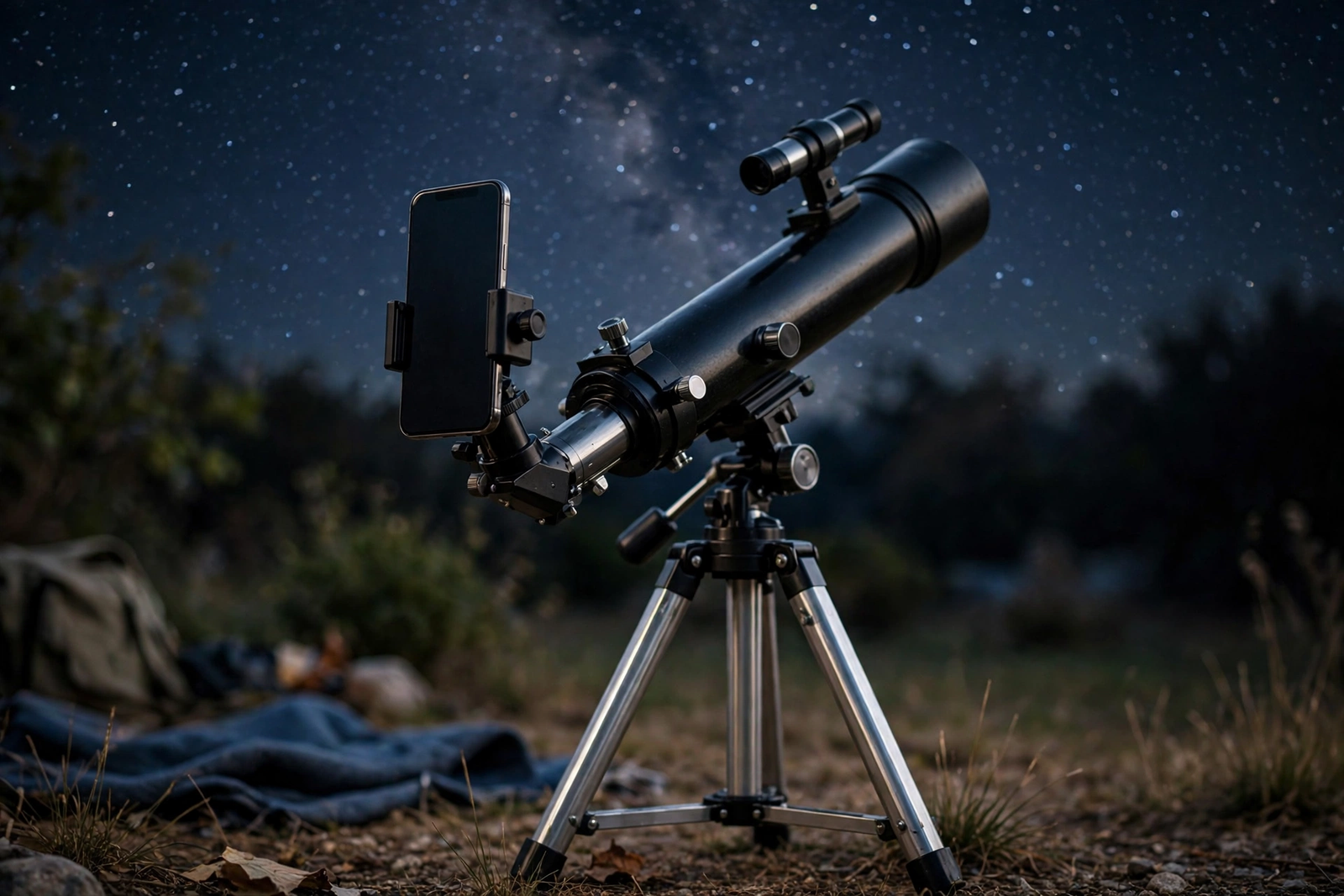
The LT 80AZ pairs an 80mm f/11 refractor with the StarSense phone-guidance system, exactly what a planet beginner needs. The long 900mm focal length reaches 36x with the 25mm eyepiece and 90x with the 10mm, right in the sweet zone for Saturn’s rings and Jupiter’s bands. The slow f/11 ratio keeps false color low, so bright planets show clean edges. The 2x Barlow pushes the 10mm to a theoretical 180x, but treat that as an experiment: the useful ceiling for 80mm sits near 160x, and the sharpest views live between 90x and 130x.
The StarSense dock is the real differentiator. You seat your phone in the dock, open the app, and it uses the phone’s camera to recognize star patterns, then guides you to the target with on-screen arrows. Owners report it turns “I can’t find anything” into “there’s Saturn” within minutes, which matters enormously since planets look like ordinary bright stars until magnified.
Who it is for: Beginners who want to find planets fast and see them well on the first night. Who should skip it: Deep-sky hunters who want faint galaxies (80mm is modest for that), and anyone whose phone is not compatible with the StarSense app.
| Aperture | 80mm refractor |
| Focal length / ratio | 900mm, f/11 |
| Included eyepieces | 25mm (36x), 10mm (90x), 2x Barlow |
| Finder | StarPointer red-dot + StarSense phone dock and app |
| Mount | Manual alt-azimuth |
| Warranty | 2-year |
| Price tier | Mid-$200s tier |
- Long f/11 focal ratio is excellent for planets
- StarSense guidance removes the finding frustration
- Solid eyepiece set out of the box
- 2-year warranty
- Long tube needs a reasonably sturdy setup position
- Phone compatibility required for the guidance feature
- Barlow pushes past useful magnification
2
Celestron AstroMaster 70AZ
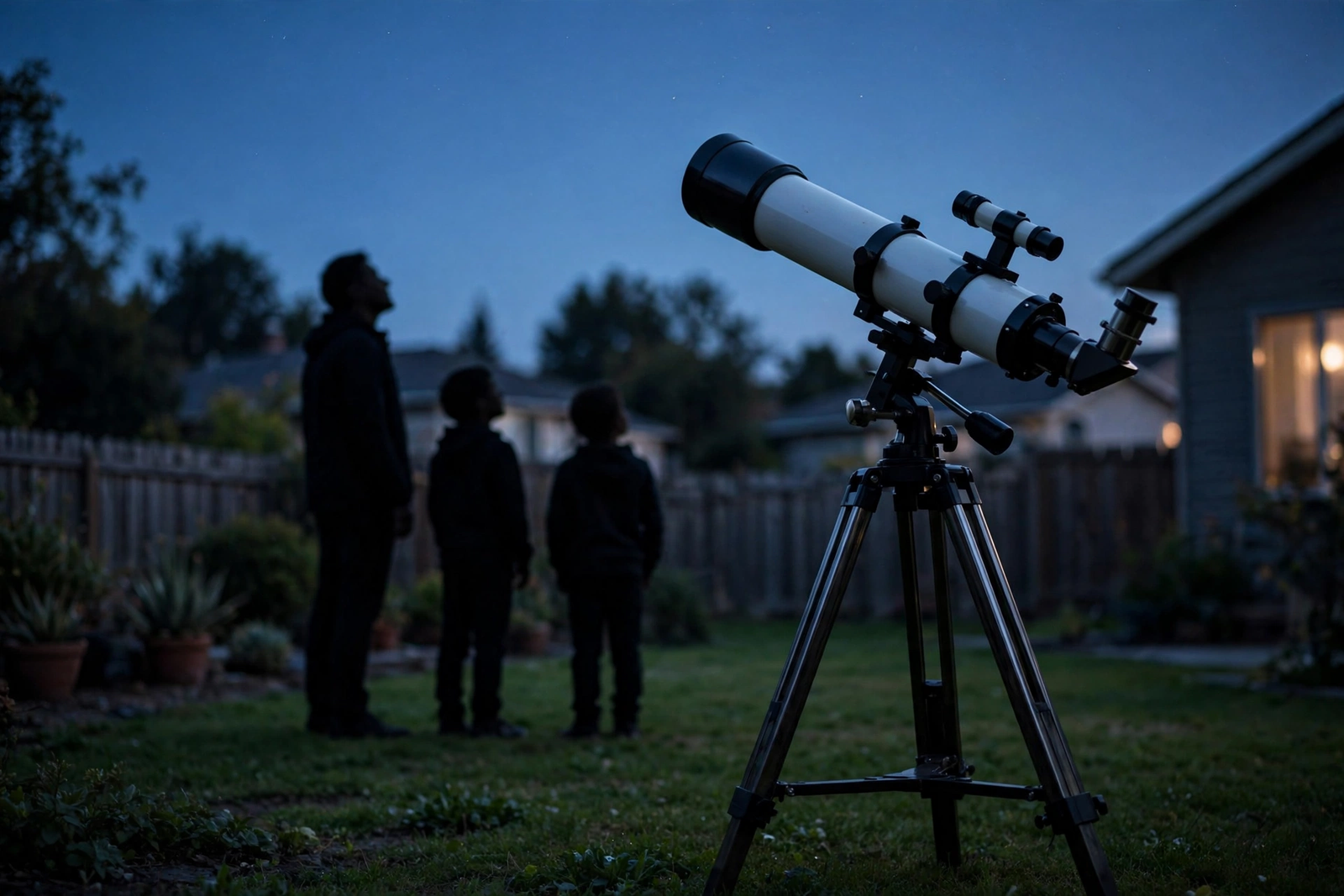
The AstroMaster 70AZ is the classic cheap-but-real planet scope, and its secret is the long focal length. At 900mm in an f/13 tube, it reaches 45x with the 20mm eyepiece and 90x with the 10mm, exactly where Saturn’s rings snap into shape and Jupiter’s two main bands show clearly. The slow f/13 ratio is genuinely kind to planets: false color stays minimal and the image holds together at high power.
The trade-offs match a price tier commonly around $150. The 70mm aperture is the practical floor for planets, so do not expect the texture a 150mm scope delivers. The manual alt-azimuth mount is adequate, but focus gently and wait a second for vibrations to settle. The StarPointer red-dot finder works once aligned in daylight.
Who it is for: Buyers on a tight budget who want real planet views, not a toy. Who should skip it: Anyone who can stretch to 80mm or more of aperture, and deep-sky observers who need more light grasp.
| Aperture | 70mm refractor |
| Focal length / ratio | 900mm, f/13 |
| Included eyepieces | 20mm (45x), 10mm (90x) |
| Finder | StarPointer red-dot |
| Diagonal | Erect-image 90-degree |
| Mount | Manual alt-azimuth |
| Warranty | 2-year |
| Price tier | Budget tier, commonly around $150 |
- Excellent price-to-performance on planets
- Long f/13 tube minimizes false color
- Simple to set up and use
- 2-year warranty
- 70mm is the floor, not the ceiling, for planet detail
- Mount needs a gentle touch at 90x
- Narrow field of view for sweeping the Milky Way

3
Gskyer 70mm AZ70400
The Gskyer AZ70400 is the lowest-priced legitimate path to seeing Saturn’s rings, in a price tier around $110. This compact 70mm refractor (400mm, f/5.7) weighs roughly 5.7 pounds and ships with a generous kit: 25mm (16x) and 10mm (40x) eyepieces, a 3x Barlow, a 5×24 finder, a phone adapter with wireless remote, and a carry bag.
Honestly, the short f/5.7 ratio is a wide-field design, not a planet specialist: past 40x to 60x it shows noticeable false color and softness, despite the higher maximum claimed on the box. Owners mention fiddling to align the finder, so do it on a distant treetop in daylight before your first night. At 40x, Saturn shows its ring shape and Jupiter shows its moons, which is exactly the promise a $110 scope should keep.
Who it is for: Families, kids, and casual stargazers who want the cheapest real telescope. Who should skip it: Planet detail seekers; the short focal ratio and small aperture cap what you will see.
| Aperture | 70mm refractor |
| Focal length / ratio | 400mm, f/5.7 |
| Included eyepieces | 25mm (16x), 10mm (40x), 3x Barlow |
| Finder | 5×24 |
| Extras | Phone adapter, wireless remote, carry bag |
| Mount | Manual alt-azimuth |
| Weight | About 5.7 lbs |
| Price tier | Around $110 tier |
- Lowest price for a real planet-capable scope
- Light and portable with carry bag
- Generous accessory kit
- Phone adapter included for snapshots
- Fast f/5.7 ratio softens high-power planet views
- Best kept at 40x to 60x despite claimed maximums
- Finder alignment takes patience
4
Orion SkyQuest XT6
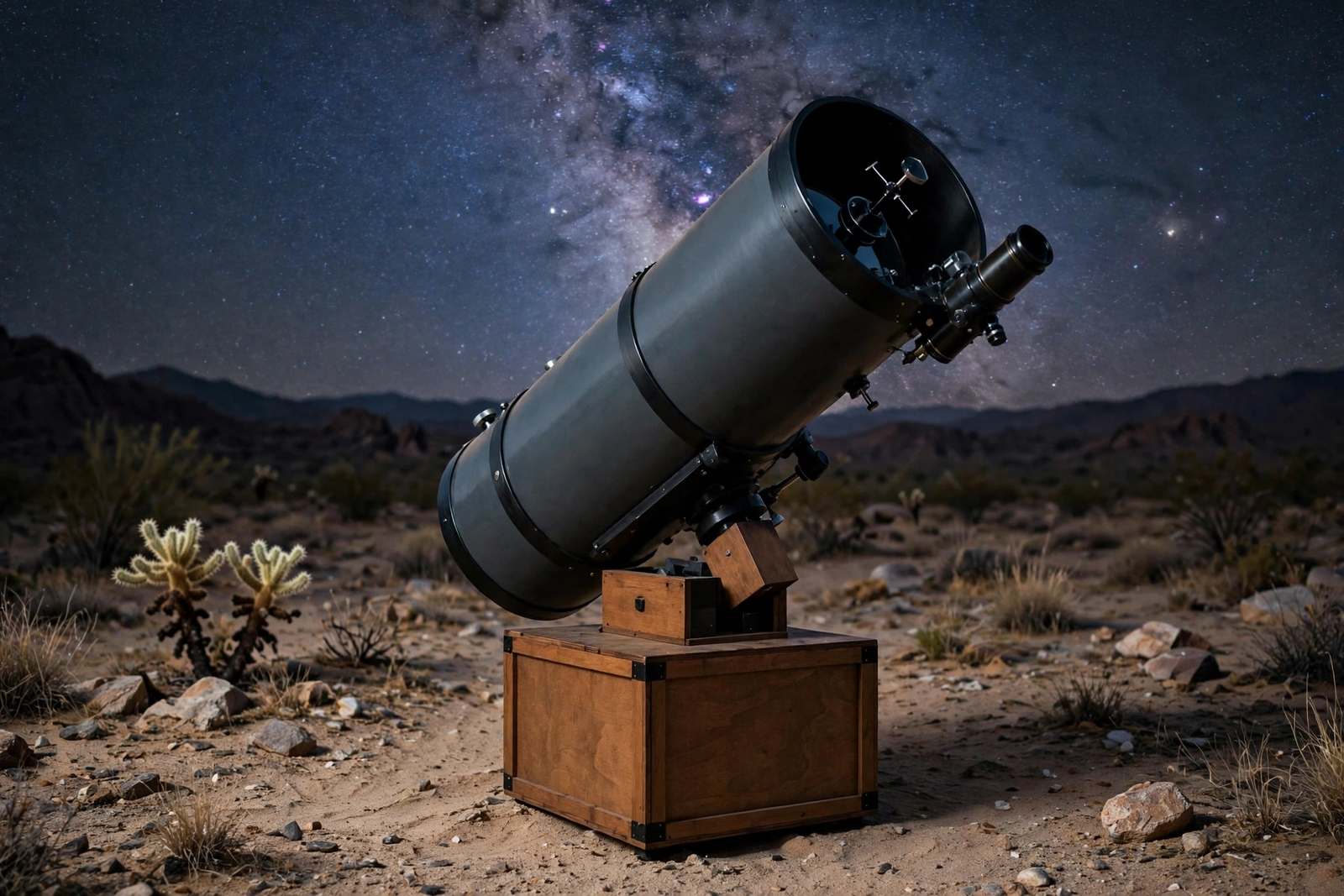
The XT6 is what experienced observers recommend for the most planet detail near $300. Its 150mm f/8 mirror gathers more than three times the light of a 70mm refractor, and the 1200mm focal length delivers 48x with the included 25mm Plossl, with headroom toward 300x on exceptional nights. In practice, 120x to 200x is where it earns its reputation: Jupiter’s bands show texture, Saturn’s rings show crisp edges, and during Mars oppositions the polar cap and dark markings come into view. The Dobsonian rocker-box base is brilliantly simple: nudge the tube and it glides.
The price tier runs roughly $270 to $450 depending on the retailer, frequently near the $300 line, hence the “stretch pick” label. The honest costs are bulk and maintenance: the tube weighs about 13 pounds and the base about 24, so this is a carry-in-two-trips scope. Newtonian reflectors need occasional collimation (mirror alignment); Orion includes a collimation cap and the process takes minutes once learned, but it is a chore refractor owners never face.
Who it is for: Observers who want maximum planetary detail and have storage space plus a short carry to the observing spot. Who should skip it: Apartment dwellers with stairs, anyone who needs one-trip portability, and buyers unwilling to learn collimation.
| Aperture | 150mm Newtonian reflector |
| Focal length / ratio | 1200mm, f/8 |
| Included eyepiece | 25mm Plossl (48x) |
| Finder | EZ Finder II |
| Mount | Dobsonian rocker-box base |
| Extras | Collimation cap included |
| Weight | Tube about 13 lbs, base about 24 lbs |
| Price tier | Roughly $270 to $450 depending on retailer, often near $300 |
- Most planetary detail per dollar under the $300 line
- Simple, steady Dobsonian mount
- Excellent high-power headroom
- Collimation cap included
- Bulky two-piece carry
- Reflectors need occasional collimation
- Only one eyepiece included, so budget for a higher-power one
Two more names worth knowing. The Gskyer 80mm AZ80400 is the bigger sibling of the AZ70400: an 80mm short-tube refractor with 25mm, 10mm, and 5mm eyepieces, a 3x Barlow, and a phone adapter with Bluetooth remote per the manufacturer’s site. Its fast focal ratio makes it a wide-field instrument first and a planet scope second. Search “Gskyer 80mm AZ80400” on Amazon for the current listing. The Celestron StarSense Explorer DX 130AZ is a 130mm Newtonian with the same phone-guided finding, gathering roughly 60 percent more light than the 102mm version, at the cost of needing occasional collimation. Search “Celestron StarSense Explorer DX 130AZ” on Amazon for the current listing. The Meade Infinity 102 is another 102mm refractor that shows up in this price conversation as an alternative. Search “Meade Infinity 102” on Amazon for the current listing.
Side-by-Side Comparison
| Telescope | Aperture | Focal length | Planet sweet spot | Price tier |
|---|---|---|---|---|
| Celestron StarSense Explorer LT 80AZ | 80mm refractor | 900mm (f/11) | 90x to 130x | Mid-$200s |
| Celestron AstroMaster 70AZ | 70mm refractor | 900mm (f/13) | 45x to 90x | Around $150 |
| Gskyer 70mm AZ70400 | 70mm refractor | 400mm (f/5.7) | 16x to 60x | Around $110 |
| Orion SkyQuest XT6 | 150mm reflector | 1200mm (f/8) | 120x to 200x | $270 to $450, often near $300 |
Our Verdict
Match the aperture to your patience. For the best first-night experience under $300, the Celestron StarSense Explorer LT 80AZ is the pick: 80mm f/11 optics that are genuinely good on planets, plus phone guidance so you observe instead of hunt. On a firm low budget, the Celestron AstroMaster 70AZ delivers honest planet views for around $150. For the cheapest real telescope that shows the rings, the Gskyer 70mm AZ70400 gets you there around $110 if you keep expectations at 40x to 60x. And if you have storage space and the patience to learn collimation, stretch to the Orion SkyQuest XT6: 150mm shows detail the smaller scopes cannot resolve, often found near the $300 line. Whichever you choose, cool it 30 minutes, start at low power, and let Saturn do the rest.