
Shopping for the best portable power station under $500 comes with one uncomfortable truth: you are buying a smaller battery. There is no 2kWh monster at this price, and anyone who tells you otherwise is selling something. But here is the other side of that truth. A good budget station still keeps your phones alive, runs a laptop all day, and carries you through a short outage with the lights on. The trick is knowing what it can and cannot run before you click buy.
So here is the honest version. Under $500 buys you roughly 268Wh to 512Wh in the models that hold their price there: phones, laptops, a mini fridge, a fan, Wi-Fi, and a CPAP for a night if you manage the humidifier sensibly. It does not buy you a full-size fridge for a day, a microwave, a coffee maker, or a space heater. Two of our picks, the Delta 2 and the AC180, are 1kWh stations that often dip near $500 during sales. We flag them clearly as sale-watch picks.
A note on prices: they bounce around with sales, so we are not quoting dollars as facts. Everything here is regularly available at or near the $500 mark when sales hit. And every pick uses LiFePO4 batteries with pure sine wave output, the combination you want for safety and longevity. We would not put a no-name box with mystery chemistry on this list at any price.
If you are new to the category, two specs matter, and they are not the same thing. Watt-hours (Wh) is the size of the fuel tank: how much energy the battery holds. Watts (W) is the size of the engine: how much power it can deliver at once. The Bluetti EB3A below is the perfect example. Big inverter, small tank. Check both numbers for every pick, and you will not get surprised.
- Best overall: Bluetti EB3A. 600W of output from a 10.1 lb box that regularly sells well under $500. Punches way above its price.
- Best middleweight: EcoFlow River 2 Max. 512Wh, very light at 13.4 lbs, and it charges 0-100% in an hour.
- Smallest and simplest: Jackery Explorer 300 Plus. 7.1 lbs and backpack friendly. A great grab-and-go travel backup.
- Watch for sales: EcoFlow Delta 2 and Bluetti AC180. Both are 1kWh stations that dip near $500 during big sales. If you catch one, it is the best value on this list.
- Stretch pick: Anker Solix C1000. Above $500 most of the time, but deep sales can bring it close. The best-engineered station on this list if you catch it on sale.
Best Portable Power Station Under $500: Top Picks at a Glance
Bluetti EB3A
600W of output from a 10.1 lb box. The budget station that does not feel like one.
EcoFlow River 2 Max
512Wh in a 13.4 lb box with a one-hour full recharge. The overnight-capable middleweight.
Jackery Explorer 300 Plus
7.1 lbs and dead simple. Grab-and-go backup for small electronics.
EcoFlow Delta 2
A 1kWh workhorse that dips near $500 on sale. The patient buyer’s jackpot.
Bluetti AC180
The most battery per dollar here when sales hit, plus UPS mode for home backup.
Anker Solix C1000
The best-engineered station on the list. Worth the hunt if a deep sale appears.
Detailed Reviews
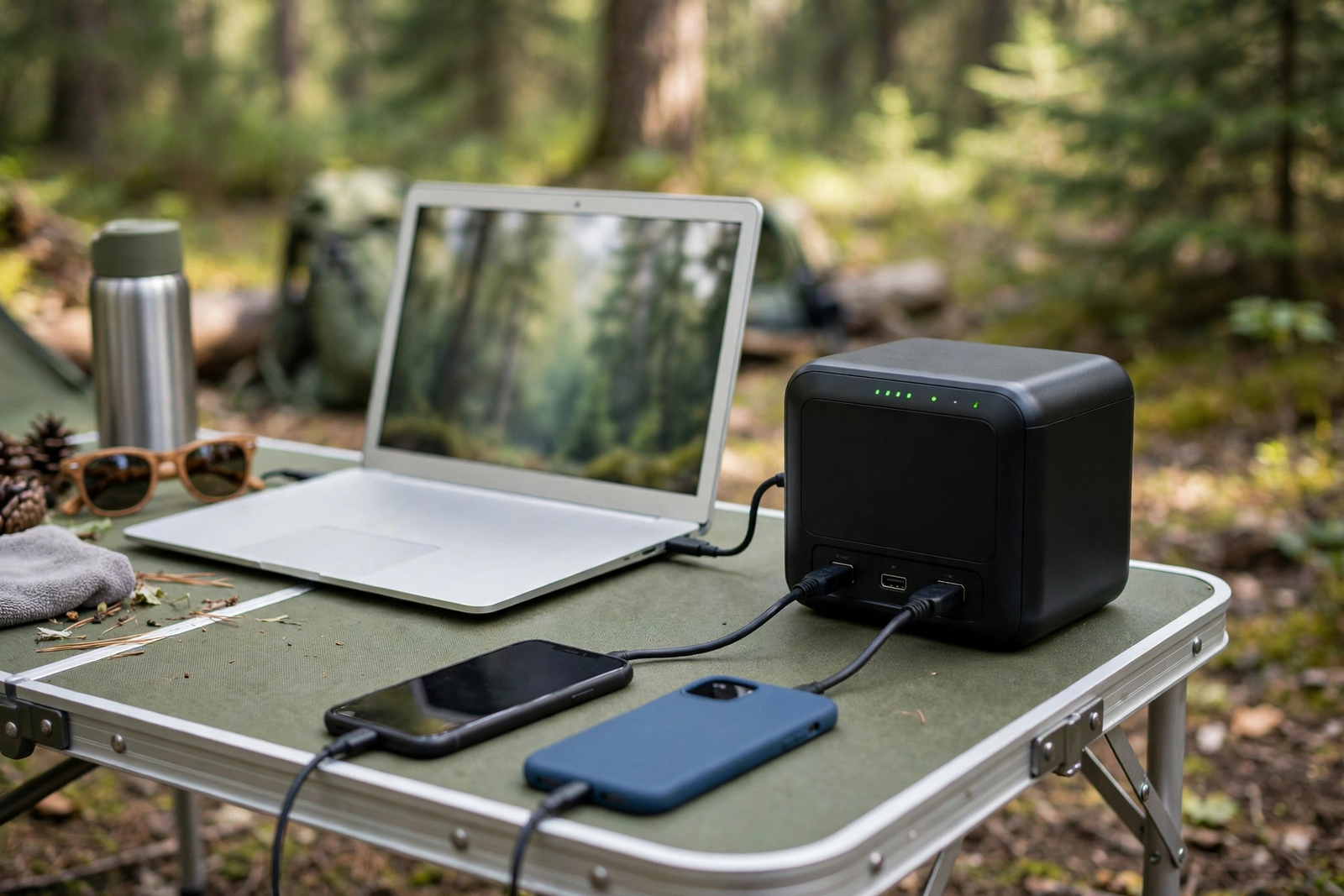
1 Bluetti EB3A
Best OverallThe EB3A is the reason “budget” stopped meaning “useless” in this category. Six hundred watts of output from a 10.1 lb box is remarkable. It runs a laptop, a 60W mini fridge, a fan, and a Wi-Fi router without breaking a sweat, and the 1200W surge handles startup spikes on small motors. Owners report it feels like a much more expensive station in daily use.
The runtime math: 268Wh x 0.85 / 60W (laptop) = about 3.8 hours. A 15W phone draws so little that you will stop counting charges. A mini fridge at 60W runs about 3.8 hours continuous-equivalent, realistically a workday with compressor cycling. It also has a 15W wireless charging pad on top and 100W USB-C, handy when you are juggling cables by flashlight during an outage. And it charges 0-80% in 30 minutes on AC.
Who it is for: budget buyers who want the most capable small station. A great first power station and a great apartment backup. Who should skip: anyone who needs to run a full-size fridge or power tools. This is not enough box. Watch for the Delta 2 or AC180 on sale instead.
| Capacity | 268Wh LiFePO4 |
| AC Output | 600W (1200W surge) |
| Weight | 10.1 lbs |
| Recharge | 0-80% in 30 minutes on AC |
- 600W output, best per dollar here
- Light at 10.1 lbs, easy to carry
- 15W wireless charging pad on top
- 100W USB-C port
- 0-80% charge in 30 minutes
- 268Wh runs out fast on bigger loads
- Cannot run a full-size fridge or power tools
- Small body means small inverter headroom
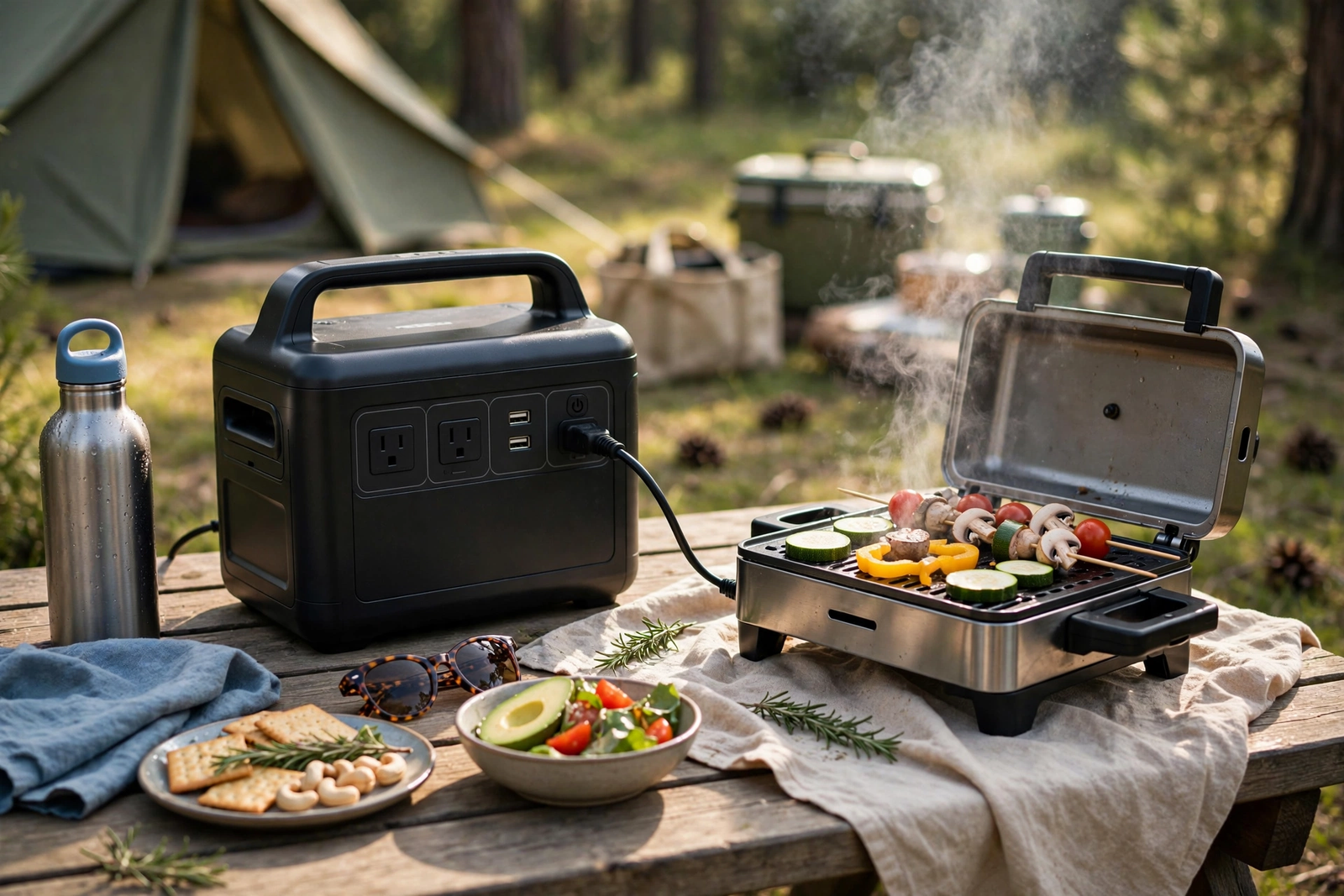
2 EcoFlow River 2 Max
Best MiddleweightThe River 2 Max sits in the sweet spot: double the capacity of the EB3A, still light enough to carry one-handed at 13.4 lbs, and it charges from empty to full in an hour. That charging speed changes how you use a station. You stop nursing the battery and start treating power like it is always there.
The math: 512Wh x 0.85 / 60W = about 7.2 hours for a laptop, or a full workday on a mini fridge. A 40W CPAP gets roughly 10.8 hours, a full night with margin. EcoFlow’s X-Boost pushes output to 1000W for devices that would trip a 500W limit, though it is not a substitute for a genuinely bigger inverter.
Who it is for: campers, road trippers, and anyone who wants a real overnight-capable station at a mid-range price. Who should skip: if 500W output limits you (small power tools, bigger appliances), the EB3A actually delivers more watts for less money, just with a smaller battery. Pick your tradeoff.
| Capacity | 512Wh LiFePO4 |
| AC Output | 500W (1000W X-Boost) |
| Weight | 13.4 lbs |
| Recharge | 0-100% in 60 minutes on AC |
- 512Wh, double the EB3A’s capacity
- Very light at 13.4 lbs
- Full recharge in one hour
- X-Boost handles brief 1000W loads
- 3000 cycles to 80% capacity
- 500W output is lower than the EB3A’s 600W
- Still not enough for a full-size fridge
- X-Boost is not a true bigger inverter
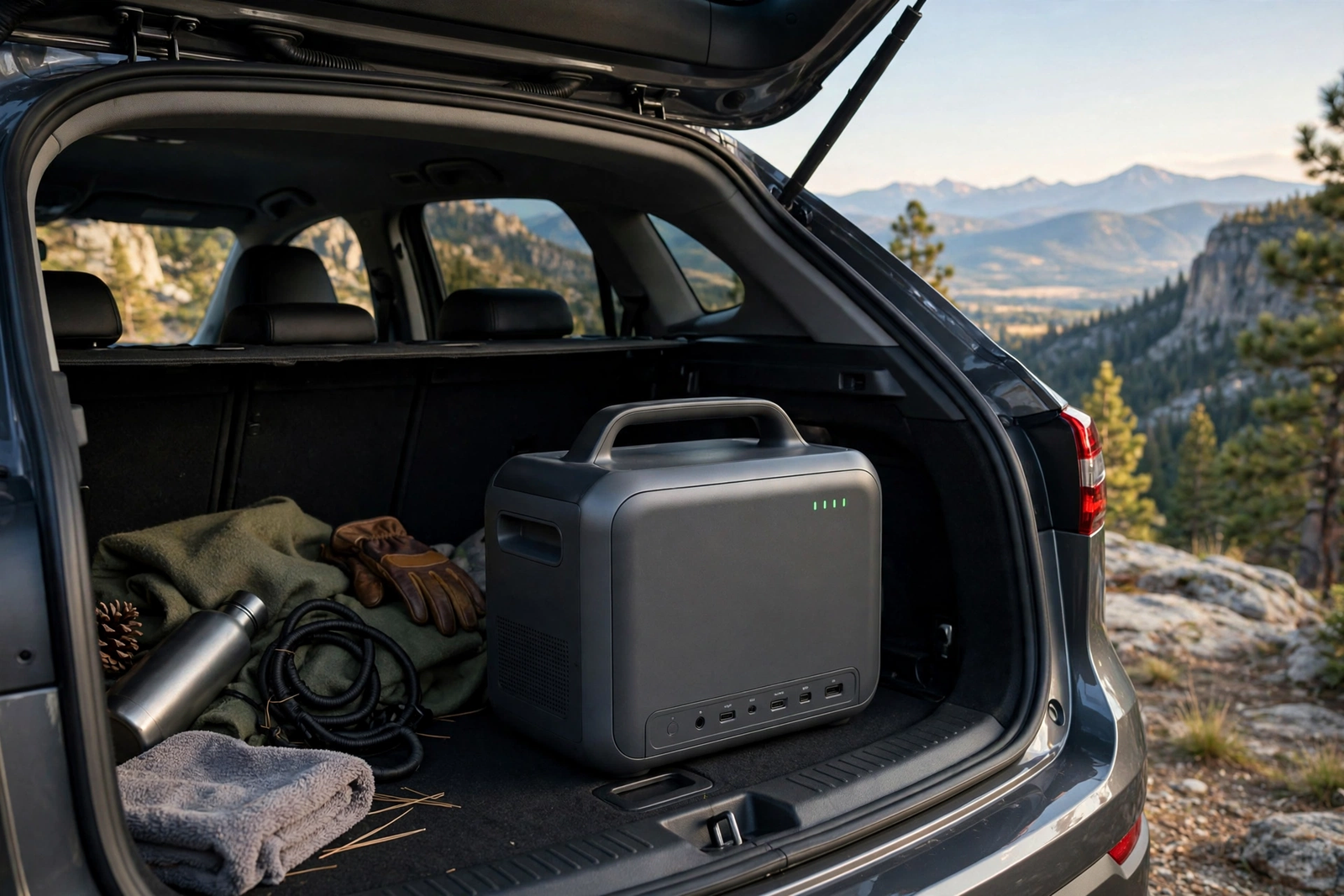
3 Jackery Explorer 300 Plus
Smallest and SimplestThe 300 Plus is the minimalist of the group. Seven pounds, dead simple, no learning curve. It is the station you toss in the car without thinking about it, and then one day the power goes out and you are very glad it was there. The runtime math: 288Wh x 0.85 / 60W = about 4 hours for a laptop. Phones and earbuds last for days. A 40W fan runs about 6 hours, enough for a hot night.
It handles a 40W CPAP for roughly 6 hours, so it works as a travel backup with the humidifier off or low, but it is not a primary CPAP solution. And be honest about what it cannot do: no coffee maker (800W), no microwave (1000W), no space heater (1500W). Anything with a real heating element is off the table.
Who it is for: travelers, commuters, and minimalists who want a grab-and-go backup for small electronics. Who should skip: anyone buying their one and only outage backup for a household. Spend a bit more on the EB3A or River 2 Max and get meaningfully more capability.
| Capacity | 288Wh LiFePO4 |
| AC Output | 300W (600W surge) |
| Weight | 7.1 lbs |
| Recharge | Fast AC top-up |
- Tiny at 7.1 lbs, backpack friendly
- Simplest station on this list
- Great travel backup for phones and laptops
- 300W output, lowest here
- No heating appliances, no full-size fridge
- Not a one-and-done household backup
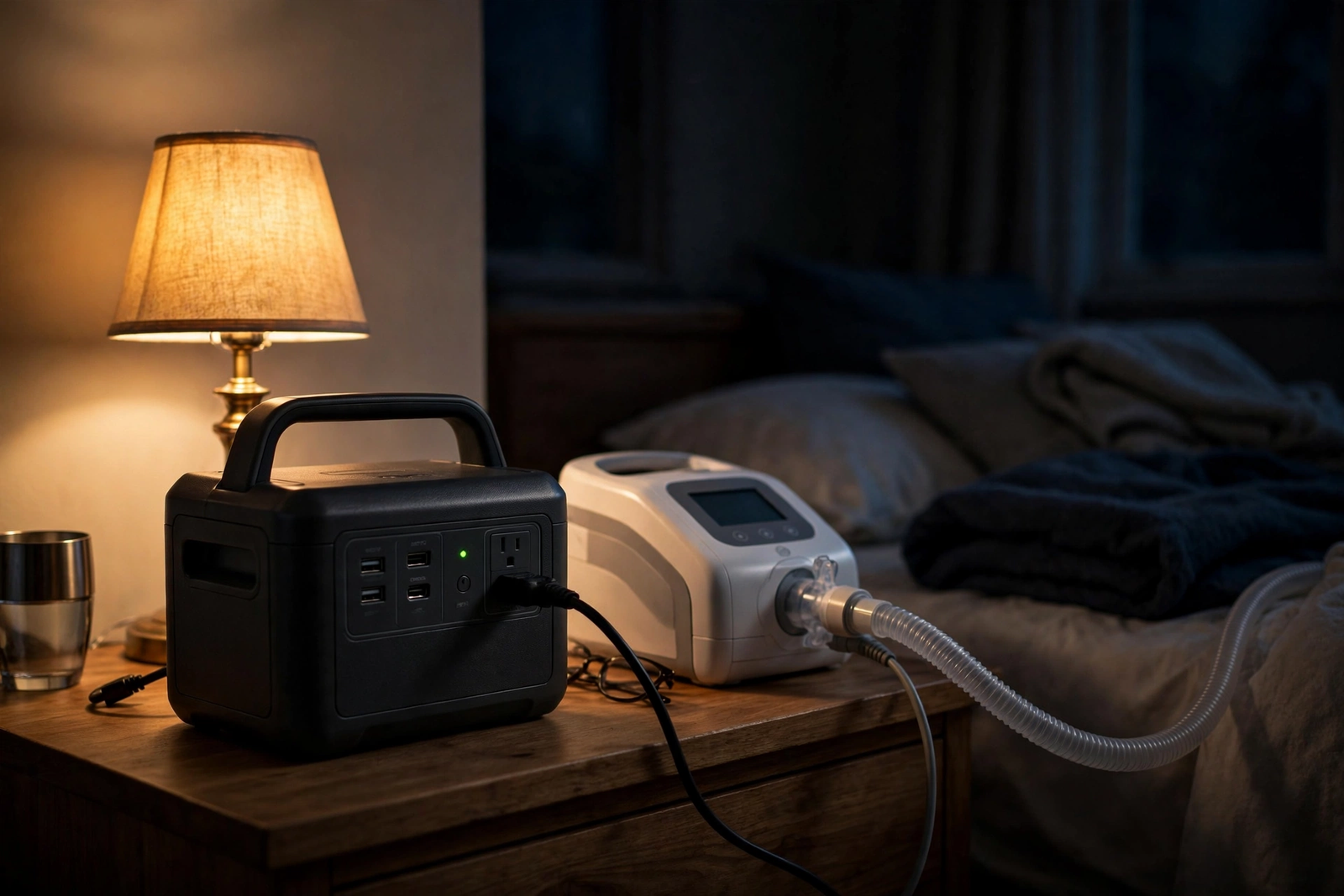
4 EcoFlow Delta 2
Sale Watch PickThis one normally sits above $500, but it dips near that line often enough during big sales (Prime Day, Black Friday, EcoFlow’s own promotions) that it belongs on this list. If you can be patient, it is the best value here by a wide margin. The runtime math shows why: 1024Wh x 0.85 / 130W (a full-size fridge, averaged) = about 6.7 hours continuous-equivalent, or 8 to 12 hours in the real world with compressor cycling.
A laptop runs about 14.5 hours. A 40W CPAP gets roughly 21 hours, two nights easy. And the 1800W output runs a microwave, a coffee maker, and most power tools, things no other pick on this list can touch. The tradeoff for waiting: you need the sale to actually happen, and 27 lbs is not a throw-it-in-a-backpack situation.
Who it is for: patient shoppers who can wait for a sale and want a true 1kWh home backup at a budget price. Who should skip: if you need a station this week at a guaranteed under-$500 price, buy the EB3A or River 2 Max instead. Do not hold your breath for a sale during an outage.
| Capacity | 1024Wh LiFePO4 |
| AC Output | 1800W (2700W surge) |
| Weight | 27 lbs |
| Recharge | 0-80% in 50 minutes on AC |
- True 1kWh capacity at budget prices on sale
- 1800W runs microwaves, coffee makers, tools
- 0-80% in 50 minutes on AC
- 5-year warranty
- Normally above $500, you must wait for a sale
- 27 lbs, not a grab-and-go station
- Overkill if you only need phone and laptop backup
5 Bluetti AC180
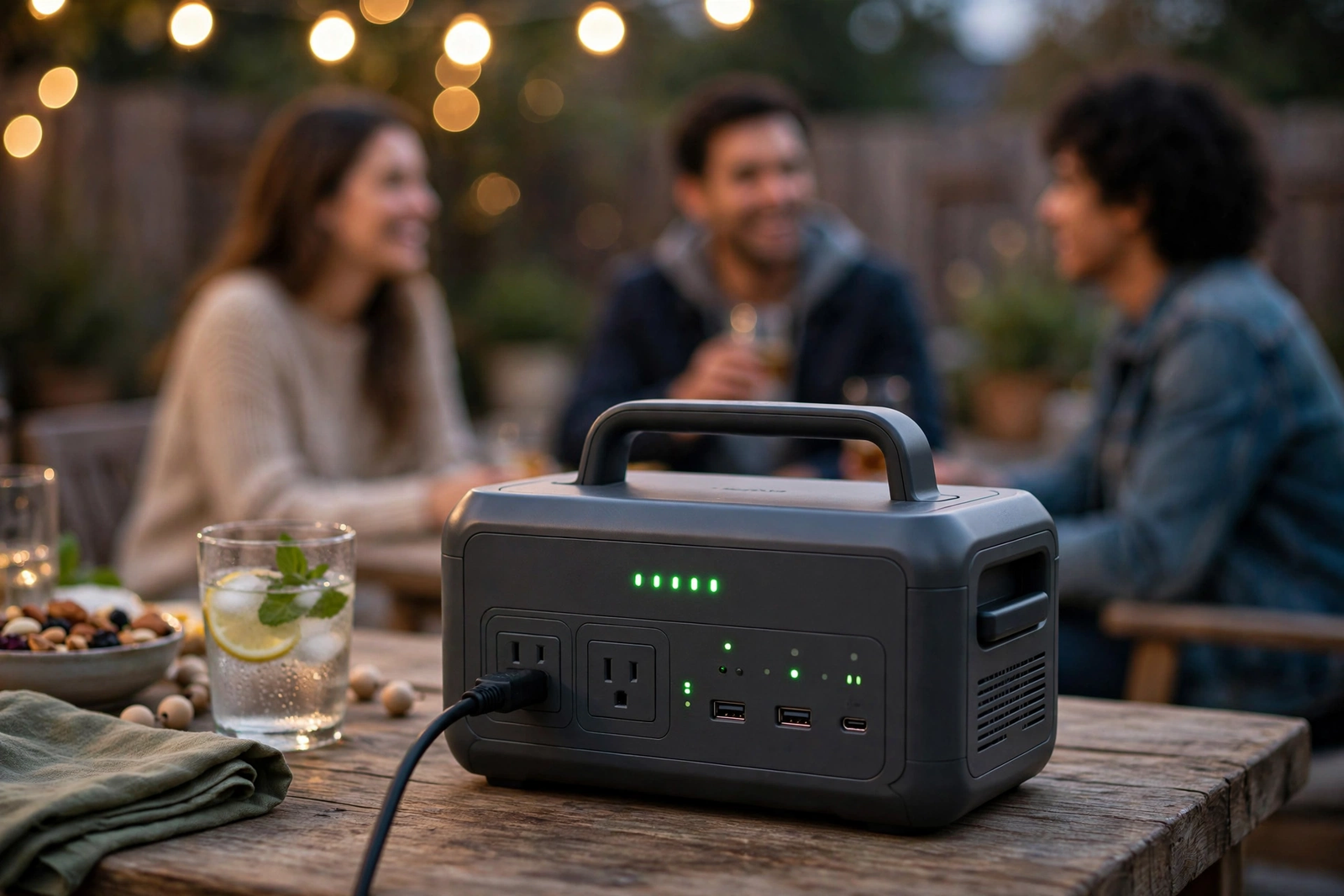
Sale Watch PickSame story as the Delta 2: normally above $500, but sale prices bring it near the line, and when they do it is arguably the most battery per dollar on this list. The math: 1152Wh x 0.85 / 130W = about 7.5 hours continuous-equivalent for a full-size fridge, realistically 9 to 13 hours with cycling. That is a genuine overnight fridge backup. A 40W CPAP gets roughly 24 hours.
The 1800W inverter handles the same heavy hitters as the Delta 2, and UPS mode is the standout feature for home use: plug it between the wall and your device and it switches over in milliseconds when the power drops. For a CPAP user or a home office, that seamless handoff is worth a lot. The catch is weight: 35 to 37 lbs makes it a home station, not a camping buddy. And again, you are waiting on a sale.
Who it is for: home backup buyers who want maximum capacity near $500 and can wait for a deal. Who should skip: campers and anyone who needs portability. Also anyone who needs it now at a fixed budget. The in-stock picks above are the safer bet.
| Capacity | 1152Wh LiFePO4 |
| AC Output | 1800W (2700W surge) |
| Weight | 35-37 lbs |
| Recharge | 0-80% in 45 minutes (TurboBoost) |
- Biggest capacity on this list
- Best battery-per-dollar on sale
- UPS mode for seamless home backup
- 3500+ cycles, 5-year warranty
- Heaviest pick at 35-37 lbs
- Normally above $500, needs a sale
- Not portable enough for camping
6 Anker Solix C1000
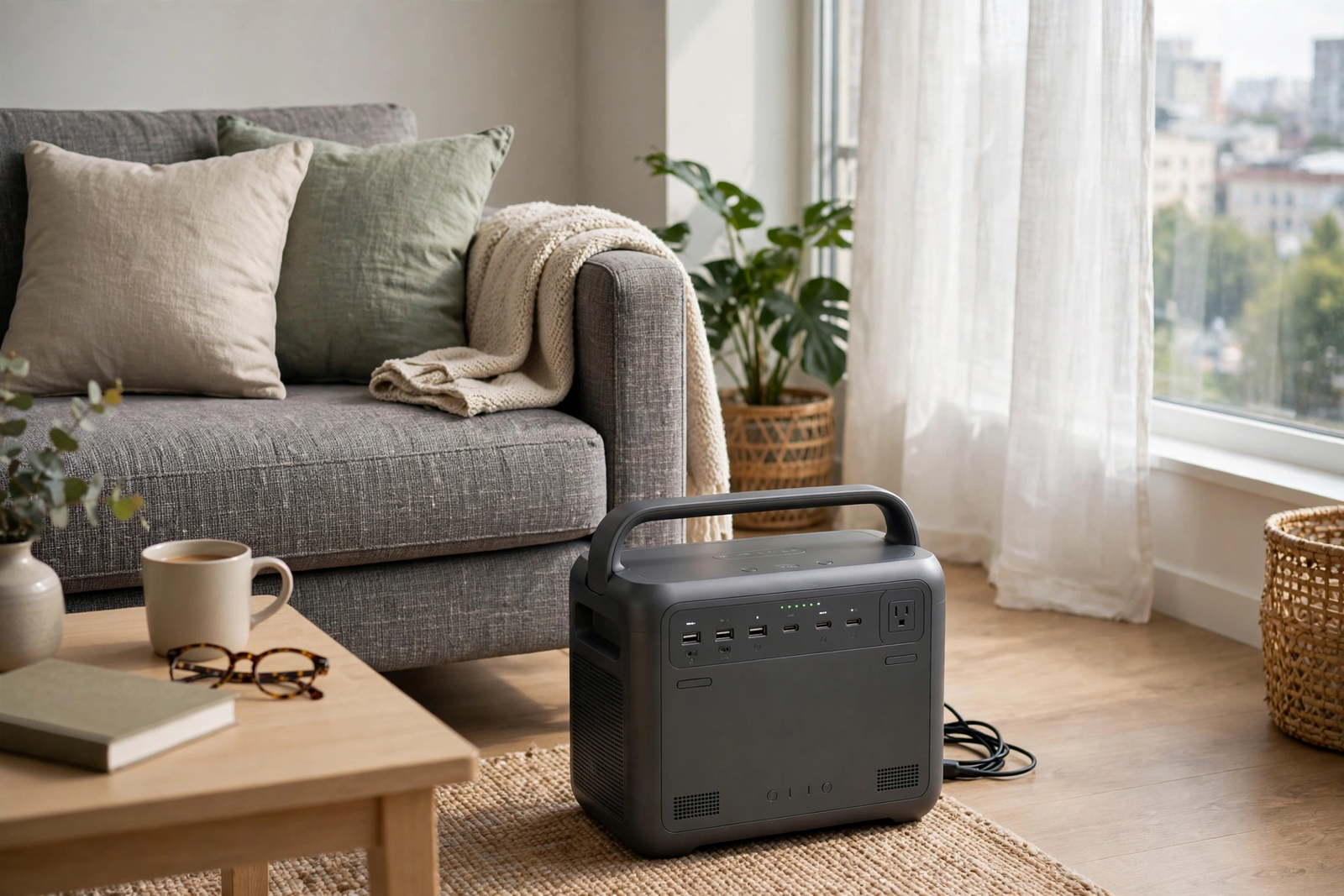
Stretch PickThe Solix C1000 is the best-engineered station on this list and the hardest to fit under $500. It occasionally gets close during deep sales, and if you catch it there, take it seriously. The runtime math: 1056Wh x 0.85 / 130W = about 6.9 hours continuous-equivalent for a fridge, 8 to 12 hours real world. A laptop gets about 15 hours. A 40W CPAP gets roughly 22 hours.
Its headline spec is charging speed: 0-80% in roughly 43 minutes, the fastest claimed here. It is also expandable with an extra Anker battery, which none of the other picks in this price band offer, and it takes up to 600W of solar. Anker’s reputation counts too: they built it on reliable charging gear, and owners report the Solix line lives up to it, with one of the clearest apps and displays in the category.
Who it is for: buyers who want the most polished 1kWh station and are willing to hunt for a deep sale. Who should skip: anyone on a strict timeline. At regular pricing it sits above this list’s budget, so treat it as a bonus, not a plan.
| Capacity | 1056Wh LiFePO4 |
| AC Output | 1800W (2400W surge) |
| Weight | ~28 lbs |
| Recharge | 0-80% in ~43 minutes |
- Best-engineered station on this list
- Fastest recharge here (0-80% in ~43 min)
- Expandable with an extra battery
- 600W max solar input
- Rarely under $500, needs a deep sale
- Same runtime as cheaper 1kWh rivals
- Expansion battery is an extra cost
Our Verdict
The Bluetti EB3A is our top pick under $500. It is the rare budget product that does not feel like a compromise: 600W of output, a 10-pound body, fast charging, and a wireless pad on top, all at a price that regularly sits well under the budget line. If you want more capacity in a still-portable box, the EcoFlow River 2 Max doubles the battery and stays light. And if you can be patient, set a price alert on the EcoFlow Delta 2. Catching a 1kWh workhorse near $500 is the best deal in portable power, full stop.
Pingback: Best Portable Power Station for Apartments (2026)
Pingback: EcoFlow Delta 2 vs Jackery Explorer 1000 v2 (2026)
Pingback: Best Portable Power Station for CPAP Machines (2026)