
Picture this: the power goes out at 9 PM on a Tuesday — the exact reason the best portable power station for apartments exists. Your fridge hums to a stop. Your phone is at 12 percent. Your CPAP is about to become a very expensive paperweight. And a gas generator? Forget it. Your building bans them, your balcony is the size of a welcome mat, and running a gas engine indoors is how people end up in the news for the wrong reasons.
This is the apartment dweller’s blackout nightmare, and it is exactly the problem a portable power station was built to solve. It is a big battery with real outlets. No fumes, no fuel, no carbon monoxide. Most of them run near silent, so you can park one in your living room and keep the fridge cold, the phones charged, and the CPAP breathing through the night.
But let us be honest before we go further: a box the size of a shoebox will not run your central air conditioner or your electric stove. Anyone who tells you otherwise is selling you something. What a good power station will do is cover the things that actually matter during an outage, which is a much shorter and more useful list than most people expect.
This guide walks through what these units can realistically do in an apartment, the five best picks for 2026, and how to match one to your place without overbuying. No jargon, no inflated promises, just the math and the machines.
- Best all-rounder for apartments: EcoFlow Delta 2. 1024Wh keeps a fridge cold for 8-12 hours, recharges to 80% in 50 minutes, and is easy to store.
- Lightest option: Jackery Explorer 1000 v2. Just 23.8 lbs with a fold-flat handle, so it slides into a closet or under a bed.
- Budget pick: Bluetti EB3A. Only 10.1 lbs, handles phones, laptops, CPAP, and lights for a fraction of the price.
- Realistic apartment loads: fridge (100-150W), laptop (60W), CPAP without humidifier (40W), router (10-15W), LED lights. These are all easy wins.
- The hard limit: space heaters, electric stoves, and central AC are off the table. A 1000Wh unit is for essentials, not the whole apartment.
Best Portable Power Station for Apartments: Top Picks at a Glance
EcoFlow Delta 2
Fridge-ready capacity, 50-minute fast recharge, 5-year warranty.
Jackery Explorer 1000 v2
23.8 lbs with a fold-flat handle. The easiest big battery to live with.
Anker Solix C1000
Fastest claimed recharge and expandable capacity for future needs.
Bluetti EB3A
Tiny 10.1-lb unit for phones, laptops, and CPAP on a budget.
EcoFlow River 2 Max
512Wh at 13.4 lbs. Real backup power you can carry in one hand.
What a Power Station Can Actually Run in Your Apartment
Before the reviews, here is the honest math. This is where most buyers go wrong, and five minutes of reading will save you from a costly mismatch.
What works well (realistic apartment outage loads):
- Full-size fridge: 100-150W on average. The compressor cycles on and off, so a 1024Wh unit delivers roughly 8-12 hours of real-world runtime.
- Phone charging: 15W. Practically nothing. A small station can recharge a phone dozens of times.
- Laptop: 60W. A 512Wh unit runs it for roughly 7 hours.
- WiFi router: 10-15W. Trivial for any of these units, and hugely valuable during an outage.
- CPAP machine: 40W without the humidifier, 60-90W with the humidifier and heated tube on. An 8-hour night without the humidifier needs roughly 380Wh of usable energy, which most mid-size units cover.
- LED lamp or string lights: 10-20W. Easy.
What will NOT work, no matter what the marketing says:
- Space heaters (1500W): would drain a 1000Wh unit in under an hour.
- Electric stoves, ovens, or full-blast microwaves: a microwave pulls 1000W. You might get one quick meal out of it, but it is not a plan.
- Central AC: not even close. A window AC is borderline and depends on its wattage.
So the realistic apartment setup is: keep the fridge cold, keep phones and laptops alive, keep the lights on, and keep the CPAP running. Every unit reviewed below is picked for exactly that job.
Detailed Reviews
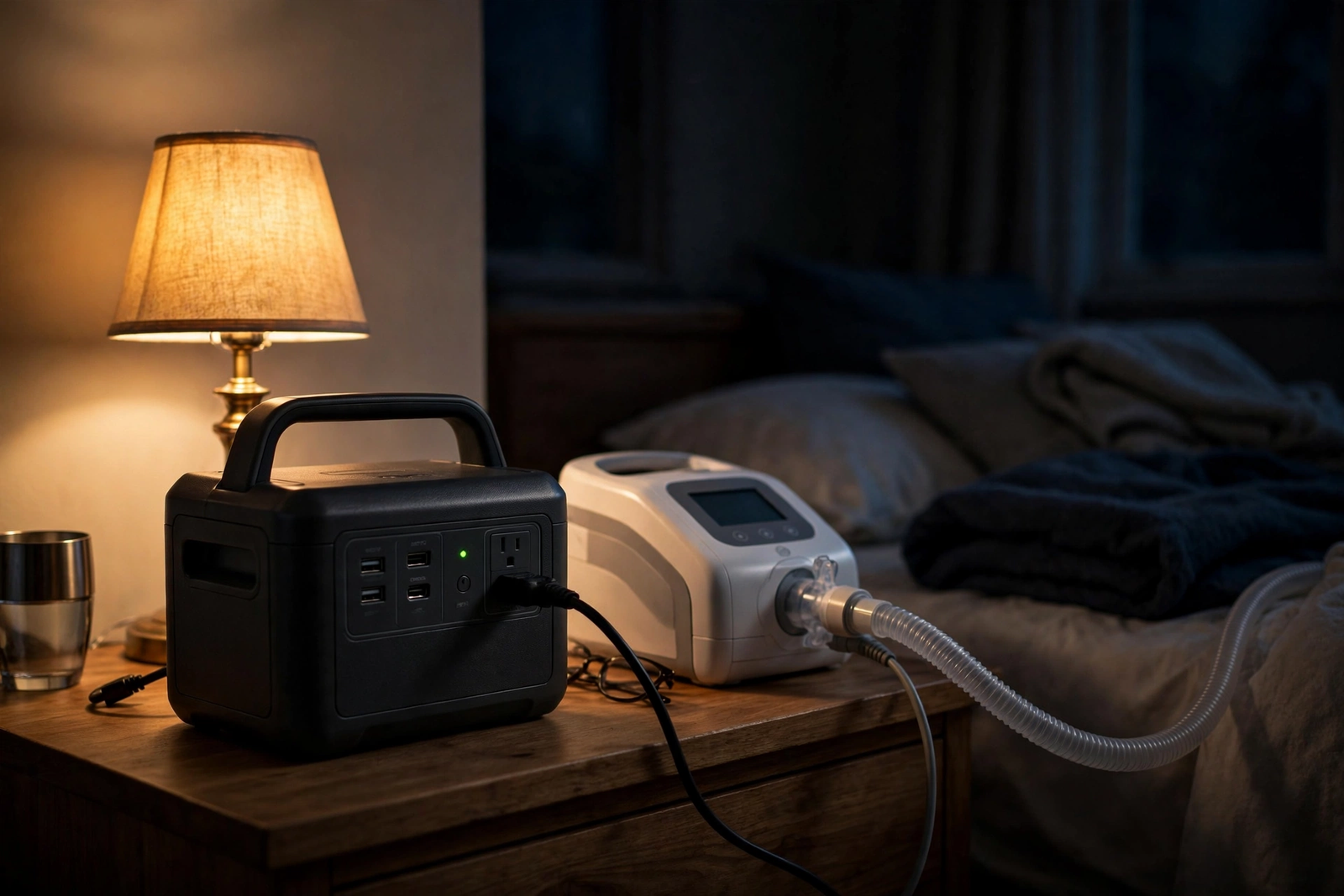
1 EcoFlow Delta 2
Best for: covering the fridge plus everything elseThe Delta 2 is the safest recommendation on this list. 1024Wh of LiFePO4 capacity and 1800W of AC output (2700W surge) at 27 lbs. That is enough juice to run a full-size fridge for 8-12 hours, charge every device in the place, power a CPAP through the night, and still have room left for lights and the router.
The headline feature is charging speed: 0 to 80 percent in 50 minutes from a wall outlet. When the power comes back after an outage, you refill almost immediately. When the forecast says a storm hits tomorrow, you do not need to remember to charge it overnight. The 2700W surge rating comfortably covers the brief startup spike when a fridge compressor kicks on, which is the spec that actually matters for fridge backup.
It also carries a 5-year warranty and a battery rated for 3000 cycles to 80 percent, which means years of regular use before any meaningful capacity loss.
| Capacity | 1024Wh LiFePO4 |
| AC Output | 1800W (2700W surge) |
| Weight | 27 lbs |
| Recharge | 0-80% in 50 min (AC) |
• Fridge-ready capacity
• Very fast AC recharging
• 5-year warranty, 3000 cycles
• Overkill if you only need phones and CPAP
• 27 lbs needs a closet corner, not a shelf
2 Jackery Explorer 1000 v2
Best for: tight storage and easy carryingIf storage space is your biggest worry, start here. The Explorer 1000 v2 packs 1070Wh, slightly more than the Delta 2, into just 23.8 lbs, with a fold-flat handle that lets it slide into a closet or under a bed. At this weight, moving it from room to room or carrying it up stairs is genuinely easy.
The 1500W AC output (3000W surge) is a touch lower than the Delta 2’s, but it still handles a fridge, CPAP, laptop, and lights without complaint, and the surge rating covers fridge compressor startups. It has a reputation for very quiet operation, which matters when the unit sits in your living room and the fan kicks on at 2 AM. There is also a 1-hour emergency charge option through the app for when you need power fast.
| Capacity | 1070Wh LiFePO4 |
| AC Output | 1500W (3000W surge) |
| Weight | 23.8 lbs |
| Recharge | 1-hour emergency charge via app |
• Lightest 1kWh unit in its class
• Very quiet operation
• 4000 cycles to 70 percent
• 1500W output is below the Delta 2’s 1800W
• Not the fastest to recharge
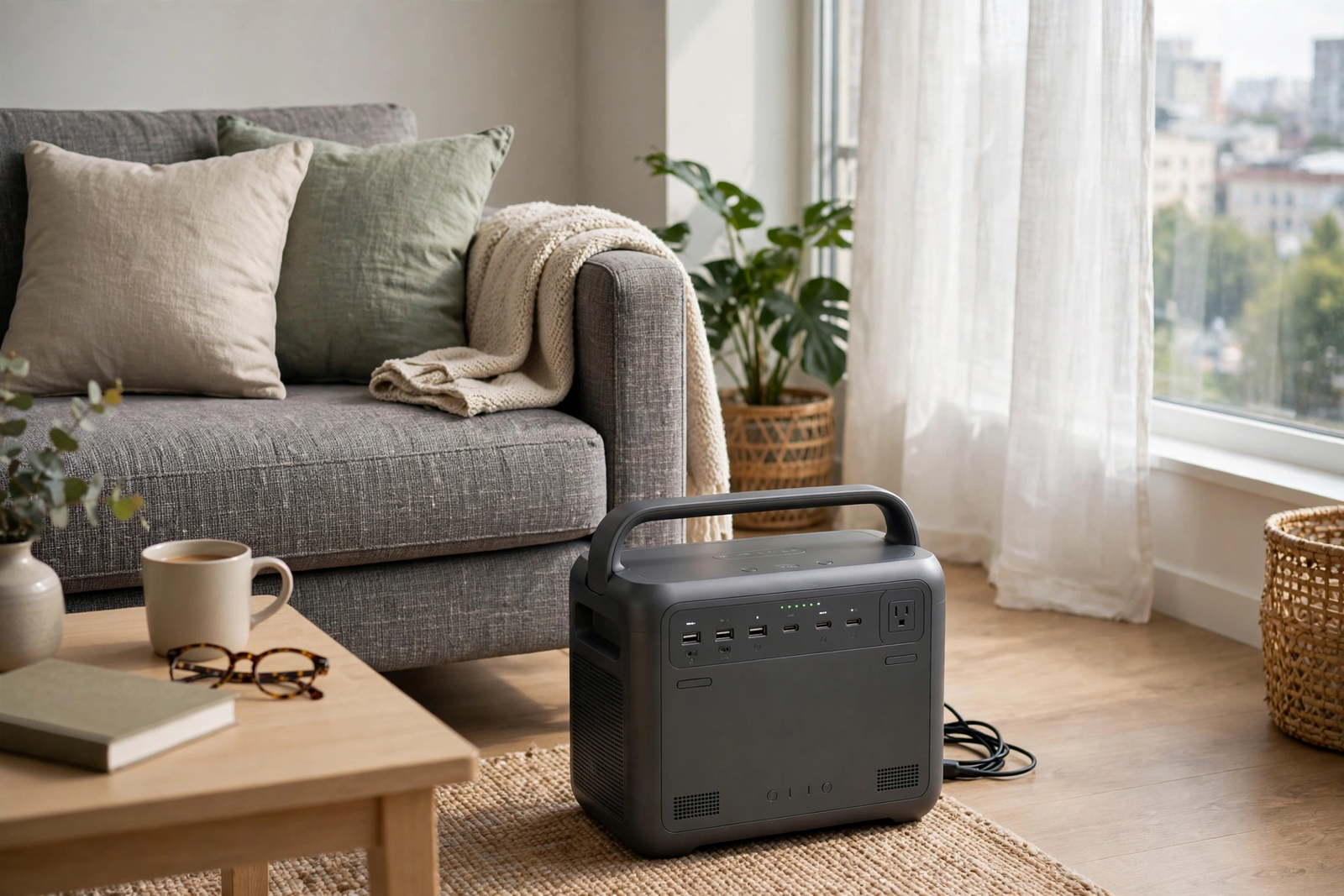
3 Anker Solix C1000
Best for: fast recharging and future expansionThe Solix C1000 is the tech-minded pick. 1056Wh, 1800W AC output (2400W surge), about 28 lbs. It claims the fastest recharge in this group, 0 to 80 percent in 43 minutes, and it is expandable with an extra battery if your needs grow later.
Anker built its name on reliable chargers, and that reputation carries over. The display and app lay out remaining runtime clearly, which sounds minor until you are in a dark apartment trying to figure out how many hours you have left. One honest caveat: the 600W max solar input is modest. Apartment dwellers should be realistic about balcony solar anyway. A panel trickles in power slowly. It is a nice bonus, not a backup plan. Buy this for the battery and the charging speed.
| Capacity | 1056Wh LiFePO4 |
| AC Output | 1800W (2400W surge) |
| Weight | ~28 lbs |
| Recharge | 0-80% in 43 min (fastest claimed) |
• Fastest claimed recharge
• Expandable with extra battery
• Clear display and app
• 600W solar cap is modest
• Slightly heavier than rivals
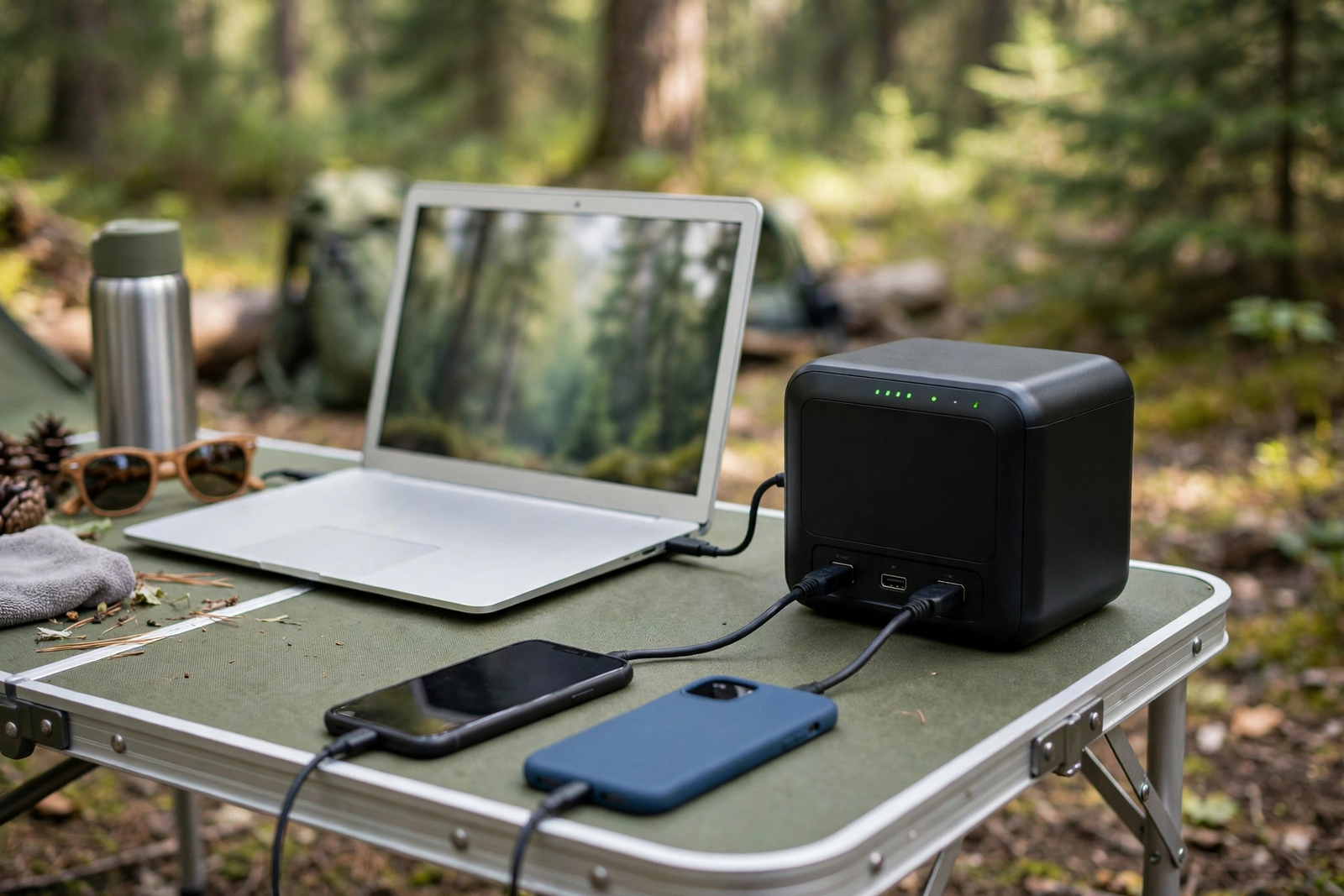
4 Bluetti EB3A
Best for: studios and tight budgetsNot everyone needs 1000Wh. The EB3A is 268Wh, 10.1 lbs, and costs a fraction of the big units. It puts out 600W AC (1200W surge), which is more than enough for phones, laptops, a router, LED lights, and a CPAP without the humidifier.
At this size, the math is simple and honest: it will not run your fridge for hours. It will keep your devices alive for days. For a studio dweller whose main outage anxiety is “my phone, my laptop, my CPAP,” this covers all three for far less money and space than a mid-size unit. It charges 0-80 percent in 30 minutes, has a 15W wireless charging pad on top, and a 100W USB-C port for fast laptop charging.
| Capacity | 268Wh LiFePO4 |
| AC Output | 600W (1200W surge) |
| Weight | 10.1 lbs |
| Recharge | 0-80% in 30 min |
• Very affordable and portable
• 100W USB-C and wireless pad
• Great second unit for devices
• Will not carry a full-size fridge
• CPAP needs humidifier turned off
5 EcoFlow River 2 Max
Best for: grab-and-go backup without the bulkThe River 2 Max sits right between the EB3A and the big units. 512Wh, 500W AC output (1000W with X-Boost), and only 13.4 lbs. Light enough to carry in one hand, big enough to matter.
This is the sweet spot for a specific apartment scenario: you do not need to run a full fridge, but you want more than phone charging. It will run a CPAP all night, keep a laptop going for a workday, charge a stack of devices, and run a mini fridge (60W) for around 7 hours. It charges fully in 60 minutes on AC, which is ideal if you are the kind of person who only thinks about backup power when a storm warning appears.
| Capacity | 512Wh LiFePO4 |
| AC Output | 500W (1000W X-Boost) |
| Weight | 13.4 lbs |
| Recharge | 0-100% in 60 min (AC) |
• Light at 13.4 lbs
• Full charge in 60 minutes
• Covers CPAP, laptop, mini fridge
• Full-size fridge needs double the capacity
• 500W output limits larger loads
Our Verdict
For most apartment dwellers, the EcoFlow Delta 2 is the right answer. It has the capacity to keep a fridge cold through a typical outage, the output to handle anything realistic you will plug in, the fastest practical recharge so it is ready when you need it, and a 5-year warranty. It is the one unit you buy once and stop thinking about. If your apartment is tiny or your budget is tight, the Bluetti EB3A covers phones, laptops, lights, and CPAP for a fraction of the price and space. Just go in knowing it will not carry a fridge. Buy the battery, charge it after every use, and the next outage becomes an inconvenience instead of a crisis.