
Boondocking is freedom with an asterisk: no hookups. The best portable power station for RV boondocking removes the asterisk — your RV’s house batteries handle the lights and the water pump, but the moment you want a microwaved burrito, a full laptop workday, or an hour of air conditioning, you are either firing up a gas generator or going without. That asterisk is the whole problem, and it is why so many off-grid trips end with a noisy generator ruining a quiet desert sunset.
Generators work, but they come with baggage. They are loud, they stink, most campgrounds restrict their hours, and your neighbors hate them with a passion usually reserved for leaf blowers. A big portable power station paired with solar panels gives you the same off-grid power in total silence. No fuel, no fumes, no 7 a.m. noise complaints, and no rationing your quiet hours around generator rules.
Picking the right station for RV use is different from picking one for tailgating or home backup. Four things matter more than anything else: a 30A RV outlet that takes your shore cable directly, enough solar input to recharge off-grid at a sane pace, a weight you can actually move or permanently install, and room to grow when weekend trips turn into full-timing. Miss any one of these and the station becomes a compromise you resent.
Here are the five stations that get it right for boondocking in 2026. They range from a 23.8 lb weekender you can carry with one hand to a 2kWh monster with a proper 30A RV port, so the right pick depends on your rig, your trips, and how much silence is worth to you.
- Best overall for RVers: Bluetti AC200L. The only pick here with a 30A RV outlet, 2048Wh expandable to 8192Wh, and 1200W of solar input.
- Big alternative: EcoFlow Delta 2 Max. Same 2048Wh/2400W class, about 50 lbs, one-hour fast charging.
- Lightweight weekender: Jackery Explorer 1000 v2. Just 23.8 lbs, dead simple to use, ideal for smaller rigs.
- Value pick: EcoFlow Delta 2. 1024Wh and 1800W output with the fastest AC charging in its class.
- Tech pick: Anker Solix C1000. Fastest recharge here (80% in 43 minutes), expandable, 600W solar input.
Best Portable Power Station for RV Boondocking: Top Picks at a Glance
Bluetti AC200L
2048Wh, 2400W, 30A RV outlet, 1200W solar input, expandable to 8192Wh. The most RV-native station here.
EcoFlow Delta 2 Max
2048Wh and 2400W at about 50 lbs with one-hour fast charging. The lighter big-tank option.
Jackery Explorer 1000 v2
Just 23.8 lbs with 1070Wh and 4000-cycle battery life. The one-person carry for small rigs.
How Much Solar Do You Need for Boondocking?
Size your solar in three steps. First, estimate a day’s usage. A light day (LED lights, phones, laptop, a fan) runs about 300Wh. A comfortable day with a mini fridge running (60W x 10 hours = 600Wh) plus devices lands around 800Wh.
Second, convert daily watt-hours into panel watts. Divide by 5 (good sun hours), then divide by 0.75 (real-world panel efficiency). A 300Wh day needs 300 / 5 / 0.75 = 80W, so a single 100W panel covers it. An 800Wh day needs 800 / 5 / 0.75 = 213W, so plan on 200-300W of panels.
Third, check the station’s solar input cap so you do not buy panels it cannot use. The Delta 2 caps at 500W and the Solix C1000 at 600W, both plenty for a 1kWh station. The AC200L accepts up to 1200W, which is what lets it refill a 2kWh battery in a few strong sun hours. One reality check: a roof AC pulls roughly 1200-1500W, so even a 2048Wh station gives you a little over an hour of cooling. Run it to cool the rig before bed, not all night.
Buying Guide: What Actually Matters for RV Use
- The 30A RV outlet. Standard RV shore power is a 30A plug. A station with a native 30A outlet takes your RV’s power cord directly. Without one, a 15A adapter works fine but caps you at 1800W (15 amps x 120 volts).
- Solar input watts. This number sets your off-grid recharge speed more than anything else. 1200W of input refills a big battery in a few strong sun hours; 500-600W is plenty for a 1kWh tank. Watts beyond the cap are wasted money.
- Weight and where it lives. A 61 lb station does not get carried; it gets installed in a storage bay and stays there. A 24 lb station rides in the truck and comes inside at night. Buy for the life you will actually live.
- Expandability. Weekend needs have a way of becoming full-time needs. Stations that accept extra batteries (the AC200L up to 8192Wh, plus the Delta 2 Max and Solix C1000) let you grow capacity without replacing the whole unit.
- Battery chemistry and warranty. Everything in this list is LiFePO4: thousands of cycles, stable, long-lived. Bluetti and EcoFlow both offer 5 years of warranty on their units here, which is the number worth comparing.
Detailed Reviews
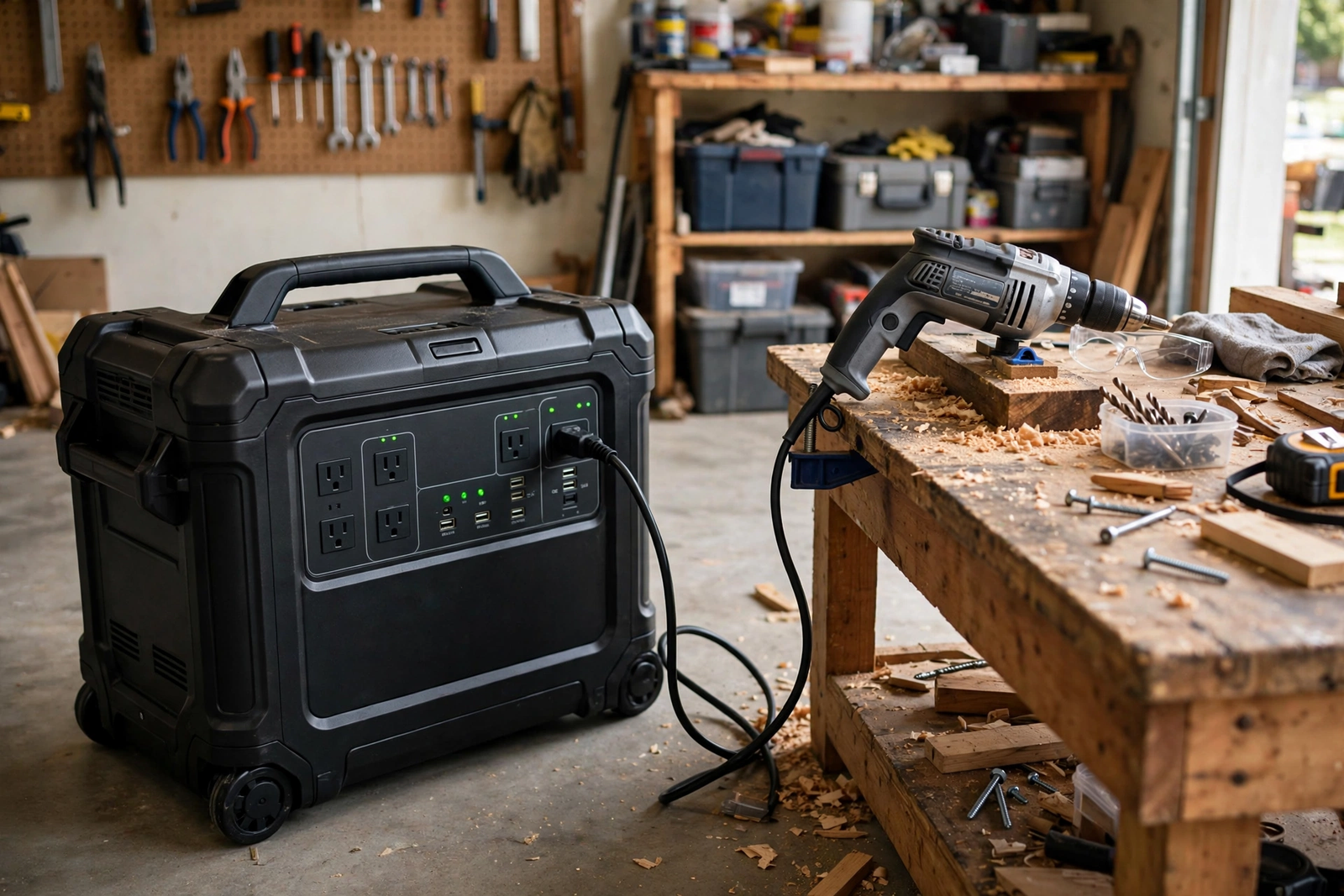
Bluetti AC200L
Best Overall for RV and Boondocking
The AC200L is the most RV-native power station in this lineup, and it comes down to one port: the 30A RV outlet. Your RV’s shore power cable plugs straight in, no adapters, no dongles, no 15A bottleneck. It turns the station into a silent hookup wherever you are parked.
Beyond that port, the numbers are serious. 2048Wh of LiFePO4 battery, 2400W of AC output (with 3600W Power Lifting for stubborn motor-driven loads like a struggling compressor), and expandability all the way to 8192Wh with extra batteries. The 1200W max solar input is the largest here by a wide margin, which means the fastest off-grid recharge. When you do have shore power, it charges 0-80% in 45 minutes. The honest downside is weight: 61.4 lbs. This is not a station you carry in and out every day. It lives in a storage bay or a corner of the rig.
| Capacity | 2048Wh LiFePO4 (expandable to 8192Wh) |
| AC output | 2400W (3600W Power Lifting) |
| Weight | 61.4 lbs |
| RV outlet | 30A RV port |
| Solar input | 1200W max |
| AC charging | 0-80% in 45 minutes |
- Native 30A RV outlet, no adapter needed
- Expandable to 8192Wh for full-timing
- 1200W solar input, fastest off-grid recharge here
- 3600W Power Lifting for motor-driven loads
- 61.4 lbs, a permanent-install weight
- Overkill for small campers and teardrops
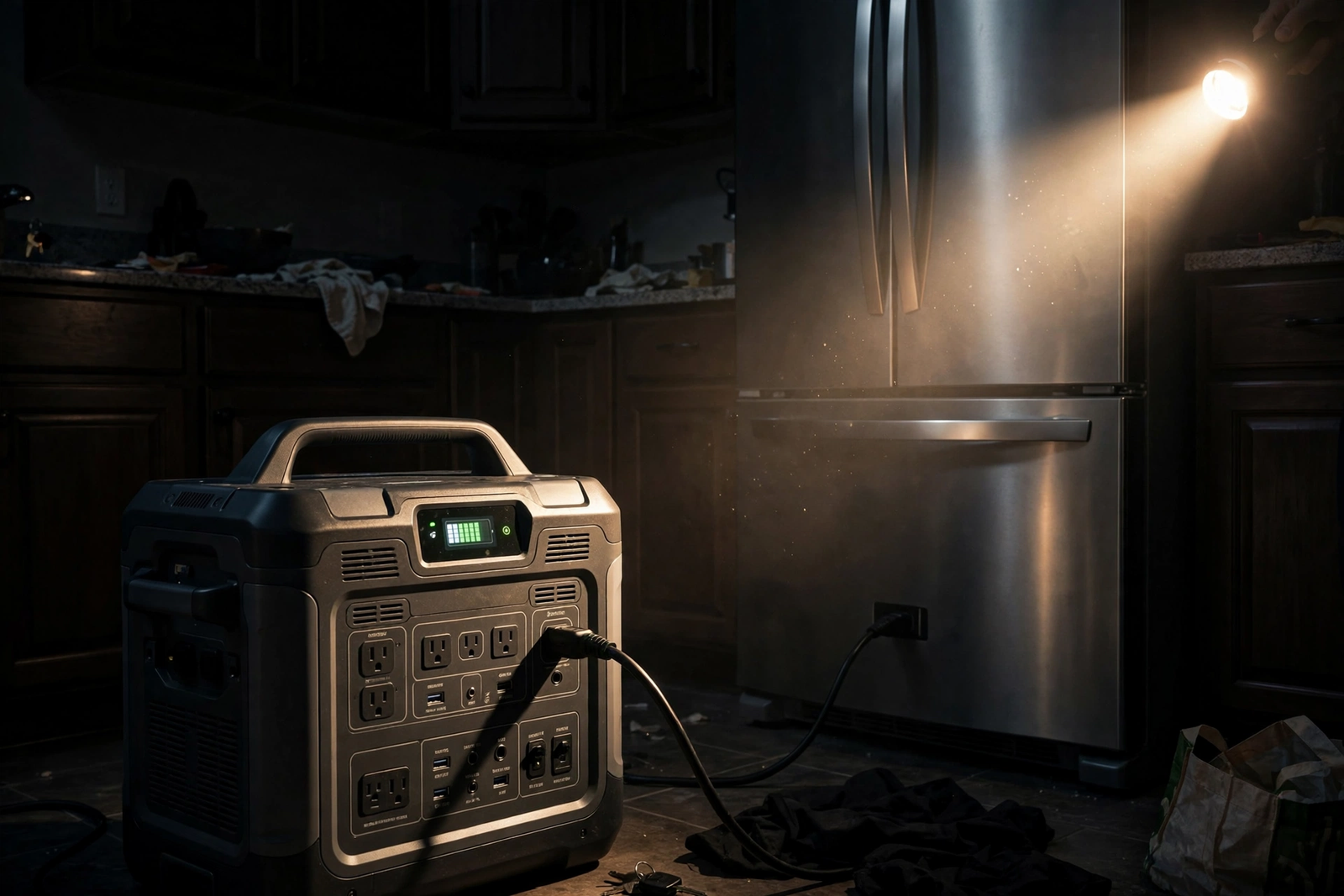
EcoFlow Delta 2 Max
Big Alternative
The Delta 2 Max plays in the same league as the AC200L: 2048Wh, 2400W of output, and expandable capacity for growing needs. It is the Delta 2’s bigger brother for people who outgrew the 1kWh class.
Its advantages are portability and charging speed. At about 50 lbs it is noticeably lighter than the AC200L, which matters when the station rides in a truck bed or gets muscled in and out of a storage bay. And it fast-charges on AC in about an hour, so a single night at a hookup campground leaves you with a full battery. What it does not have is the AC200L’s dedicated 30A RV outlet, so you will connect your shore cable through a 15A adapter. That works fine for most loads but caps pass-through at 1800W.
| Capacity | 2048Wh LiFePO4 (expandable) |
| AC output | 2400W |
| Weight | About 50 lbs |
| AC charging | About 1 hour (full) |
- 2048Wh and 2400W in a lighter package
- One-hour fast AC charging
- Expandable capacity
- Good fit for existing EcoFlow setups
- No native 30A RV outlet, 15A adapter caps at 1800W
- Still heavy to move daily
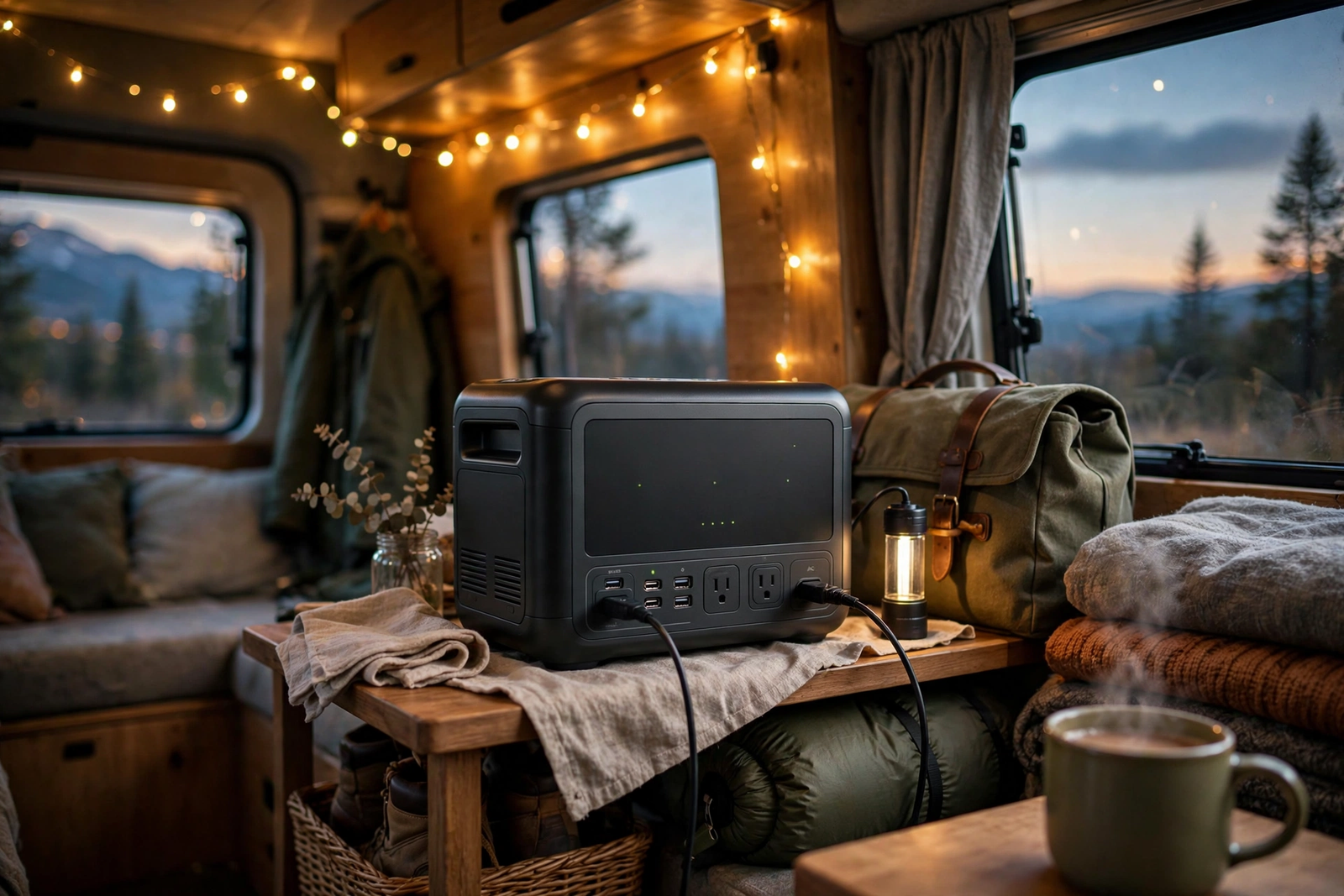
Jackery Explorer 1000 v2
Best Lightweight Weekender
At 23.8 lbs, the Explorer 1000 v2 weighs less than half of the big units. That is the whole pitch, and it is a good one: this is a station one person carries in and out of the RV without thinking twice. It has a fold-flat handle, runs very quietly, and the app offers a one-hour emergency charge mode for when you are in a hurry.
The specs back up the reputation. 1070Wh of LiFePO4, 1500W of AC output (3000W surge), and 4000 charge cycles to 70% capacity, the longest cycle life in this list. Do the runtime math: 1070Wh x 0.85 gives about 910 usable watt-hours. That is lights, phones, and laptops for a long weekend, a CPAP all night with power to spare, or a mini fridge for roughly 15 hours. The 1500W output runs a microwave or a coffee maker one at a time, but this is not the station for roof air conditioning.
| Capacity | 1070Wh LiFePO4 |
| AC output | 1500W (3000W surge) |
| Weight | 23.8 lbs |
| Cycle life | 4000 cycles to 70% |
| Extra | Fold-flat handle, 1-hour emergency charge via app |
- Lightest here at 23.8 lbs, easy solo carry
- 4000-cycle battery life, longest in this list
- Runs very quietly
- Simple to live with
- 1070Wh is a weekend tank, not a full-time one
- Not enough for roof air conditioning
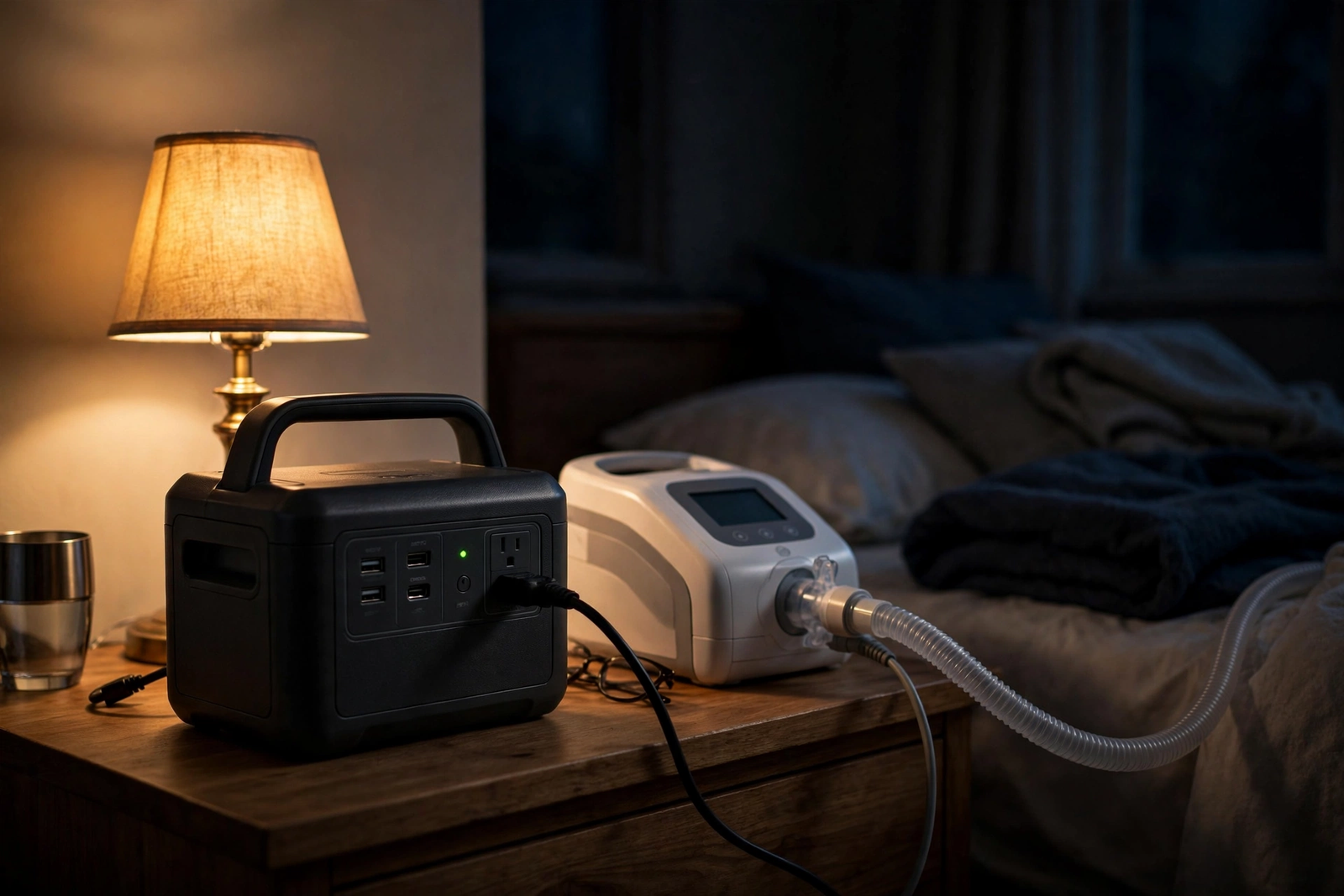
EcoFlow Delta 2
Best Value
The Delta 2 is the all-rounder workhorse of the 1kWh class: 1024Wh of LiFePO4, 1800W of AC output (2700W surge), and 27 lbs. It does everything the weekender needs, for the lowest entry price in this list.
Its superpower is charging speed. 0-80% in 50 minutes on AC is the fastest in its class, which is a bigger deal for RVers than it sounds: stop at a hookup campground for one night and you roll out with a full battery. Its 500W max solar input is plenty for a couple hundred watts of panels, the sweet spot for a station this size. You also get 3000 cycles to 80% and a 5-year warranty, the longest warranty coverage in this lineup. Runtime math: 1024 x 0.85 is about 870 usable Wh, enough for a mini fridge through the night plus all your devices, or two to three easy days of lights and laptops.
| Capacity | 1024Wh LiFePO4 |
| AC output | 1800W (2700W surge) |
| Weight | 27 lbs |
| AC charging | 0-80% in 50 minutes |
| Solar input | 500W max |
| Warranty | 5 years, 3000 cycles to 80% |
- Most capability per dollar in the 1kWh class
- Fastest AC charging in its class
- 5-year warranty, longest coverage here
- Manageable 27 lbs
- No 2kWh-plus capacity path
- No 30A RV outlet
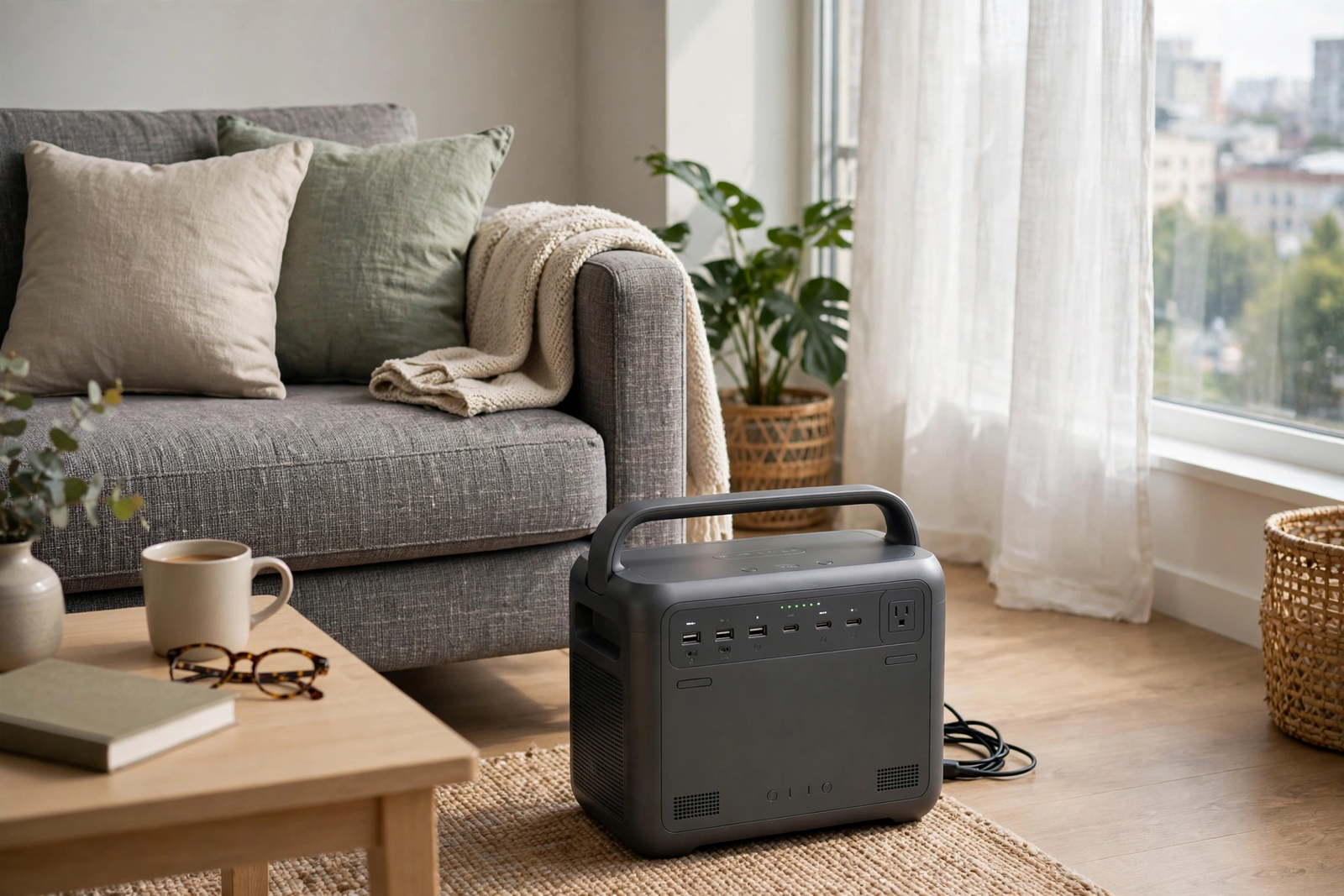
Anker Solix C1000
Tech Pick
Anker built its name on reliable electronics, and the Solix C1000 carries that reputation into power stations. 1056Wh of LiFePO4, 1800W of AC output (2400W surge), about 28 lbs, and the fastest recharge claim in this list: 0-80% in 43 minutes.
Two things make it interesting for RVers specifically. First, it is expandable with an extra battery, which is rare in the 1kWh class and means your station can grow if weekend trips turn into months on the road. Second, its 600W max solar input is the most solar headroom of any 1kWh unit here, so it recharges off-grid faster than its classmates. With 3000+ cycles and Anker’s track record, this is the pick for buyers who value engineering and fast turnarounds over raw capacity per dollar.
| Capacity | 1056Wh LiFePO4 (expandable) |
| AC output | 1800W (2400W surge) |
| Weight | About 28 lbs |
| AC charging | 0-80% in 43 minutes |
| Solar input | 600W max |
- Fastest recharge claim in this list
- Expandable, rare in the 1kWh class
- 600W solar input, best off-grid speed in its class
- Anker reliability reputation
- Less capacity per dollar than the Delta 2
- No 30A RV outlet
Comparison Table
| Station | Capacity | Output | Weight | Standout |
| Bluetti AC200L | 2048Wh (to 8192Wh) | 2400W | 61.4 lbs | 30A RV port, 1200W solar input |
| EcoFlow Delta 2 Max | 2048Wh (expandable) | 2400W | ~50 lbs | Lighter 2kWh, 1-hr fast charge |
| Jackery Explorer 1000 v2 | 1070Wh | 1500W | 23.8 lbs | Lightest, quietest, simplest |
| EcoFlow Delta 2 | 1024Wh | 1800W | 27 lbs | Best value, 5-year warranty |
| Anker Solix C1000 | 1056Wh (expandable) | 1800W | ~28 lbs | Fastest recharge, 600W solar |
Our Verdict
For RV and boondocking, the Bluetti AC200L is the clear pick. The 30A RV outlet alone settles it: it is the only station here that takes your shore cable directly. Add expandability to 8192Wh and 1200W of solar input, and it is a system that grows with you from long weekends to full-timing. If that is more station than your rig needs, the Jackery Explorer 1000 v2 is the smart weekender buy: light, simple, and easy on the wallet.
Pingback: Best Solar Panels for Power Stations 2026: 5 Folding Picks
Pingback: What Size Portable Power Station Do I Need? (2026 Guide)