
Every beginner composter weighing compost tumbler vs electric composter hits the same fork in the road, usually within an hour of starting research, usually within an hour of starting research. On one side: the compost tumbler, a rotating drum that lives outside and turns scraps into real compost for under $200. On the other: the electric composter, a countertop appliance that shrinks food waste overnight for $400 to $900. They share a name and almost nothing else.
The confusion is understandable because the industry uses one word, “composter,” for two fundamentally different machines. A tumbler hosts a living microbial ecosystem that produces genuine finished compost over weeks. An electric unit mostly grinds and dehydrates in hours, producing a pre-compost that still needs soil to finish. Neither is a scam. They just solve different problems for different households.
This guide compares the two formats honestly across the dimensions that decide purchases: cost, output, effort, space, speed, and who each suits. It closes with the best picks in each format. No hands-on testing is claimed. Everything below comes from manufacturer spec sheets, published reviewer findings, and owner reports.
- A tumbler makes real finished compost through microbial decomposition over 4 to 8 weeks. An electric unit makes a dried pre-compost in hours that needs soil contact to finish.
- The budget fork is real: $85 to $200 for a good tumbler versus $299 to $899 for an electric unit, plus consumables for electrics.
- Tumblers need outdoor space and a few minutes of turning every few days. Electrics need counter space, an outlet, and filter or pod replacements.
- Choose a tumbler if you have any outdoor space and want genuine compost. Choose electric if you have no outdoor space or need indoor, odor-free operation.
- The honest middle answer for many households is both: an electric unit for daily scraps and a tumbler for the finished amendment.
Compost Tumbler vs Electric Composter: The Real Cost Math
A quality dual-chamber tumbler runs $85 to $200 as a one-time purchase with zero running costs. Sunlight and microbes are free. An electric composter runs $299 to $899 upfront (Vitamix FC-50 at $399.95 direct, Lomi and Reencle Prime around $499), plus ongoing consumables: Lomi pods and charcoal at about $50 per 45 cycles, replacement carbon filters for the FC-50 every few months, microbe refills for the Reencle. Over three years, a tumbler costs its sticker price. An electric unit costs its sticker price plus hundreds more in consumables and electricity. If budget is the deciding factor, the tumbler wins by a wide margin.
Output: What You Actually Get
This is where the formats diverge most. A well-run tumbler produces finished compost: dark, crumbly, earthy-smelling humus you can plant directly into. An electric unit produces a dried, ground intermediate that must cure in soil for a week or two before it behaves like compost. The Reencle Prime narrows this gap with its live-microbe process, but even it benefits from soil finishing. If your goal is the best possible soil amendment, the tumbler wins. If your goal is waste reduction with a useful byproduct, electrics are excellent.
Effort and Routine
Tumblers ask for physical engagement: loading scraps, adding browns, turning the drum every few days, monitoring moisture. It is a few minutes a few times a week, and many gardeners enjoy the ritual. Electrics ask for almost nothing day to day: drop scraps in, press a button, empty the dry output. The effort shifts to maintenance: replacing filters, buying pods, wiping down the unit. Choose based on which kind of effort fits your life, not on the fantasy of zero effort, because neither format is truly effort-free.
Space and Setting
Tumblers need outdoor space: a balcony, patio, or yard corner, plus clearance to rotate. They are weather-exposed and slow down in winter unless insulated. Electrics need indoor counter or floor space and a power outlet, and they work year-round regardless of weather. Apartment with no balcony: electric is the only option. House with a yard: the tumbler is the natural fit. Short on room? The models in our small-space compost tumbler guide need as little as about 7 square feet of floor space.
Top Picks at a Glance
FCMP Outdoor IM4000
Genuine finished compost, one-time cost, zero consumables.
VIVOSUN 43-Gallon
Biggest cheap capacity with vent control.
Reencle Prime
Live microbes: the closest electric gets to real composting.
Lomi (Pela)
Best design and most cycle flexibility in an electric.
Detailed Reviews

1 FCMP Outdoor IM4000
If you have outdoor space, this is the value king of composting. Thirty-seven gallons across two chambers, excellent aeration engineering, recycled Canadian-made construction, and a one-time budget-friendly price with no consumables ever. It makes real finished compost in 4 to 8 weeks under good conditions. The 4.5-star consensus across tens of thousands of owners is unmatched.
Who it’s for: anyone with a balcony, patio, or yard who wants real compost cheaply. Who should skip: true apartments with zero outdoor space.
| Capacity | 37 gallons, dual chamber |
| Material | Recycled PP (BPA-free, UV-inhibited), galvanized steel frame |
| Cost | One-time, budget-friendly tier, zero consumables |
| Output | Genuine finished compost |
- Genuine finished compost
- Lowest lifetime cost
- Proven durability
- Huge owner base
- Needs outdoor space
- Slows in winter
- Assembly takes a helper

2 VIVOSUN 43-Gallon Dual Chamber
The budget tumbler pick: 43 gallons, adjustable vents, dual chambers, 360-degree rotation, all at the lowest price tier in this guide. It makes the same genuine compost as the FCMP, just in a lighter-duty vessel. For a first tumbler or a tight budget, it is the rational choice.
Who it’s for: budget buyers with outdoor space. Who should skip: buy-it-for-life shoppers.
| Capacity | 43 gallons (2 x 21.5 gal) |
| Material | PP plastic, galvanized steel frame |
| Vents | Adjustable air vents |
| Cost | Budget tier, zero consumables |
- Biggest cheap capacity
- Vent control
- Genuine compost output
- Lighter build
- Fiddly assembly
- Uninsulated
3 Reencle Prime
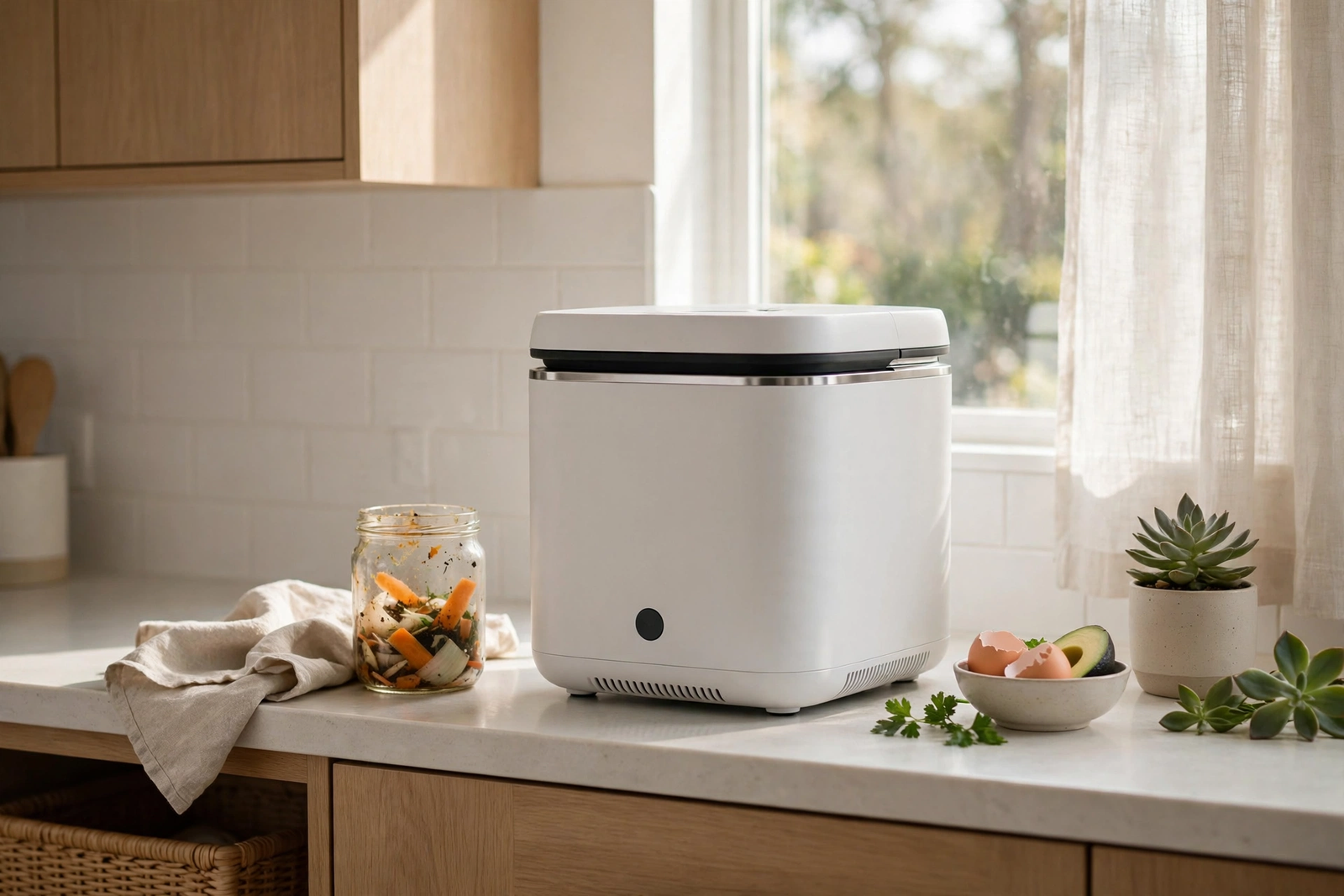
For households that must go electric, the Reencle is the pick that comes closest to what a tumbler does. Its live microbes continuously decompose waste rather than just dehydrating it, producing the most compost-like output of any electric machine. Rated 28 dB, odor-free via 3-layer filtration, 14 liters handling up to 2.2 lbs per day. Around $499 to buy or $35 per month to rent.
Who it’s for: apartment dwellers who want the most genuine composting an electric can offer. Who should skip: anyone with outdoor space, where a tumbler costs a fifth as much.
| Capacity | 14 liters, up to 2.2 lbs per day |
| Method | Live microbes, continuous |
| Noise | Rated 28 dB |
| Price tier | Premium tier (about $499, or $35/month rental) |
- Closest to real composting
- Quiet
- Odor-free
- Continuous use
- Premium price plus consumables
- Newer brand
4 Lomi (Pela)
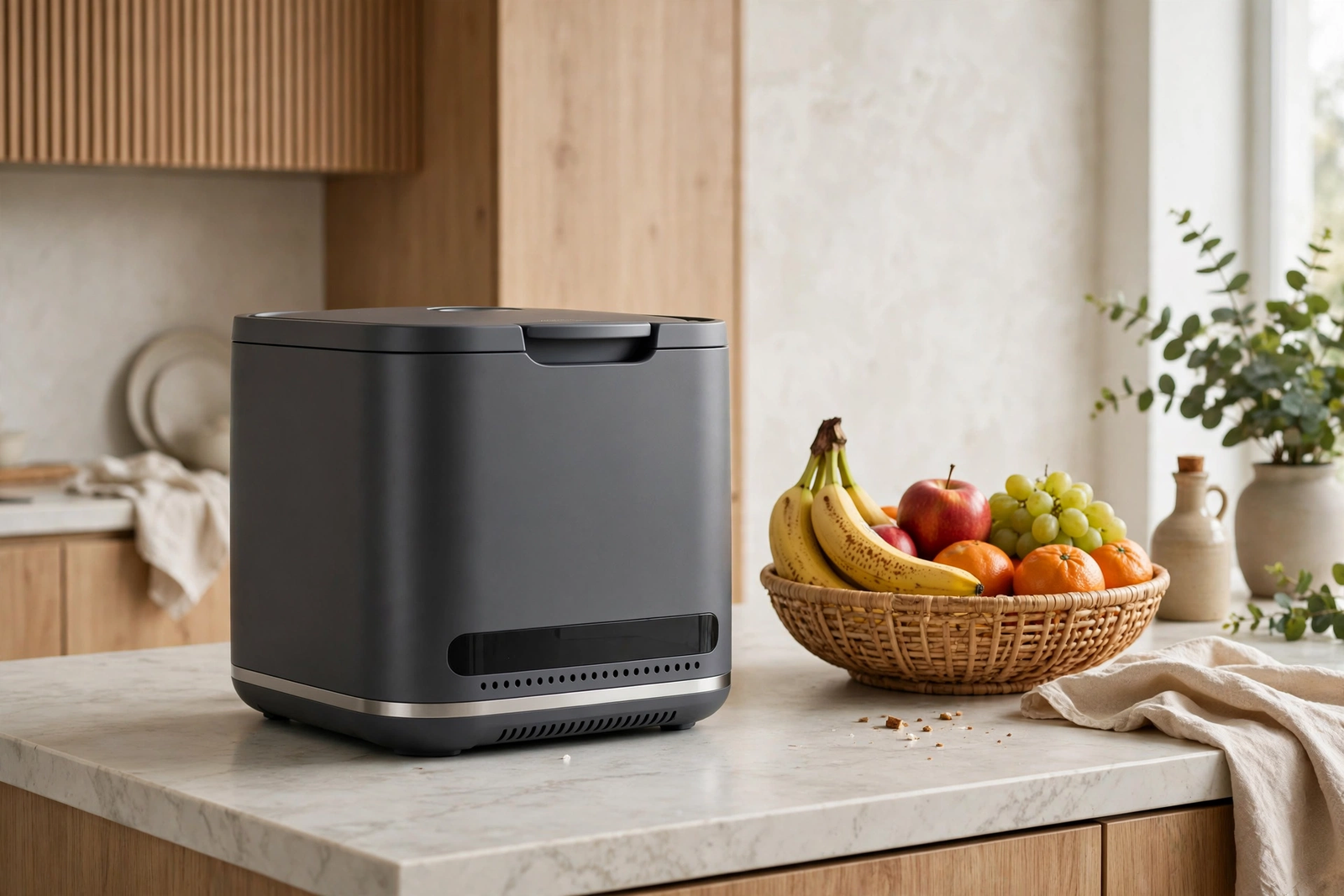
Lomi is the design leader with three cycle modes and the longest, most thorough Grow Mode in the dehydrating class. Three liters, about $500 plus $50 in pods and charcoal per 45 cycles. For electric buyers who want the most control and the best-looking machine, it delivers, as long as the consumable math is acceptable.
Who it’s for: design-conscious electric buyers. Who should skip: budget-focused buyers and consumable skeptics.
| Capacity | 3 liters |
| Modes | 3 modes (3-5 hr to 16-20 hr) |
| Consumables | About $50 per 45 cycles |
| Price tier | Premium tier (about $500) |
- Best design
- Flexible modes
- Thorough Grow Mode
- Consumable costs
- Large footprint
- Noisier
3-Year Cost Comparison, Itemized
The cost section above gave the shape; here are the line items so you can adjust the math to your household.
| Line item | Tumbler (FCMP IM4000) | Electric (Lomi) | Electric (Vitamix FC-50) | Electric (Reencle Prime) |
|---|---|---|---|---|
| Purchase | ~$85-200 once | ~$500 | $399.95 | ~$499 |
| Year 1 consumables | $0 | ~$50-100 | ~$30-60 | ~$50-100 |
| Year 2 consumables | $0 | ~$50-100 | ~$30-60 | ~$50-100 |
| Year 3 consumables | $0 | ~$50-100 | ~$30-60 | ~$50-100 |
| Electricity (3 yrs, approx.) | $0 | Modest | Modest | Modest (runs continuously) |
| Browns (leaves/cardboard) | Free to minimal | N/A | N/A | N/A |
| 3-year total (approx.) | $85-200 | $650-800 | $490-580 | $620-740 |
The tumbler’s lifetime cost advantage is roughly 3x to 4x. That gap funds a lot of garden supplies. The electric premium is the price of indoor convenience, zero outdoor space, and year-round operation. Whether that premium is worth it depends entirely on whether you have the alternative.
The Hybrid System: Why Many Serious Composters Run Both
The format war has a peace treaty, and experienced composters sign it: use both. An electric unit lives in the kitchen handling daily scraps with zero odor and zero trips outside. Its output, instead of going straight to plants, goes into the outdoor tumbler as a pre-processed, sanitized nitrogen input. The tumbler finishes it into genuine compost in weeks rather than months, because the material arrives partially broken down.
This system plays to each format’s strength and covers each weakness. Winter? The electric keeps working while the tumbler sleeps. Summer glut of garden waste? The tumbler absorbs volumes no countertop unit could. Smell? Neither stage produces any when managed. The cost is owning two systems, but for a serious gardening household the combined output and convenience justify it. Start with whichever format fits your space, and add the second when the first reveals its limits.
Environmental Footprint: Electricity vs Manufacturing
Buyers sometimes ask which format is greener. The honest answer is that both beat landfilling food waste by an enormous margin, and the difference between them is second-order.
A tumbler’s footprint is mostly manufacturing: plastic or steel production, shipping a bulky item once. After that it runs on sun and microbes with zero energy input for a decade. An electric’s footprint is manufacturing plus ongoing electricity and consumables: filters, pods, and packaging shipped repeatedly. Over a ten-year life the tumbler’s footprint is clearly smaller. But context matters: an electric composter in an apartment dweller’s kitchen displaces food waste that would otherwise generate methane in a landfill, and methane is roughly 80 times more potent than CO2 over 20 years. Either machine is a large net positive versus the trash bin. Do not let footprint perfectionism stop you from composting at all.
The 5-Question Decision Quiz
Answer these five questions honestly and the format picks itself.
1. Do you have any outdoor space (balcony, patio, yard)? No: electric. Yes: continue.
2. Does your winter drop below freezing for months? Yes and you want winter composting: insulated tumbler (Jora) or electric. Mild winters: any tumbler works.
3. Is your budget under $250 all-in? Yes: tumbler, no contest. Electrics start around $400 before consumables.
4. Do you want finished compost for a garden, or just less food waste? Finished compost: tumbler. Less waste with a useful byproduct: either, electric is easier.
5. How much daily effort will you actually sustain? Minutes a few times a week outdoors: tumbler. Near-zero with occasional filter changes: electric.
If you answered “tumbler” to most: the FCMP IM4000 is the default pick. If “electric”: the Reencle Prime for output quality, Lomi for design, Vitamix FC-50 for value and quiet.
Time Audit: Honest Weekly Minutes
Marketing implies both formats are effortless. Here is the realistic weekly time cost per format, averaged across owner reports.
- Tumbler: 5 minutes turning every 2-3 days, 5 minutes adding scraps and browns a few times a week, occasional moisture checks. Total: roughly 20-30 minutes per week.
- Electric (Lomi/Vitamix): 2 minutes loading scraps daily, one button press per cycle, 5 minutes emptying and wiping weekly, filter changes every few months. Total: roughly 15-20 minutes per week.
- Electric (Reencle): 2 minutes adding scraps daily, 5 minutes harvesting output weekly, occasional filter and microbe checks. Total: roughly 15-20 minutes per week.
The difference is smaller than expected. The real distinction is not total time but the kind of time: scheduled outdoor physical minutes versus scattered indoor seconds. Choose the kind you will actually do.
Our Verdict
The format decision is simpler than the internet makes it. Got outdoor space? Buy a tumbler. The FCMP IM4000 makes genuine finished compost for a one-time budget-friendly price, and nothing electric touches that value. No outdoor space? Go electric, and pick the Reencle Prime for the most compost-like output or Lomi for design and flexibility. The only wrong choice is buying an electric unit while expecting a tumbler’s finished compost, or buying a tumbler with nowhere to put it. Match the machine to your space and your goal, and composting works.