
Composting has a space problem, and the best compost tumbler for small spaces and apartments is the answer. The classic advice assumes a backyard, a big pile, and room to swing a pitchfork. But millions of would-be composters live in apartments, condos, and townhouses with nothing but a balcony, a patio, or a few square feet of side yard. The good news is that composting scales down beautifully. The bad news is that most “best composter” lists ignore small spaces entirely.
This guide is built for the space-constrained composter. We cover the two realistic paths: countertop electric units for true apartments with no outdoor space at all, and compact tumblers for balconies, patios, and small yards. Each pick is judged on footprint first, because a composter that does not fit your space is useless no matter how well it composts.
Nothing here comes from hands-on product testing. Every claim is grounded in manufacturer spec sheets, published reviewer findings, and owner reports from gardening communities.
- No outdoor space at all? A countertop electric unit (Reencle Prime or Lomi) is the only realistic option, and both are odor-controlled for indoor use.
- Balcony or small patio? A compact dual-chamber tumbler like the VIVOSUN 43-gallon gives real composting capacity in about 7 square feet of floor space.
- Electric units cost more upfront ($400 to $500 tier) but need zero outdoor space; tumblers cost far less but need a balcony or patio.
- For apartments, noise and odor matter more than capacity. The Reencle Prime’s 28 dB rating and 3-layer filter are built for shared-wall living.
- Whatever you choose, keep the footprint honest: measure your space before buying, including clearance to open doors and lids.
Best Compost Tumbler for Small Spaces and Apartments: The Two Paths
Path 1: countertop electric. If you have no balcony, no patio, and no yard, this is your path. Electric units sit on a counter, process scraps indoors with carbon or multi-layer filtration, and produce a dry amendment you can use on houseplants, donate to a community garden, or add to a green-waste bin. The Reencle Prime and Lomi are the two strongest options, and the Vitamix FC-50 is the quiet budget-conscious third.
Path 2: compact tumbler. If you have even a small balcony or patio, a compact tumbler gives you genuine hot composting at a fraction of the electric price. The VIVOSUN 43-gallon dual chamber is the standout here: 43 gallons of capacity in a footprint of roughly 26 by 24 inches. The Miracle-Gro dual chamber is the simpler alternative at 37 gallons.
Top Picks at a Glance
Reencle Prime
28 dB whisper-quiet, odor-free, genuine composting. Built for apartments.
Lomi (Pela)
Best-looking countertop unit with flexible cycle modes.
VIVOSUN 43-Gallon
Most composting capacity per square foot of balcony.
Miracle-Gro Dual Chamber
Easiest assembly for a first-time balcony composter.
Detailed Reviews
1 Reencle Prime
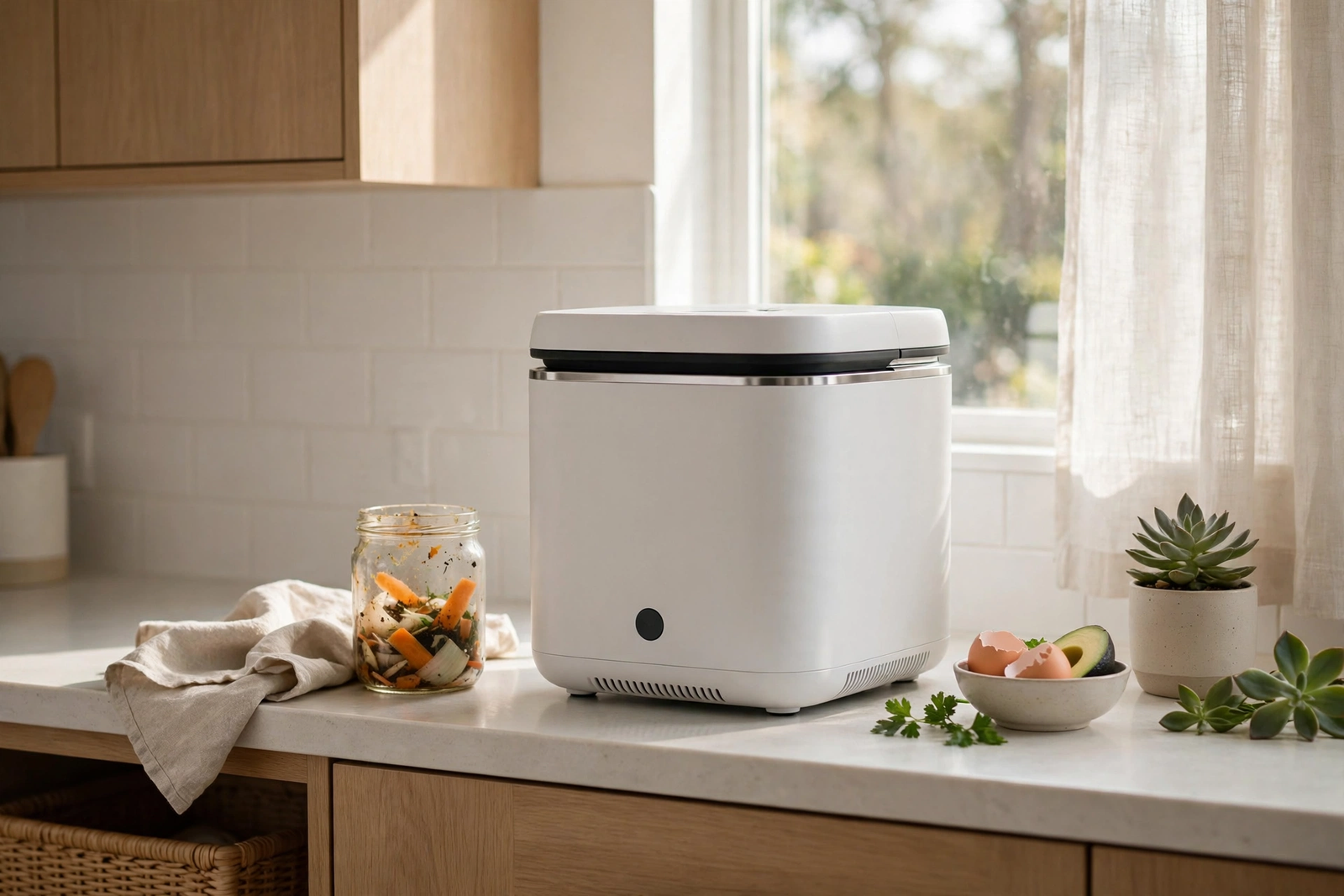
The Reencle is the most apartment-friendly composter in this guide for three reasons: it is quiet at a rated 28 dB (quieter than a conversation, safe for shared walls), it is odor-free via a 3-layer filter system, and its live-microbe process handles up to 2.2 lbs of scraps per day continuously, so there is no waiting for cycles. The 14-liter unit is about the size of a small trash can and fits beside a kitchen counter. You can also rent it for $35 per month instead of buying at around $499, which suits renters who may move.
Who it’s for: apartment dwellers who want real composting with no outdoor space. Who should skip: anyone with a balcony, where a tumbler costs far less.
| Capacity | 14 liters, up to 2.2 lbs per day |
| Noise | Rated 28 dB |
| Odor control | 3-layer filter system |
| Size | About 12 x 13 x 18 inches |
| Price tier | Premium tier (about $499, or $35/month rental) |
- Quietest option
- Genuinely odor-free
- Continuous use
- Rental option for renters
- Premium price to buy
- Newer brand
- Needs counter-adjacent floor space
2 Lomi (Pela)
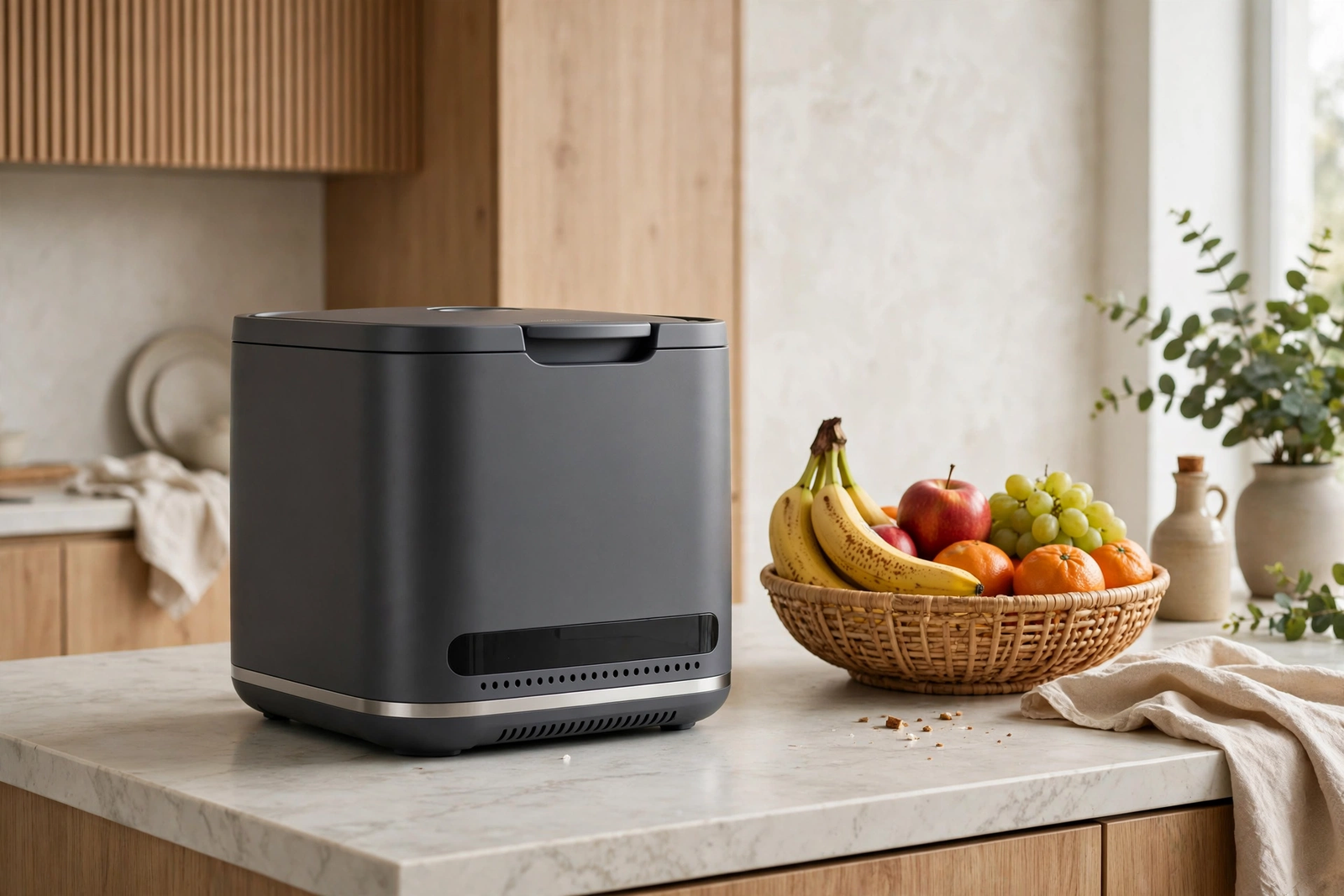
Lomi’s case for small spaces is its countertop form factor and looks: at about 18 x 13 x 12 inches it sits on the counter like a large bread maker, and it is the best-looking machine in the category. The 3-liter capacity suits one or two people, and the three modes let you trade speed for output quality. The costs are real: about $500 upfront plus $50 in pods and charcoal per 45 cycles, and owner reports flag noise. For a studio apartment where the machine is always within earshot, weigh the noise reports seriously.
Who it’s for: design-conscious apartment dwellers with counter space. Who should skip: noise-sensitive studios and pod-cost skeptics.
| Capacity | 3 liters |
| Modes | 3 modes (3-5 hr to 16-20 hr) |
| Size | About 18 x 13 x 12 inches |
| Consumables | About $50 per 45 cycles |
| Price tier | Premium tier (about $500) |
- Compact countertop footprint
- Best design
- Flexible modes
- Consumable costs
- Noise reports
- Premium price

3 VIVOSUN 43-Gallon Dual Chamber
If you have outdoor space measured in feet rather than acres, the VIVOSUN is the capacity king of small footprints: 43 gallons in roughly 26 by 24 inches of floor space. That is a serious composting volume on a balcony. The dual chambers keep the cycle continuous, the adjustable vents help in the variable conditions of balcony life (wind, reflected heat, irregular feeding), and the budget-tier price leaves money for plants. Check your building’s rules on balcony composting first, and remember you need clearance to rotate the drum.
Who it’s for: balcony and patio owners who want maximum composting in minimum space. Who should skip: anyone with literally no outdoor space.
| Capacity | 43 gallons (2 x 21.5 gal) |
| Footprint | About 26 x 24 inches |
| Vents | Adjustable air vents |
| Chambers | Dual chamber, 360-degree rotation |
| Price tier | Budget tier |
- Most capacity per square foot
- Vent control
- Budget price
- Dual chambers
- Needs outdoor space
- Lighter build
- Fiddly assembly
4 Miracle-Gro Dual Chamber
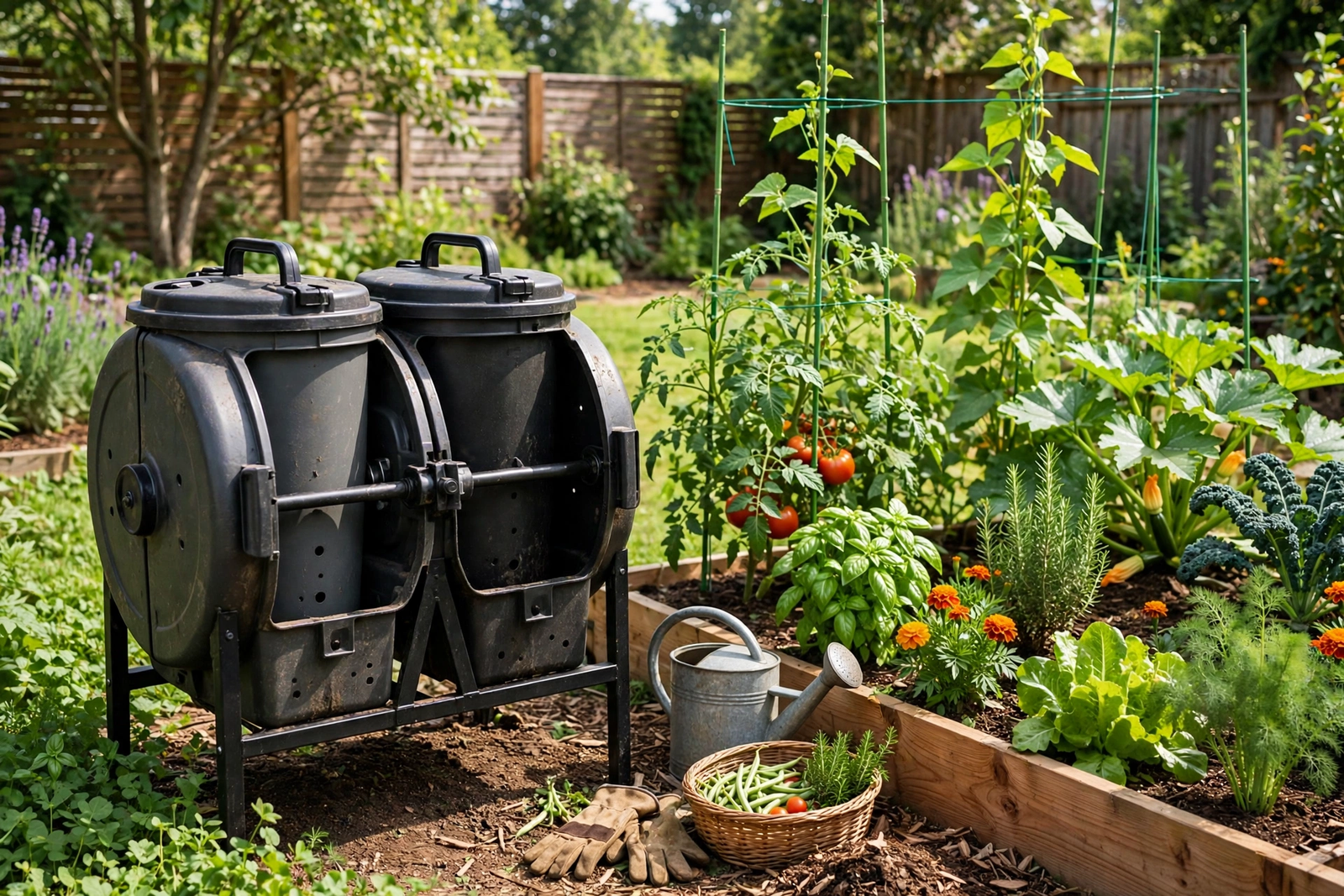
The Miracle-Gro trades the VIVOSUN’s extra 6 gallons for the easiest assembly and smoothest operation in the category. At 37 gallons across two chambers it still handles a household’s scraps, the sliding doors and easy-turn mechanism are balcony-friendly (no wrestling a stiff drum in tight quarters), and the brand is a known quantity. For a first-time composter on a patio, simplicity beats specs.
Who it’s for: first-time balcony composters who value ease. Who should skip: capacity maximizers.
| Capacity | 37 gallons (2 x 18.5 gal) |
| Doors | Sliding doors |
| Rotation | Easy-turn mechanism |
| Material | BPA-free plastic, galvanized steel base |
| Price tier | Mid-range tier |
- Easiest assembly
- Smooth turning
- Good seals
- Trusted brand
- Less capacity than VIVOSUN
- Plain aeration
- Needs outdoor space
Worm Bin vs Electric vs Tumbler: The Apartment Showdown
Three methods compete for the small-space composter. Here is how they actually compare on the dimensions that matter indoors.
| Factor | Worm bin | Electric composter | Compact tumbler |
|---|---|---|---|
| Space needed | Small tote under sink | Counter or floor + outlet | Balcony or patio required |
| Upfront cost | $50-100 | $400-500 | $85-200 |
| Running costs | Bedding occasionally | Filters, pods, electricity | Zero |
| Odor risk | Low if managed | Very low (filtered) | Low (outdoors) |
| Effort | Weekly feeding, moisture checks | Minimal daily, filter changes | Turning every few days |
| Output quality | Excellent (castings) | Good pre-compost | Genuine compost |
| Speed | 2-3 months | Hours to days | 4-8 weeks |
| Deal-breakers | Live worms indoors, temperature sensitivity | Price, consumables | Needs outdoor space |
The worm bin is the dark horse: cheapest, best output (worm castings are superb fertilizer), but it demands comfort with live worms and stable indoor temperatures. The electric is the most convenient and the most expensive. The tumbler makes the best true compost but needs the balcony. There is no universal winner; there is only the best fit for your space, budget, and squeamishness.
The Landlord and HOA Conversation
Many leases and HOAs restrict outdoor composting, and asking permission beats begging forgiveness. Here is how to have the conversation.
- Lead with the sealed system. “Sealed rotating drum” or “indoor electric unit with carbon filtration” sounds nothing like “compost pile,” because it is nothing like one. Use the equipment’s real description.
- Address odor preemptively. This is the only objection that matters. Explain the filtration (electric) or the sealed aerobic design (tumbler), and offer a one-month trial with a written agreement to remove it if there are complaints.
- Cite the waste angle. Many municipalities charge for trash by volume. A composter visibly reduces your waste output, which is a point in your favor with property managers.
- Get it in writing. A brief email confirmation beats a verbal yes if a neighbor complains later. Keep it filed.
- Know when to go electric. If outdoor permission is a hard no, stop fighting and get a countertop unit. Indoor electrics need no permission in virtually any lease.
Balcony Safety: Weight, Drainage, and Rules
A tumbler on a balcony is a structural question first and a gardening question second. Get this wrong and the compost is the least of your problems.
Weight. A full 43-gallon tumbler can weigh 200+ pounds including the frame. Check your balcony’s load rating before buying; most residential balconies handle it, but old buildings and railings-mounted planters deserve verification. Distribute weight against the building wall, not the railing edge.
Drainage. Tumblers produce leachate, especially when the pile is wet. That liquid will find your downstairs neighbor’s balcony if you let it. Place a shallow tray under the drum, check it after rain, and keep pile moisture in the correct range so there is little free liquid to begin with.
Rules. Beyond the landlord conversation above, check municipal rules: some cities restrict balcony composting, some encourage it. A five-minute search of your city’s waste management site settles it.
Odor Diplomacy in Shared Buildings
In a shared building, your composting reputation is made or lost on smell. The technical fixes are covered in our troubleshooting guide; this is the social layer.
- Never let neighbors discover a problem before you do. Check your system before it becomes noticeable. If you smell something, they will soon.
- Keep the area visibly clean. A tidy balcony with a clean tumbler reads as “responsible hobby.” Scraps on the floor read as “health hazard.” Perception matters.
- Share the output. Nothing converts skeptics like free compost for their plants. A small bag of finished compost for the neighbor downstairs is the cheapest insurance you can buy.
- Have an exit plan. Know where the tumbler would go (a friend’s yard, a community garden) if complaints force removal. Having the plan calm makes the whole endeavor lower-stakes.
Where the Finished Compost Goes (No Garden Needed)
The number one unanswered question in apartment composting: I made compost, now what? More options than you think.
- Houseplants. The obvious one. Top-dress pots with finished compost twice a year; they will show the difference.
- Community gardens. Most accept compost donations gladly, and some will trade you vegetables for it.
- Gardening neighbors. Post on a local group: free compost for pickup. It will be gone within days.
- Guerrilla gardening. That sad street tree outside your building would love a top-dressing. Check local rules first, but this is widely tolerated.
- Municipal green waste. Where available, finished compost can go in the organics bin. It is a fine end to the loop even if it feels anticlimactic.
The 30-Day Starter Plan for Apartment Composters
The first month decides whether apartment composting sticks. This plan removes the guesswork.
Week 1: Set up and observe. Install the electric unit or assemble the balcony tumbler. Start collecting scraps without pressure. Notice how much your household actually generates; most people overestimate by half. Find your browns source (a bag of shredded cardboard, a neighbor’s leaf pile).
Week 2: Build the routine. Fix your feeding schedule: same time, same place, every two to three days. Bury greens under browns every single time. Check moisture with the squeeze test. If anything smells, fix it now using the troubleshooting guide before it becomes a story your neighbors tell.
Week 3: First output. Electric owners will empty their first real batch; tumbler owners will see the pile heating and shrinking. Mix a small amount of finished or cured material into a houseplant. This tangible result is what converts a chore into a hobby.
Week 4: Systematize. Decide where finished compost goes long-term (houseplants, community garden, neighbor). Set a recurring reminder for filter checks or turning days. By day 30 the routine should run on autopilot. If it does not, simplify: fewer inputs, stricter schedule, smaller ambitions. A simple system you maintain beats a perfect system you abandon.
Our Verdict
Small space does not mean no composting. It means choosing the right tool for the space you have. Zero outdoor space: the Reencle Prime is the quietest, most genuinely composting countertop option, with Lomi as the design pick. Balcony or patio: the VIVOSUN 43-gallon gives you the most compost per square foot at a budget price, with the Miracle-Gro as the easier alternative. Measure your space, check your building rules, and start small. A working small system beats an ambitious one that never gets built.
Pingback: Compost Tumbler Not Heating Up? 7 Reasons and Fixes (2026)
Pingback: Do Electric Composters Really Make Compost? Honest Answer (2026)
Pingback: Best Compost Tumbler for Cold Climates (2026): Winter Picks
Pingback: Compost Tumbler vs Electric Composter: Which Should You Buy? (2026)
Pingback: FCMP vs VIVOSUN Compost Tumbler (2026): Which Wins?
Pingback: Why Does My Compost Tumbler Smell? 5 Fixes That Work (2026)