
Do electric composters really make compost? It is the question hiding inside every electric composter purchase, the one buyers type into forums at 1 a.m. after unboxing: does this thing actually make compost, or did I just buy a $500 food dryer? The marketing shows rich, dark soil. The machine produces something that looks a bit like soil. But gardeners keep reporting a confusing middle ground, and the companies themselves keep hedging.
Here is the straight answer, the one that would save a lot of buyers a lot of disappointment. Most electric composters do not make finished compost. They make an intermediate material: food waste that has been ground, heated, and dehydrated into a dry, shrunken, mostly sterile powder or crumble. That material still needs time in contact with soil and soil microbes to become the humus-rich amendment gardeners call compost. The FoodCycler company is unusually honest about this: it calls its output “foodilizer,” not compost.
None of that means these machines are useless. It means you should buy one for what it actually does: shrink your food waste by up to 90 percent, kill odors, and produce a soil amendment that finishes quickly once it hits dirt. This guide explains the science in plain terms, what to do with the output, and which machines come closest to the real thing.
Nothing here comes from hands-on product testing. Every claim is grounded in manufacturer spec sheets, published reviewer findings, and owner reports from gardening communities.
- Real compost is made by living microbes over weeks, with heat, moisture, and oxygen. A 4-hour heated cycle cannot replicate that biology.
- Electric composter output is best described as a pre-compost: dried, ground, volume-reduced, and biologically incomplete.
- The output still needs 1 to 2 weeks mixed into soil before plants get the full benefit. Applied raw in large amounts, it can temporarily tie up nitrogen.
- The Reencle Prime is the exception: its live-microbe system genuinely continues decomposition, making its output the closest to real compost.
- Buy an electric composter for waste reduction and odor control, not as a replacement for a compost pile. Judge it on those terms and most owners are satisfied.
Do Electric Composters Really Make Compost: What Real Compost Actually Is
Compost is not just rotted food. It is the end product of a microbial succession: mesophilic bacteria start the breakdown, thermophilic bacteria take over and drive temperatures to 130 to 160 F, fungi decompose the tough cellulose and lignin, and the whole process ends in humus, a stable, dark, earthy-smelling material rich in microbial life. That takes weeks at minimum, usually months, and it requires sustained moisture and oxygen throughout.
An electric composter runs a fundamentally different process. It grinds the waste, heats it to drive off moisture, and in some cases adds microbial tablets. The result is dramatically smaller and drier, and the heat does kill pathogens and seeds, which is genuinely useful. But the microbial succession never happens. The lignin is not decomposed by fungi. The humus is not formed. What you have is better described as dehydrated, sanitized food waste.
The “Foodilizer” Admission
Give Vitamix credit for honesty here. The company calls the FC-50’s output “foodilizer” and describes it as a fast-acting fertilizer and soil amendment, not compost. Its own guidance says to mix about one cup of output into roughly ten cups of soil and let it sit for about ten days. That ten-day soil rest is doing the composting the machine did not finish. Lomi’s guidance is similar: its Grow Mode output is the most processed, but the company still positions it as a supplement to soil, not a replacement for compost.
What to Do With the Output
Treat electric composter output as a potent amendment, not as potting soil. Mix it into garden beds or potting mix at modest ratios and give it a week or two of soil contact before planting directly into it. The reason is nitrogen: unfinished, high-carbon material can temporarily lock up nitrogen as soil microbes rush to finish decomposing it, which can yellow young plants. Small amounts, well mixed, and time solve this completely. Many owners report excellent garden results once they learn this rhythm. The failures come from dumping a full bucket of fresh output directly around plant stems. Got even a small balcony? A compact tumbler finishes that pre-compost properly – see the compost tumblers for small spaces and apartments that fit in a few square feet.
Which Machines Come Closest to Real Compost
Ranked by output quality, the order is clear. The Reencle Prime leads because it does not dehydrate and stop: its ReencleMicrobes keep working on the material continuously, which is actual decomposition rather than arrested dehydration. Reviewers who tested machines side by side rated it highest on this exact criterion. Lomi’s Grow Mode is next: the 16 to 20 hour cycle with microbial pods produces the most broken-down output of the dehydrating machines. The Vitamix FC-50’s output is a clean, dry, sanitized powder that works well as a soil amendment once cured in soil, and its honesty about the “foodilizer” concept is refreshing.
Top Picks at a Glance
Reencle Prime
Live microbes keep decomposing continuously. The closest to real compost.
Lomi (Pela)
Grow Mode gives the most thorough output of the dehydrating machines.
Detailed Reviews
1 Reencle Prime
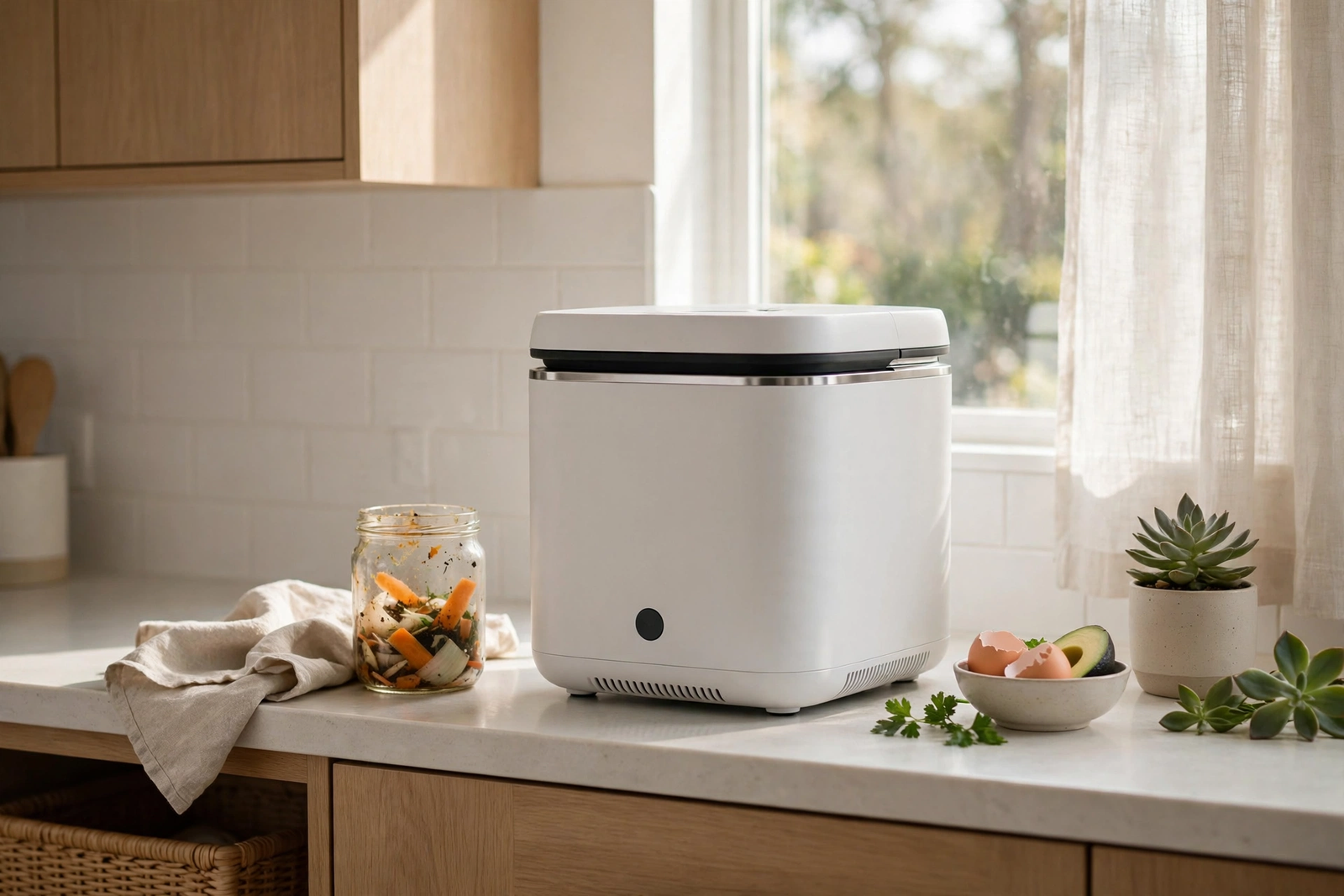
The Reencle earns its top spot here on mechanism, not marketing. Its chamber hosts live, self-replicating microbes that continuously break food down over about 24 hours. That is decomposition, the same class of process as a backyard pile, just accelerated and contained. The output is an odor-free material that reviewers consistently describe as the most compost-like of any electric machine. It processes up to 2.2 lbs per day in a 14-liter chamber at a rated 28 dB, with a 3-layer filter system.
Who it’s for: anyone whose purchase hinges on output quality. Who should skip: buyers who want the most established brand.
| Capacity | 14 liters, up to 2.2 lbs per day |
| Method | Live ReencleMicrobes, continuous decomposition |
| Noise | Rated 28 dB |
| Odor control | 3-layer filter system |
| Price tier | Premium tier (about $499, or $35/month rental) |
- Genuine continuous decomposition
- Most compost-like output
- Quiet
- Odor-free
- Newer brand
- Needs ongoing microbe care
- Premium price
2 Lomi (Pela)
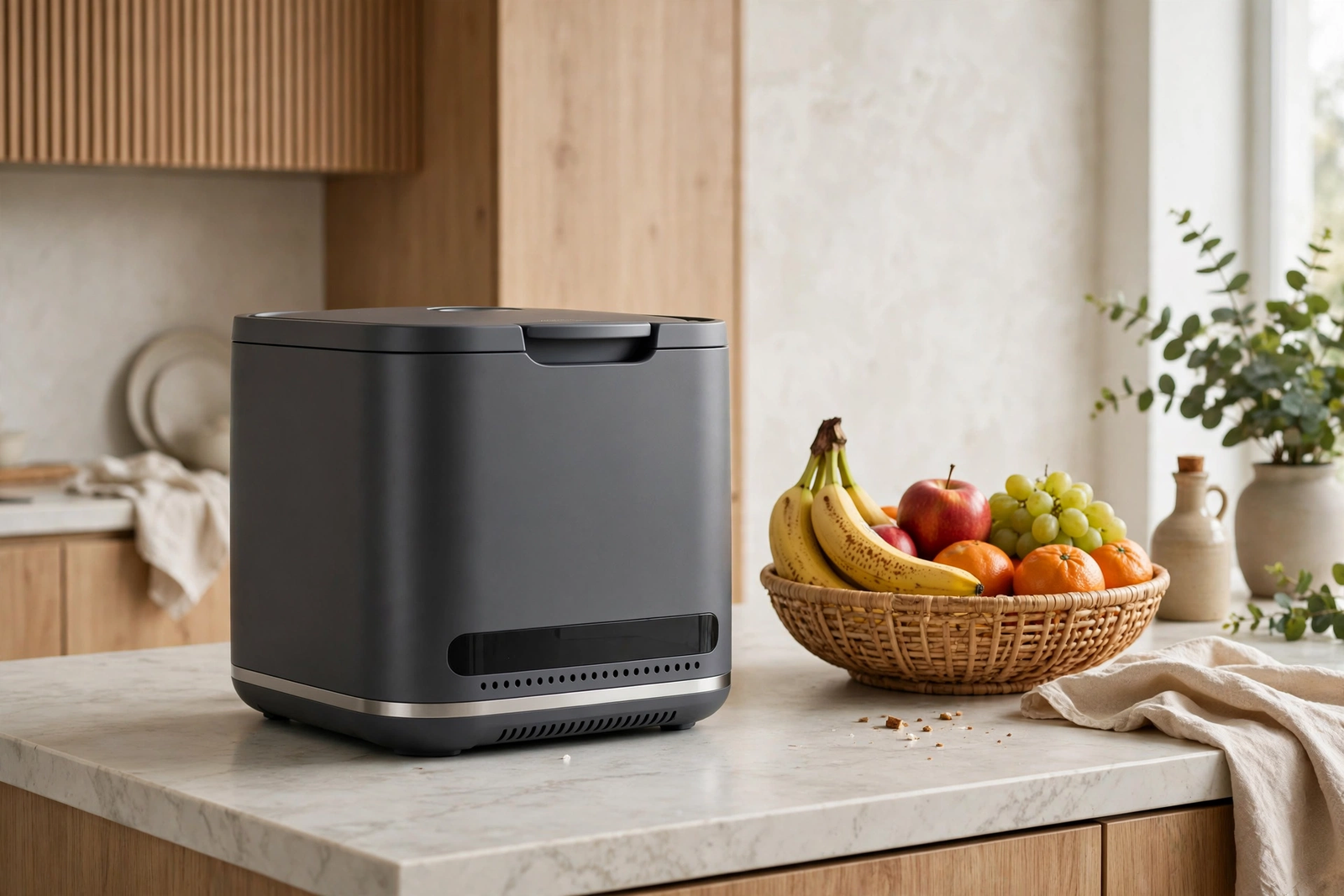
Lomi’s Grow Mode is the longest cycle in the category at 16 to 20 hours, and that time matters: longer, microbe-assisted processing produces a more broken-down output than quick dehydrate cycles. The 3-liter capacity, three modes, and sleek design are the same as ever, with the same caveats (about $500, $50 in pods and charcoal per 45 cycles, large footprint). If you are choosing among grind-and-dehydrate machines and output quality is the priority, Grow Mode is the best of the breed.
Who it’s for: buyers who want the best dehydrated output and accept the pod costs. Who should skip: anyone who balks at consumable subscriptions.
| Capacity | 3 liters |
| Best mode for output | Grow Mode, 16 to 20 hours |
| Consumables | LomiPods + charcoal, about $50 per 45 cycles |
| Price tier | Premium tier (about $500) |
- Longest most thorough cycle available
- Good design
- Flexible modes
- Consumable costs
- Large footprint
- Noisier than Reencle
Decomposition in Plain English: The Four Phases
To understand why a four-hour cycle cannot make compost, it helps to know what real decomposition involves. It happens in four overlapping phases, each driven by different organisms.
Phase 1: Mesophilic warm-up (days 1-3). Moderate-temperature bacteria colonize fresh waste and begin breaking down sugars and starches. The pile warms to about 70-100 F. This is the only phase an electric composter roughly replicates, and only thermally.
Phase 2: Thermophilic hot phase (days 3-14). Heat-loving bacteria take over, driving temperatures to 130-160 F. Proteins, fats, and complex carbohydrates break down. Pathogens and weed seeds die. This sustained high heat over days is what sanitizes real compost, and no countertop cycle sustains it.
Phase 3: Fungal breakdown (weeks 2-8). As easy food runs out, fungi move in to decompose cellulose and lignin, the tough structural materials in plant waste. This is the phase that creates the crumbly texture of finished compost. It cannot be rushed; fungi work on their own schedule.
Phase 4: Curing and humus formation (weeks 8+). Microbial activity slows, the pile cools toward ambient temperature, and complex humus compounds form. The result is stable, earthy-smelling, biologically rich compost.
An electric composter compresses a rough thermal imitation of phase 1 into a few hours and skips the rest. The output is sanitized and shrunken, which is genuinely useful, but phases 2 through 4 still need to happen somewhere. That somewhere is soil.
What Happens If You Skip the Soil-Curing Step
The most common electric-composter mistake is treating the output as finished compost and planting directly into it. Here is the biology of why that backfires.
Fresh electric output is high in carbon relative to available nitrogen, and it is biologically quiet: the heating cycle killed most microbes. When you mix it into soil, native soil microbes rush to colonize this new food source, and to do it they pull nitrogen out of the surrounding soil. This is nitrogen immobilization, sometimes called nitrogen robbery. For a week or two, plants near the fresh output can show yellowing leaves and stalled growth, the classic signs of nitrogen deficiency, even though you just “fertilized” them.
The fix is time, not more product. Mix the output into soil at modest ratios (roughly one part output to ten parts soil), wait ten to fourteen days, and let the microbial bloom pass. After that window the nitrogen is released back and the material behaves like the amendment it is. This is exactly why Vitamix’s own guidance specifies the ten-day rest. It is not caution; it is chemistry.
7 Ways to Get Better Output From Any Electric Composter
- Chop scraps smaller. Every machine processes small pieces faster and more completely. Thirty seconds with a knife improves every cycle.
- Drain wet scraps. Squeeze excess liquid from watermelon rinds, coffee grounds, and similar before adding. Less water means shorter, more effective cycles.
- Do not overload. A packed chamber processes unevenly. Two moderate loads beat one stuffed load in every machine.
- Mix input types. A load of pure fruit or pure bread processes worse than a varied mix. Diversity feeds more complete breakdown.
- Use Grow Mode when it matters. Lomi owners: the 16-20 hour Grow Mode exists for a reason. Use it when output quality matters more than speed.
- Keep microbes fed (Reencle). Consistent daily feeding keeps the microbe colony vigorous. Starving it, then overloading it, produces the worst output.
- Cure everything in soil. No exceptions. Even the best output improves with a week or two of soil contact before planting.
Who Should Not Buy an Electric Composter
Honesty requires the negative case. Skip the category entirely if any of these describe you.
- You have a yard and no physical limitations. A $150 tumbler makes better compost for a third of the price. The electric premium buys convenience you may not need.
- You generate very little food waste. One person who eats out most nights will not fill any machine often enough to justify $400-500.
- You have nowhere for the output to go. No plants, no garden, no community garden, no green-waste bin. The output accumulates and the value proposition collapses.
- You expect finished compost. If the phrase “pre-compost that needs soil curing” disappoints you, save your money. The marketing will keep disappointing you after purchase too.
How Long Does Electric Output Really Take to Finish in Soil?
The ten-to-fourteen-day curing figure gets quoted a lot, but what actually happens during those two weeks? Understanding the timeline helps you plan instead of guess.
Days 1-3: soil microbes colonize the fresh material aggressively. This is the nitrogen immobilization window, when nearby plants may look hungry. Do not plant seeds or transplants into the mix yet.
Days 4-7: the microbial bloom peaks and begins to settle. Moisture from the soil softens the dried particles, and fungal threads start connecting the material to the surrounding soil food web.
Days 8-14: nitrogen is released back as microbes die off and decompose. The material darkens, softens, and becomes indistinguishable from the surrounding soil. At this point it is a genuine amendment.
Two factors stretch this timeline: cold soil (microbes work slower below 50 F, so winter top-dressing may need three weeks) and large particle size (chunky output cures slower than powder). Grinding output finer or simply waiting longer both solve it. The practical rule: when in doubt, give it the full two weeks. Soil is patient, and so should you be.
Our Verdict
So, do electric composters really make compost? No, with one meaningful exception. They make an excellent pre-compost: sanitized, shrunken, odor-free, and ready to finish in soil within a week or two. The Reencle Prime is the exception that proves the rule, because its live microbes keep the decomposition going instead of just drying things out. Buy any of these machines for what they truly deliver, which is waste reduction and a potent soil amendment, and cure the output in soil before planting. Do that, and the only people disappointed are the ones who expected a miracle.