
So are robot lawn mowers worth it? The pitch is hard to resist: a little robot quietly keeps your lawn trimmed while you do literally anything else. No Saturday lost to mowing, no paying a crew every week, no grass clippings tracked through the house. Manufacturers love this fantasy, and to be fair, for a lot of yards it is close to the truth.
But the honest answer is the one nobody puts in an ad: it depends on your yard, your slope, your tree cover, and what mowing currently costs you in money or weekends. For the right lawn, a robot mower is a superb purchase. For the wrong lawn, it is an expensive gadget that gets stuck and ends up parked in the garage by August.
This guide walks through the real cost math, what you actually get back in time, the quiet lawn-quality argument, and the downsides manufacturers gloss over. It closes with three starter picks for typical small yards and a clear-eyed verdict on who should buy and who should skip.
Nothing here comes from hands-on testing. Every claim is grounded in manufacturer spec sheets, reviewer findings, and owner reports.
- Wire-free robot mowers sit in the premium tier (roughly $2,000 to $5,000 as a verified price range), while wire-based models typically run $800 to $2,000. Professional boundary-wire installation adds another $150 to $400 if you do not want to bury wire yourself.
- A weekly lawn service costs thousands per year, so a robot mower often pays for itself within a few seasons for owners switching away from hired mowing.
- The real return is time and consistency: daily light trims, quiet operation, and clippings that mulch back into the lawn.
- Honest downsides: you still edge and trim, steep or tangled yards push budget models past their limits, theft needs a plan, and the mower comes indoors for winter.
- For a simple yard between 1/8 and 1/4 acre, a wire-free starter model is the sweet spot; the three picks below cover budget, mainstream, and hilly small yards.
Are Robot Lawn Mowers Worth It? The Real Cost Math
Sticker shock is the number one reason people hesitate, and it is a fair reaction. A good wire-free robot mower lives in the premium tier, with a verified price range of about $2,000 to $5,000 depending on capacity and navigation tech. Wire-based models are kinder to the wallet at roughly $800 to $2,000, and if you go the wired route but do not fancy trenching your own boundary wire, professional installation typically adds $150 to $400.
The comparison that matters is not robot versus free. It is robot versus what mowing costs you right now. A weekly lawn service runs into the thousands per year in most US markets, and that number never goes down. Against that backdrop, even a premium-tier wire-free model often pays for itself within a few seasons. If you mow yourself, the math is softer: you are trading dollars for Saturdays, which is a perfectly valid trade but harder to put on a spreadsheet.
Running costs are refreshingly boring. Blades are a consumable and need periodic replacement, electricity use is modest, and most owners report the ongoing spend as a small annual line item rather than a second purchase. The costs people forget are situational: wire-free RTK models want a clear view of the sky and can struggle under heavy tree cover, wired models can need wire repairs after aggressive edging or a curious shovel, and every robot mower benefits from basic theft precautions since they sit out in the open by design.
One more cost nobody mentions: the wrong model. An underpowered mower on a steep, complicated yard does not just underperform, it creates a second job of rescuing it. Matching the machine to the yard is where the money is actually saved, which is why slope ratings and honest capacity numbers matter more than feature lists.
What You Actually Get Back: Your Time
This is the argument that wins most owners over, and it has nothing to do with specifications. A robot mower works on a schedule you set once. It trims a little every day or two while you are at work, asleep, or doing anything more interesting than pushing a mower. The weekly mowing block simply disappears from your calendar.
It is not zero involvement, and anyone who says otherwise is selling something. You still edge along fences and walls, clear fallen branches and kids’ toys before a run, and give the machine an occasional wipe-down. But owners consistently describe the remaining work as minutes of tidying rather than an afternoon project. The mental shift matters too: mowing stops being a looming weekend chore and becomes something that quietly happens.
Because the mower cuts a little at a time, it also handles post-rain growth spurts without the rescue session a weekly schedule forces on you. Come back from a two-week vacation and the lawn looks the same as when you left.
Lawn Quality: The Argument Nobody Makes Loudly Enough
Here is the benefit manufacturers under-sell: frequent light cuts are genuinely better for grass than one aggressive weekly hack. A robot mower taking a small amount off the top every day or two keeps the blade at a consistent height, avoids scalping, and mulches tiny clippings straight back into the turf where they break down and feed the soil. No bagging, no clumps, no brown patches where a dull push-mower blade tore the grass.
Owners report thicker, more even lawns within a season, and the mechanism is unglamorous: consistency beats intensity. A weekly mow lets grass grow long, then shocks it; a robot never lets it get long in the first place. Some models mow in neat parallel lines that leave a striped pattern owners love showing off.
Noise is part of the quality story too. Robot mowers run far quieter than gas mowers; the Segway Navimow i110N, for example, is rated at 58 dB(A), roughly conversation level. That means early-morning or evening runs without neighbor drama, which is exactly when you want the machine working while the yard is empty.
The Honest Downsides
Edging and trimming are still your job. No robot mower truly finishes the edges along fences, walls, and garden beds. Models with dedicated edge-cutting discs, like the Mammotion LUBA mini 2 AWD, shrink the leftover strip, but owners still keep a string trimmer for the detail work. Budget for a quick trim pass as part of the routine, not as a failure of the robot.
Complicated yards expose weak machines. Steep slopes beyond the rated grade, narrow passages under a meter wide, soggy low spots, and heavy tree cover (for RTK-based wire-free models that need satellite visibility) are where robots get stuck or give up. The fix is unglamorous: measure your slope honestly, map your tight spots, and buy a machine rated above your worst case, not at it.
Theft is a real consideration. These are small, valuable machines sitting in open yards. Most modern models include anti-theft measures like PIN locks, alarms, and app-based tracking; the Navimow i110N lists anti-theft among its features. Sensible owners still park the mower in the garage when away for long stretches and in neighborhoods where anything not bolted down walks away.
Winter means storage. Robot mowers are fair-weather workers. Most owners bring the machine indoors for the cold months and store the battery properly rather than leaving it to freeze in the yard. It is a minor hassle, but it is a real line item in the ownership experience that the brochures skip.
Wired models have a wire to maintain. A buried boundary wire is out of sight until an edger, aerator, or enthusiastic dog finds it. Breaks are fixable and repair kits exist, but it is an ongoing background task that wire-free owners simply never think about.
Top Picks at a Glance
Segway Navimow i110N
Wire-free starter pick for most simple yards up to 1/4 acre.
Mammotion YUKA mini 500
Budget-tier wire-free entry for small yards, with 50% slope handling.
Mammotion LUBA mini 2 AWD
True AWD climber for small yards with real slopes and rough terrain.
Detailed Reviews
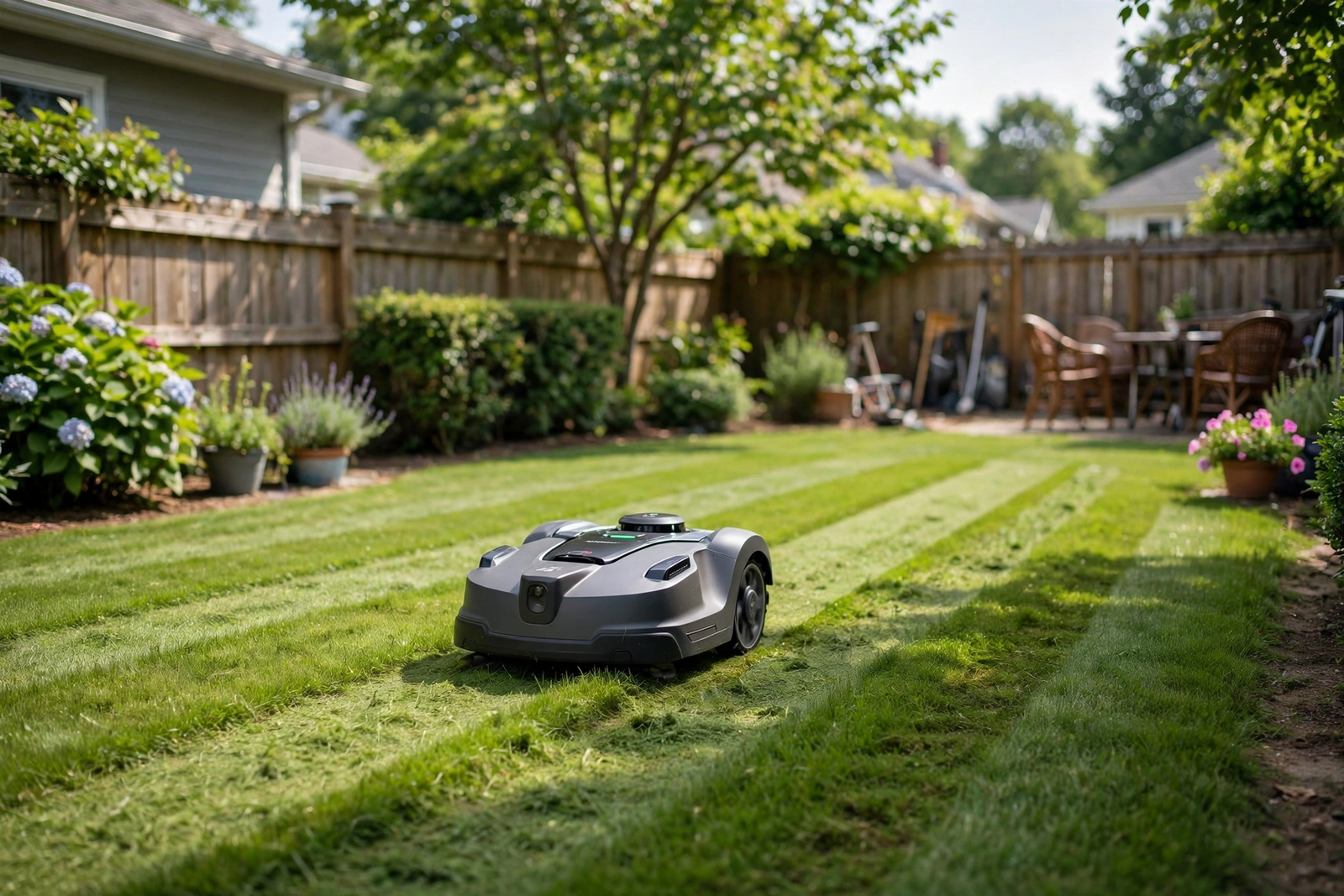
1 Segway Navimow i110N
The i110N is the easiest recommendation in this niche for a simple reason: it skips the boundary wire entirely. Segway’s EFLS 2.0 system fuses RTK positioning with camera vision, so setup means driving a virtual boundary in the app instead of burying hundreds of feet of wire on a Saturday. For a straightforward rectangular or L-shaped yard up to 1/4 acre, that single difference turns installation from a project into an afternoon.
Day to day, owners get app control, multi-zone management, AI-assisted mapping, and a 140-degree camera for obstacle detection. At a rated 58 dB(A) it runs quietly enough for dawn mowing, and Segway lists anti-theft features, which matters for a machine that lives outside.
The honesty footnote matters here. Segway rates the i110N for 30% slopes (about 17 degrees), but one reviewer measured a 16-degree maximum and found small slopes to be a weak spot. Treat gentle grades as fine and anything you would call a real hill as a sign to look at the AWD pick below. The i110N launched at $1,299 list price; street prices move around, so think of it in the mid-range, under-$1000 tier rather than anchoring on any single number.
Who it’s for: Owners of simple 1/8 to 1/4 acre yards who want wire-free convenience without the premium-tier price tag. Who should skip: Anyone with meaningful slopes, heavy tree cover blocking satellite signals, or yards bigger than 1/4 acre.
| Lawn capacity | 1/4 acre |
| Navigation | Wire-free (EFLS 2.0: RTK + vision fusion) |
| Slope rating | 30% (about 17°) per manufacturer; reviewer measured 16° max |
| Cutting height | 2 to 3.6 inches |
| Noise | 58 dB(A) |
| Extras | App control, multi-zone management, AI-assisted mapping, virtual boundaries, anti-theft, 140° camera |
| Price tier | Mid-range / under $1000 tier; launched at $1,299 list (MSRP) |
- No boundary wire to install or repair
- Quiet operation
- Multi-zone support
- Anti-theft features included
- Slope ability is modest and reviewer-tested below the rating
- 1/4 acre ceiling
- Needs decent sky view for RTK
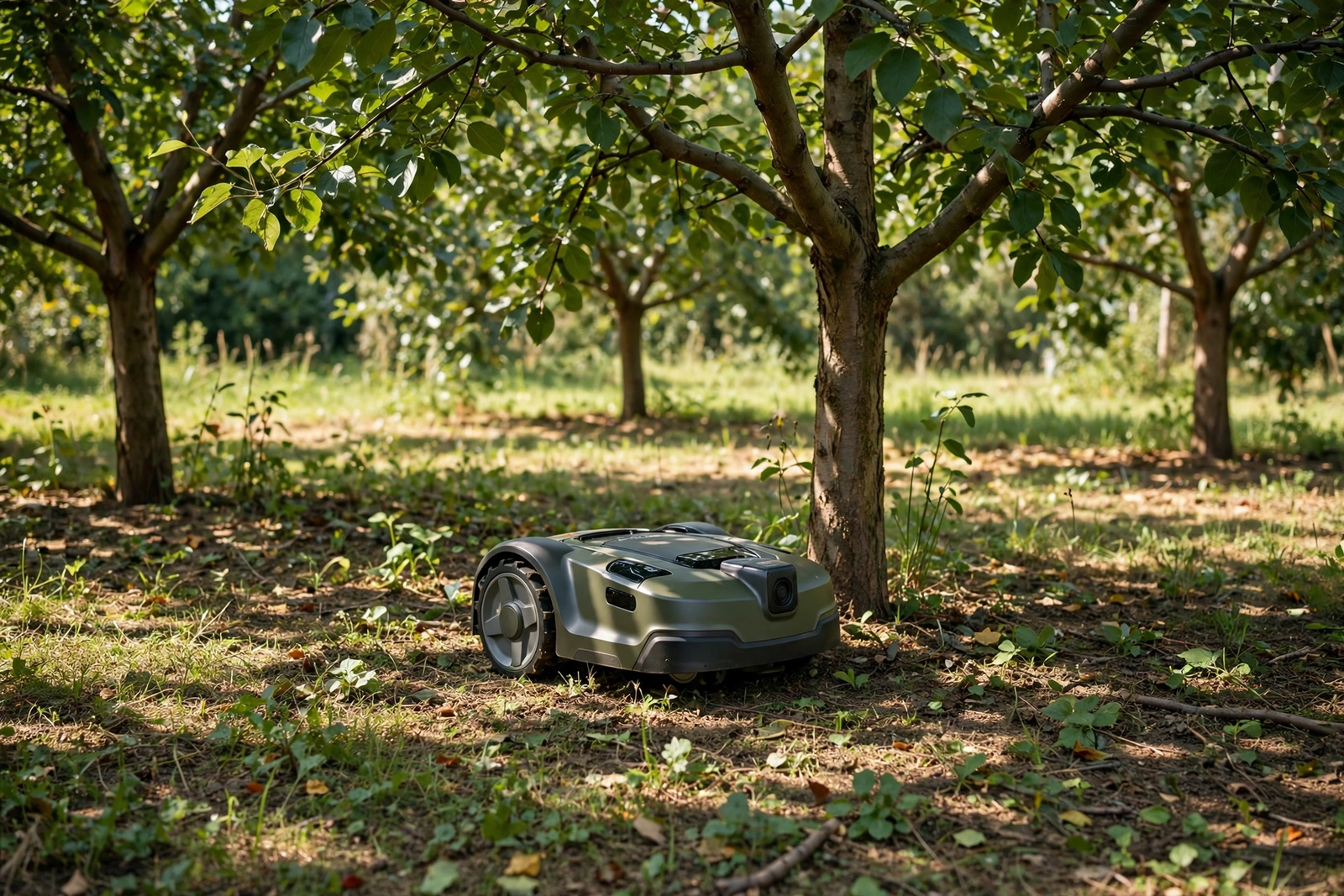
2 Mammotion YUKA mini 500
If the i110N is the mainstream pick, the YUKA mini 500 is the “prove the concept cheaply” pick. It covers about 500 square meters (roughly 1/8 acre) with AI-vision virtual mapping, so like the i110N there is no wire to bury. The standout number at this tier is the 50% slope rating, which is genuinely impressive for a budget machine and well above what most small-yard mowers claim.
App control and support for up to 15 zones round out a package that punches above its price class on paper. The trade-offs are the ones you would expect: the 1/8 acre ceiling means it is strictly a small-yard machine, and budget-tier vision navigation will not match premium models on tricky obstacle courses. For a modest flat-ish yard, though, it is the lowest-cost way to find out whether the robot-mowing life suits you.
Who it’s for: Budget-conscious owners of small yards (1/8 acre or less) who want wire-free setup and decent slope ability for the money. Who should skip: Larger yards, and anyone who needs premium obstacle avoidance or edge trimming.
| Lawn capacity | 500 m² (about 1/8 acre) |
| Navigation | AI-vision virtual mapping, wire-free |
| Slope rating | 50% |
| Zones | Up to 15 |
| Control | App control |
| Price tier | Budget tier (no dollar figure stated) |
- Budget-tier pricing
- Strong 50% slope rating for the class
- Wire-free mapping
- 15-zone support
- 1/8 acre capacity ceiling
- Budget-tier navigation trade-offs on complex yards
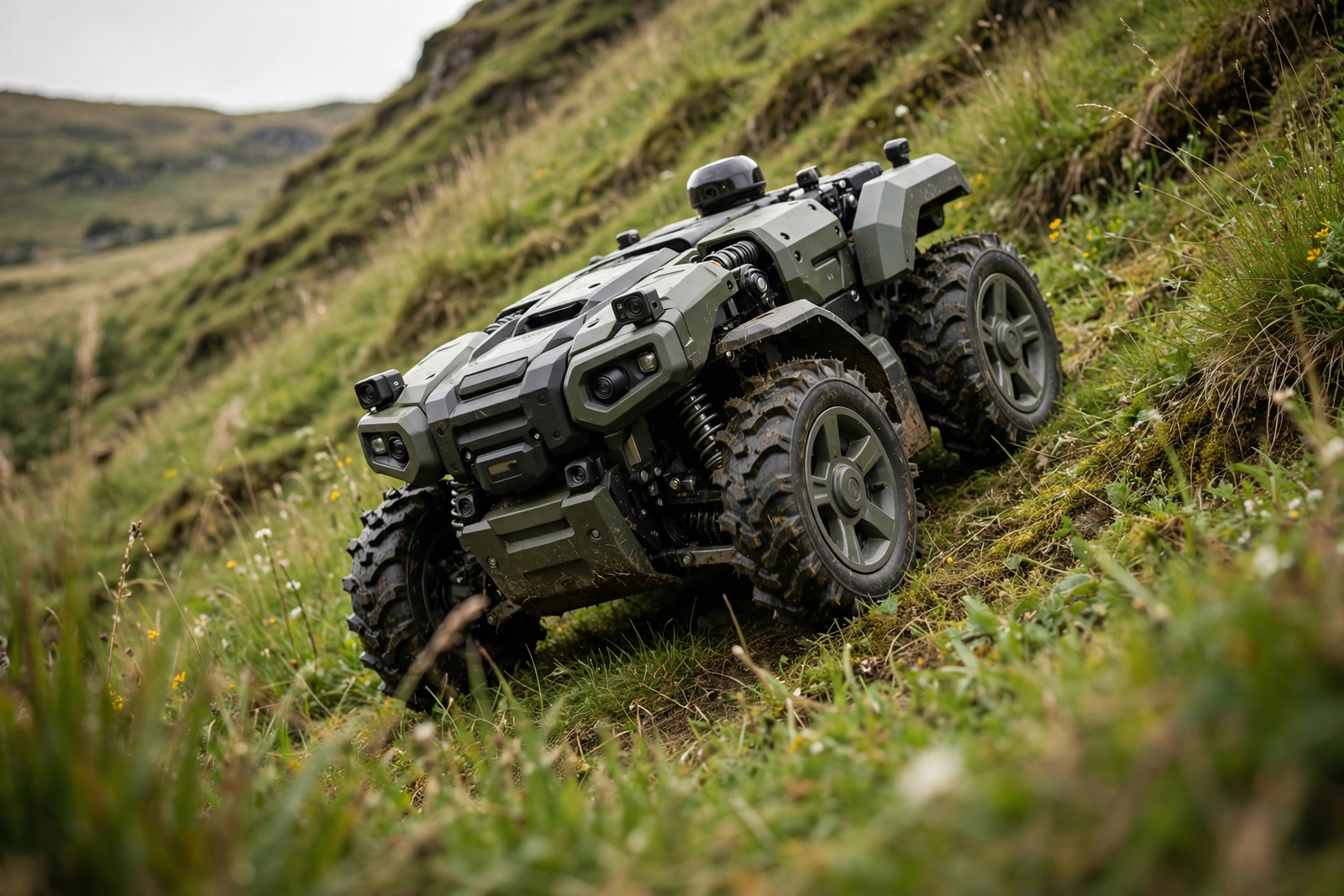
3 Mammotion LUBA mini 2 AWD
Small yard plus real slope is the exact scenario where most robot mowers fail, and it is the scenario the LUBA mini 2 AWD was built for. True all-wheel drive and a manufacturer slope rating of 80% (about 38.6 degrees) put it in a different league from the two picks above. The honesty note: notebookcheck’s ramp test measured 70% before the mower threw a “tipped” error rather than the full 80%, so treat the rating as a best case and your actual hill as the real test.
Beyond traction, the spec sheet is unusually generous for a compact machine: tri-camera AI vision fused with NetRTK, with no physical RTK antenna to install; a dedicated side edge-cutting disc that shrinks the dreaded uncut strip; drop-and-mow mode for carrying it to a remote patch; a replaceable battery; and a 3-year warranty. Coverage is 1,000 square meters (about 1/4 acre), so it handles the same yard size as the i110N while climbing far better. It sits in the premium compact tier; no dollar figure is stated here because the only MSRP on record belongs to a larger variant.
Who it’s for: Owners of 1/4 acre or smaller yards where slopes, rough patches, or awkward terrain rule out standard models. Who should skip: Flat simple yards where the AWD premium buys capability you will never use.
| Lawn capacity | 1,000 m² (about 1/4 acre) |
| Drive | True all-wheel drive |
| Slope rating | 80% (38.6°) manufacturer claim; independent ramp test measured 70% |
| Navigation | Tri-camera AI vision + NetRTK fusion; no physical RTK antenna needed |
| Edge cutting | Dedicated side edge-cutting disc |
| Extras | Drop-and-mow mode, replaceable battery, 3-year warranty |
| Price tier | Premium compact tier (no dollar figure stated) |
- Best-in-class slope ability for a compact mower
- Edge-cutting disc
- No antenna installation
- Replaceable battery
- 3-year warranty
- Premium compact pricing
- Overkill for flat yards
- 1/4 acre ceiling
Cost Comparison: Your Options Side by Side
| Option | Typical upfront | Typical yearly cost | Your weekly effort |
|---|---|---|---|
| Weekly lawn service | $0 | Thousands per year | None |
| Wire-free robot mower | Premium tier: $2,000-$5,000 | Small (replacement blades, minor parts, modest electricity) | Near zero; edging still yours |
| Wire-based robot mower | $800-$2,000 | Small, plus occasional wire repairs | None |
| Pro boundary-wire installation (add-on) | $150-$400 one-time | None | None |
Who Should Buy, and Who Should Skip
Buy if: you currently pay for a lawn service and want that money back within a few seasons; your yard is a straightforward 1/8 to 1/4 acre; you value weekends more than the purchase price; you are comfortable with an app and basic troubleshooting; you travel and want the lawn maintained while you are gone.
Skip if: your yard has slopes or obstacles beyond what the rated models handle; heavy tree cover would starve a wire-free RTK model of satellite signal (a camera-based model may suit better); your lawn is tiny enough that a robot is pure gadgetry; the premium tier would stretch your budget uncomfortably; or you genuinely enjoy mowing, which is a fine reason that needs no defense.
Our Verdict
For the right yard, yes, a robot mower is worth it, and it is not close. The combination of reclaimed weekends, a healthier lawn from daily light cuts, and payback within a few seasons against hired mowing makes it one of the more rational smart-home purchases available. The failures come from mismatches, not from the concept: an underpowered machine on a steep yard, a wire-free RTK model under dense trees, or a premium purchase for a postage-stamp lawn. Measure your yard, respect the slope ratings (and the reviewer caveats behind them), start with a starter pick matched to your size, and the robot earns its keep.