
How long will a power station run a refrigerator? If your power is out and the fridge is full, that’s the question you’re googling at 11 PM while your ice cream dies. Take a breath, because here is the honest answer nobody selling you a power station wants to lead with: a typical 1kWh portable power station keeps a full-size fridge cold for roughly 8 to 12 hours. Not 24. Not “days.” About one night.
That is still enough to save your groceries through most outages. Utility outages in the US usually clear within a few hours, and a fridge that stays shut keeps food safe for about 4 hours on its own. A power station bridges the gap between that and morning, which is exactly when most people panic-buy one at full price.
The real number depends on three things: the station’s capacity, how your fridge actually uses power, and how hot the room is. Ignore any product page that gives you a single confident number, because fridge power draw is a moving target and marketing math always rounds up.
Below we do the math together, station by station, so you know exactly what you are getting before you buy. Five popular stations are ranked by real fridge runtime, with the numbers shown step by step.
- A full-size fridge averages 100-150W because the compressor cycles on and off, running roughly a third of the time.
- The formula: rated watt-hours x 0.85, divided by average watts = hours. The 0.85 accounts for inverter losses and the fact that batteries never give you 100%.
- 1kWh stations (Delta 2, Jackery 1000 v2, AC180, C1000): about 8-12 hours on a full-size fridge, about 16-20 hours on a mini fridge.
- 2kWh stations (Bluetti AC200L): about 18-24 hours on a full-size fridge, up to 35 hours on a mini fridge.
- No 1kWh station runs a full fridge for 24 hours. For that you need 2kWh or more, or a solar panel recharging the station during the day.
How Long Will a Power Station Run a Refrigerator: Top Picks at a Glance
Bluetti AC180
1152Wh, the most capacity in the 1kWh class, which means the longest fridge runtime of the four.
Bluetti AC200L
2048Wh of capacity plus solar input for multi-day fridge backup when outages stretch on.
Jackery Explorer 1000 v2
Only 23.8 lbs with a fold-flat handle and quiet operation, the easiest one to carry anywhere.
Why Fridge Math Trips People Up
The mistake is reading the fridge’s nameplate. Your full-size fridge says something like 500W or 600W on the back sticker, and you see a 1800W power station and think that is triple what the fridge needs. But the nameplate number is the worst-case draw: compressor startup surge plus the ice maker running plus the defrost heater, all at once. In normal life the compressor kicks on for 15-20 minutes, cools the inside down, then shuts off for 30-40 minutes. Over an hour that averages out to roughly 100-150W for a full-size fridge, or about 40-60W for a mini fridge.
Heat changes the math. A fridge in a cool kitchen cycles gently. That same fridge in a hot garage works much harder because cold keeps escaping into warm air, and your runtime can shrink by a third on a hot day. Keep the doors closed during an outage and it cycles less. Open it every hour to check and you burn battery for nothing.
Then there is the inverter. Turning stored DC battery power into AC wall-outlet power loses roughly 15%, and lithium batteries reserve a small slice of capacity to protect themselves. That is why we multiply by 0.85 instead of using the full rated watt-hours. A 1024Wh station does not hand you 1024Wh. It hands you about 870Wh you can actually spend.
Fridge Runtime Comparison
Real-world estimates assume normal compressor cycling in a 70F room. Hot conditions cut these numbers.
| Station | Capacity | Full-Size Fridge (~130W avg) | Mini Fridge (~50W avg) | Standout |
| Bluetti AC200L | 2048Wh | 18-24 hrs | ~35 hrs | Marathon pick, expandable |
| Bluetti AC180 | 1152Wh | 9-13 hrs | ~19-20 hrs | Most capacity per dollar |
| Jackery 1000 v2 | 1070Wh | 8-12 hrs | ~18 hrs | Lightest, quietest, 4000 cycles |
| Anker C1000 | 1056Wh | 8-12 hrs | ~18 hrs | Fastest recharge |
| EcoFlow Delta 2 | 1024Wh | 8-11 hrs | ~17 hrs | All-round workhorse |
What Actually Matters When Buying for a Fridge
- Capacity first, everything else second. Fridge backup is a capacity game. Output wattage barely matters because a fridge averages only 130W. A 2kWh station outlasts a 1kWh station every time.
- Compressor startup surge is real but manageable. When the compressor kicks on it briefly draws far more than its running average, sometimes 800-1200W for a second. Every station here handles that easily with surge ratings of 2400-3600W.
- Think about recharging, not just capacity. An 8-hour outage needs a charged station. A 3-day outage needs a way to refill. If long outages are common where you live, buy a station with strong solar input and add a portable panel.
- Keep the fridge closed. This is free battery. Every door opening lets cold air pour out and forces a longer compressor cycle. During an outage, treat the fridge like a cooler.
- A mini fridge or chest freezer is dramatically cheaper to run. Moving essentials into a small chest freezer and backing up just that can double or triple your runtime on the same station.
Detailed Reviews
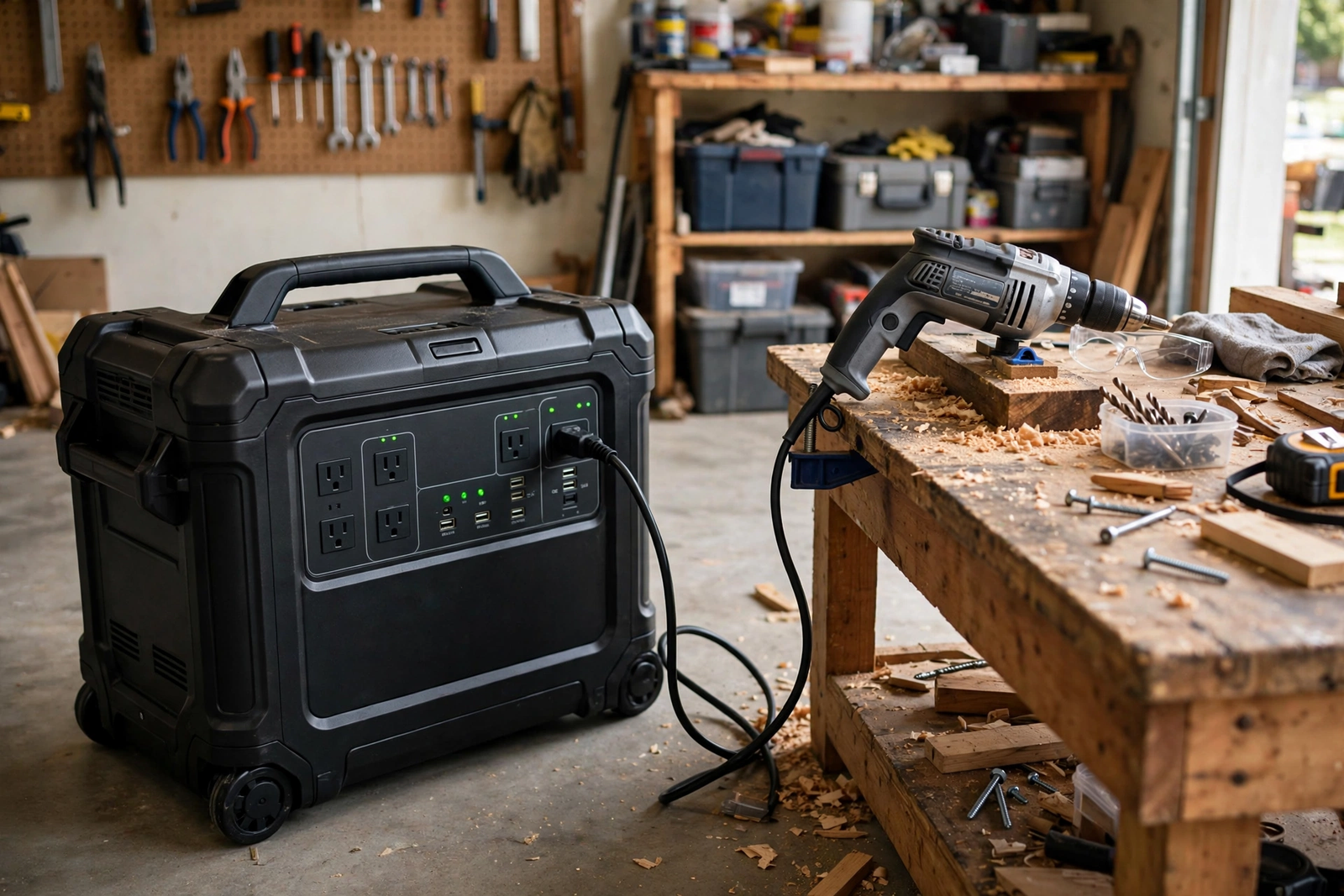
Bluetti AC200L
With 2048Wh of capacity, the AC200L is in a different league from everything else here. The math: 2048 x 0.85 = 1741Wh, divided by 130W average = about 13 hours of continuous-equivalent runtime, which stretches to roughly 18-24 real-world hours with normal compressor cycling. A mini fridge runs nearly 35 hours. Pair it with solar panels (it accepts up to 1200W) and you can stretch a fridge indefinitely by recharging during the day.
At 61.4 lbs it is not portable in any real sense, so think of it as a small generator you park, not a box you carry. It also gives you 2400W of AC output, a 30A RV port, and expansion up to 8192Wh if outages are a regular part of your life. If keeping a full fridge cold through a multi-day outage is the mission, this is the pick. Skip it if you need something you can lift into a car easily.
| Capacity | 2048Wh LiFePO4 |
| AC Output | 2400W (3600W Power Lifting) |
| Weight | 61.4 lbs |
| Recharge | 0-80% in 45 min, 1200W solar max |
- 2048Wh gives the longest fridge runtime here
- Expandable to 8192Wh for regular outages
- 1200W solar input for multi-day refills
- 2400W output plus 30A RV port
- 61.4 lbs, not portable in any real sense
- Big step up in size and cost from 1kWh stations
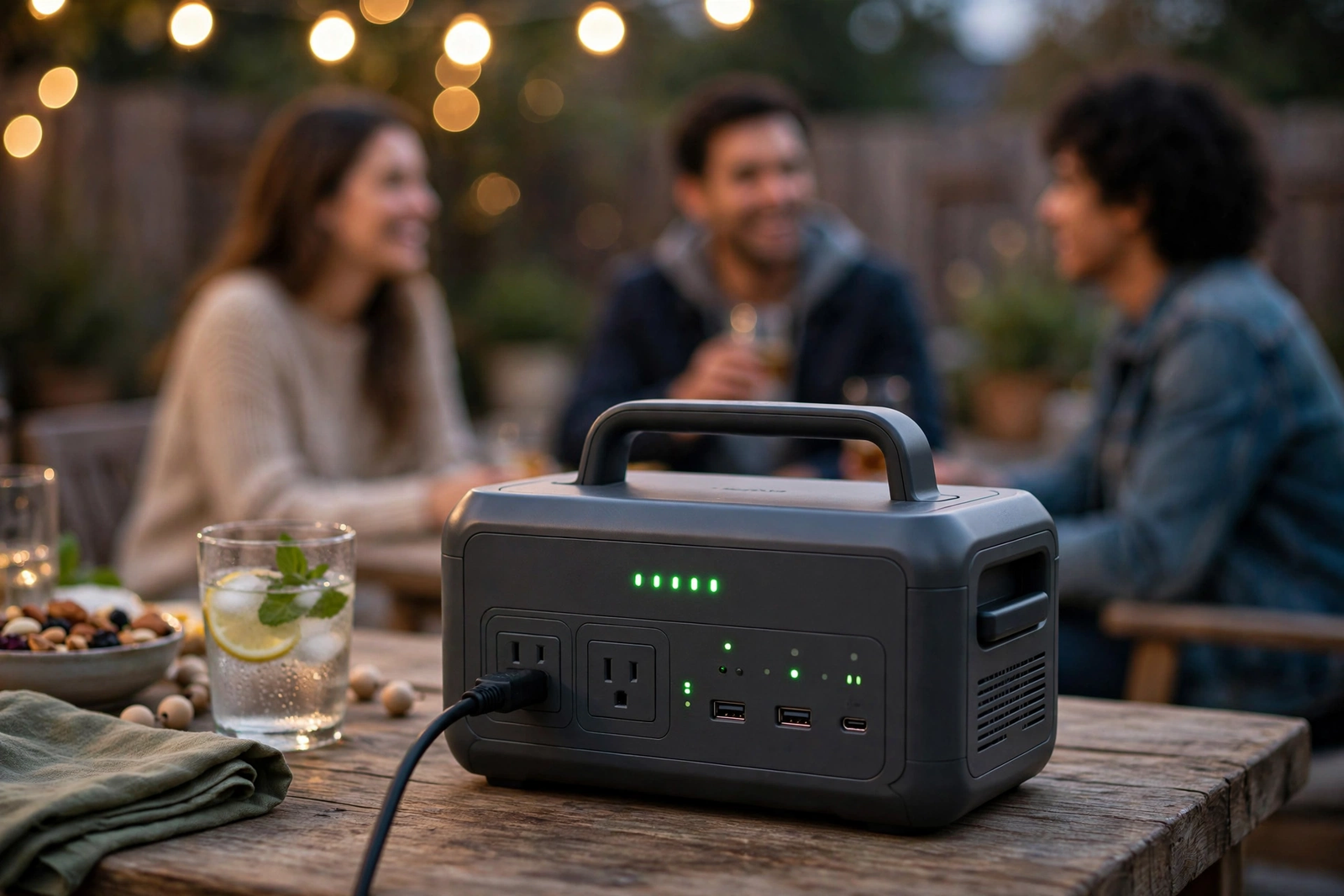
Bluetti AC180
The AC180 has the most capacity of the four 1kWh stations at 1152Wh, which buys it the longest fridge runtime of the bunch. The math: 1152 x 0.85 = 979Wh, divided by 130W = about 7.5 hours continuous-equivalent, or roughly 9-13 hours with real cycling. A mini fridge goes about 19-20 hours. It also has 1800W of output, UPS mode for seamless switchover, and 3500+ battery cycles.
The tradeoff is weight. At 35-37 lbs it is noticeably chunkier than the Jackery, and owners report feeling it on stairs. If it mostly lives next to the fridge and only moves for outages, that does not matter. For the money, this is the most fridge-hours per dollar in the 1kWh class. Skip it if weight matters, since it is the heaviest of the 1kWh group.
| Capacity | 1152Wh LiFePO4 |
| AC Output | 1800W (2700W surge) |
| Weight | 35-37 lbs |
| Recharge | 0-80% in 45 min (TurboBoost) |
- Most capacity (1152Wh) in the 1kWh class
- Best fridge runtime per dollar
- UPS mode for seamless switchover
- 3500+ battery cycles, 5-year warranty
- Heaviest of the 1kWh group at 35-37 lbs
- Less convenient to carry to the car or campsite
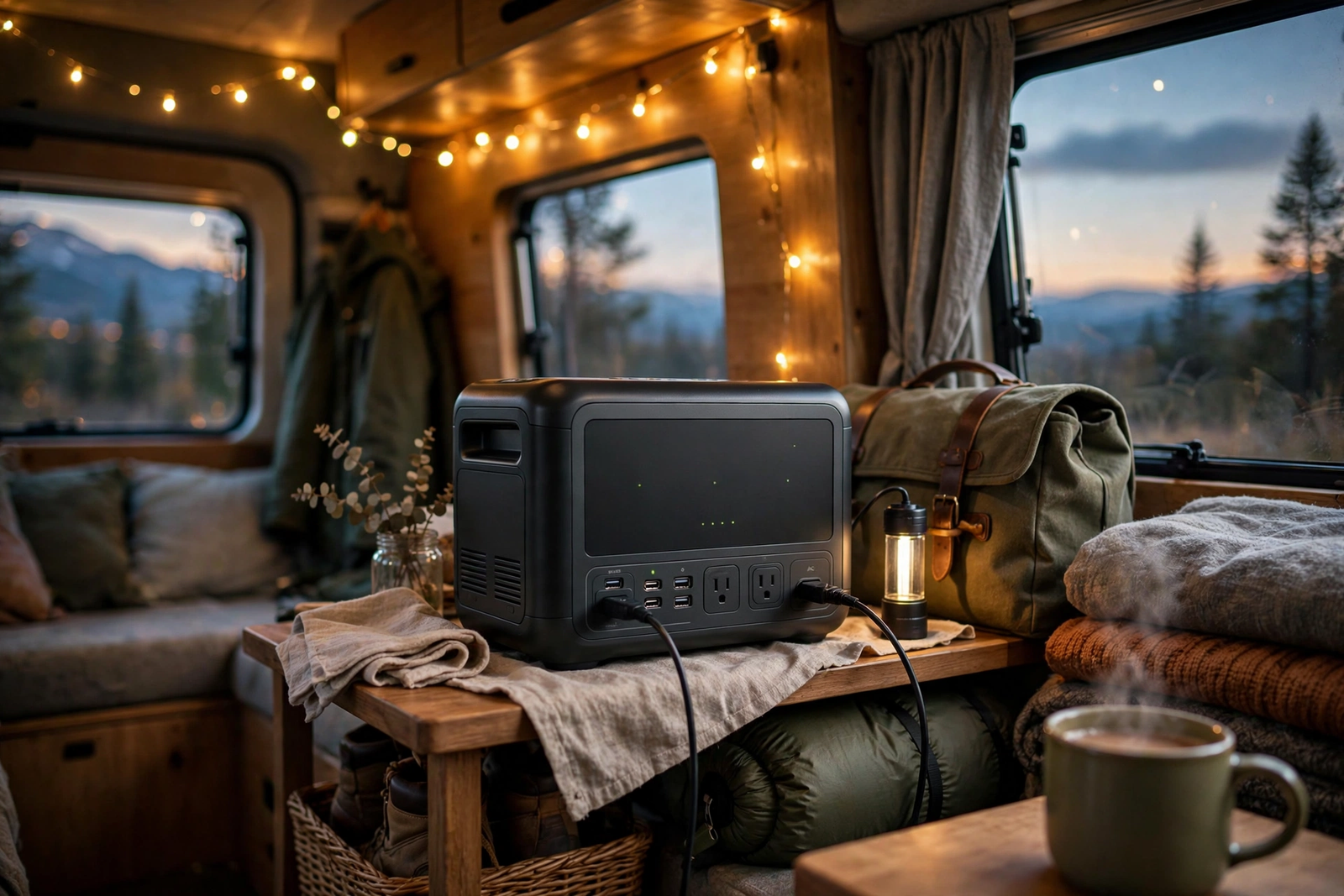
Jackery Explorer 1000 v2
The Jackery 1000 v2 carries 1070Wh. The math: 1070 x 0.85 = 910Wh, divided by 130W = about 7 hours continuous-equivalent, or roughly 8-12 hours real world with cycling. A mini fridge runs about 18 hours. At 23.8 lbs it is the lightest station here, the handle folds flat, and owners consistently report it is very quiet and easy to use, which matters when it is humming in your kitchen at 2 AM.
It recharges fast in emergency mode (about an hour via the app) and its battery is rated for 4000 cycles, the longest lifespan in this group. You give up a little capacity versus the Bluetti and some output wattage versus the EcoFlow (1500W vs 1800W), but for a straightforward, carry-it-anywhere fridge backup, it is excellent. Skip it if you want the absolute longest runtime in this class.
| Capacity | 1070Wh LiFePO4 |
| AC Output | 1500W (3000W surge) |
| Weight | 23.8 lbs |
| Recharge | ~1 hour emergency charge (via app) |
- Lightest here at 23.8 lbs, fold-flat handle
- Very quiet, simple to use
- 4000 cycles, longest-rated lifespan in the group
- Fast emergency recharge mode
- 1500W output is the lowest of the five
- Slightly less capacity than the AC180
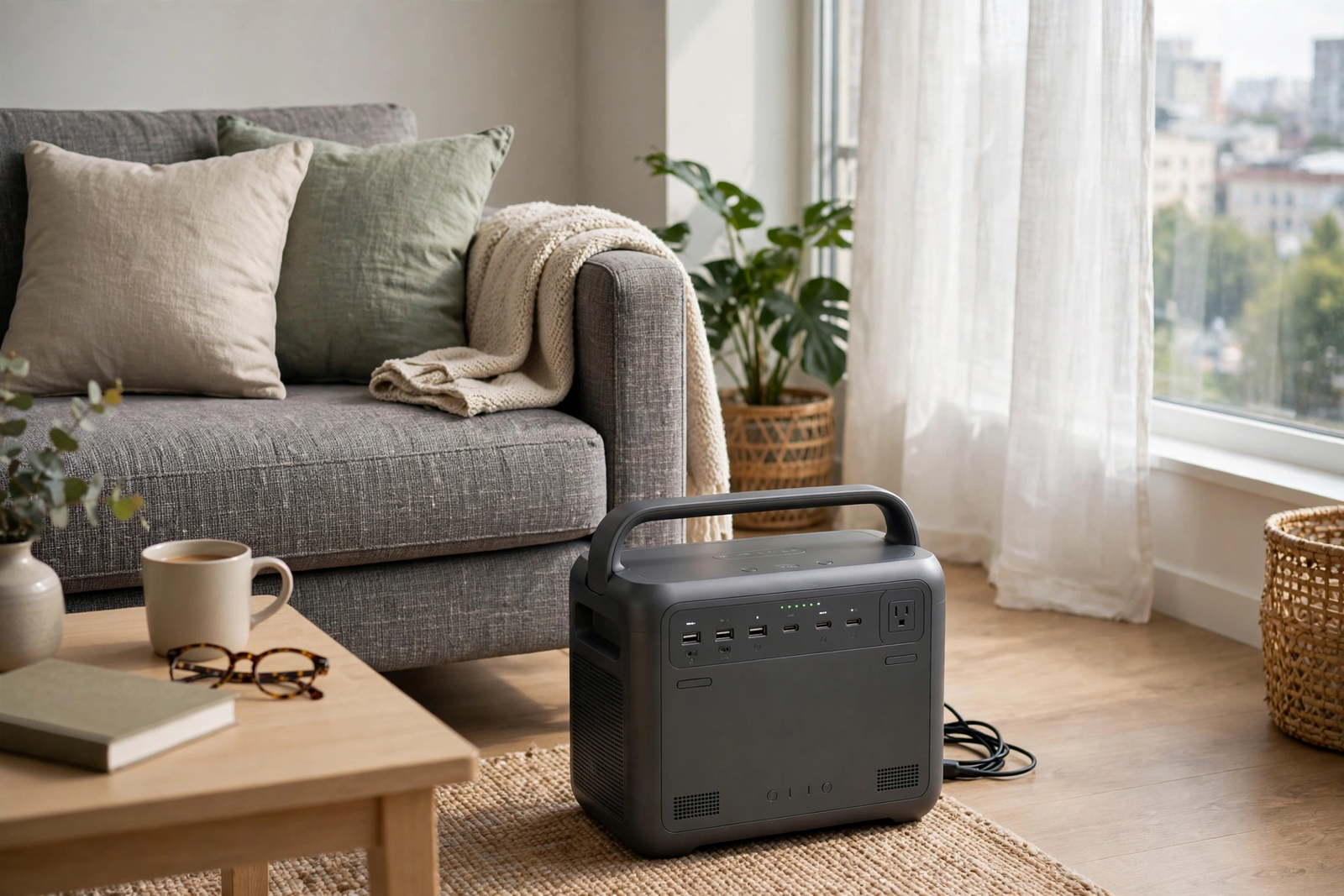
Anker Solix C1000
The C1000 holds 1056Wh. The math: 1056 x 0.85 = 898Wh, divided by 130W = about 6.9 hours continuous-equivalent, or roughly 8-12 hours with cycling. A mini fridge runs about 18 hours. Where it stands out is recharging: 0-80% in a claimed 43 minutes, the fastest of this group, plus 600W max solar input and an expandable battery option.
It has 1800W of output like the EcoFlow and Bluetti, 3000+ cycles, and weighs about 28 lbs. Anker’s reputation in consumer electronics gives it a trust edge for buyers nervous about newer brands. Runtime is essentially tied with the Jackery. The differentiator is how fast it refills between outages. Skip it if you run heavy appliances alongside the fridge, since runtime is the same class as its rivals.
| Capacity | 1056Wh LiFePO4 |
| AC Output | 1800W (2400W surge) |
| Weight | ~28 lbs |
| Recharge | 0-80% in 43 min, 600W solar max |
- Fastest recharge: 0-80% in 43 minutes
- 1800W output with 600W solar input
- Anker reliability reputation
- Expandable with extra battery
- Fridge runtime tied with the Jackery, not standout
- Expansion battery adds cost
EcoFlow Delta 2
The Delta 2 packs 1024Wh. The math: 1024 x 0.85 = 870Wh, divided by 130W = about 6.7 hours continuous-equivalent, or roughly 8-11 hours real world with cycling. A mini fridge runs about 17 hours. It is the smallest capacity of the five, so it is last on raw runtime, but it compensates elsewhere: 1800W output, 0-80% charging in 50 minutes on AC, 500W solar input, 3000 cycles, and a 5-year warranty.
If the fridge is one of several things you need backed up (lights, phones, a fan, the WiFi router), the Delta 2’s balanced spec sheet and fast refills make it the workhorse. Just go in knowing the Bluetti AC180 or Jackery give you slightly more fridge-hours for the same footprint. Skip it if you want the longest possible runtime per dollar.
| Capacity | 1024Wh LiFePO4 |
| AC Output | 1800W (2700W surge) |
| Weight | 27 lbs |
| Recharge | 0-80% in 50 min, 500W solar max |
- Balanced 1800W output for the whole house
- 0-80% charge in 50 minutes
- 5-year warranty
- Strong app with fine control
- Smallest capacity of the five (1024Wh)
- Shortest raw fridge runtime here
Our Verdict
For most people backing up a full-size fridge through typical outages, the Bluetti AC180 is the pick. It has the most capacity in the 1kWh class at 1152Wh, which translates directly into the longest fridge runtime of the four, and it usually sells at the best price per watt-hour. If your outages last days, skip the 1kWh class entirely and get the Bluetti AC200L: its 2048Wh gets you through a full day and night, and with solar panels it becomes a real multi-day fridge solution.
Frequently Asked Questions
Want the number for your own fridge? Our free Power Station Runtime Finder sizes a station for your exact fridge and outage length — no guesswork.
Pingback: What Size Portable Power Station Do I Need? (2026 Guide)
Pingback: Best Portable Power Station for CPAP Machines (2026)